Britain’s Forecourts Face More Than a Price Shock
A routine refuelling stop is exposing financial, operational and human strain across the UK.
Why is fuel theft rising at UK forecourts?
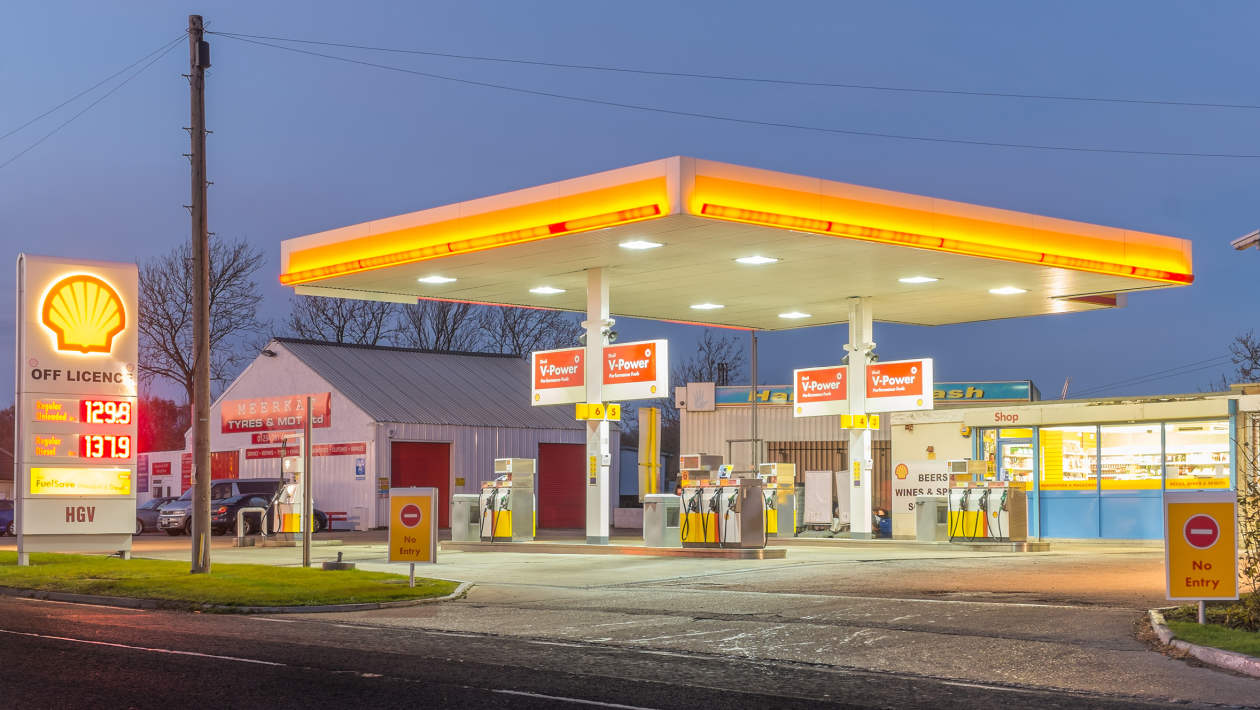
Petrol theft has risen as household pressure and hostility at filling stations intensified after the conflict began. Forecourt Eye recorded a 24 per cent increase in the average daily volume stolen, from 5,777 litres before the conflict to 7,163 litres afterwards. Its comparison covers five months on either side of the outbreak, giving the change a defined period rather than a single bad week. The company drew its figures from 550 UK forecourts, so the result is an analysis of monitored sites, not a count from every pump. That distinction matters: the increase describes the locations Forecourt Eye observed. Operators are therefore dealing with both more fuel leaving without payment and greater friction at the point of sale. The monitored result measures the scale of missing fuel, not the motive behind each incident or the outcome of any investigation. The immediate ownership consequence is simple: an unpaid fill is no longer a minor till discrepancy.
How much fuel is being stolen each day?
Across the UK, the estimated daily loss is almost £194,000 in fuel, equivalent to around 109,000 litres. The national estimate comes from scaling monitored-forecourt results to the country’s roughly 8,350 sites. At those monitored sites, the post-28 February daily loss was £12,751, compared with £8,621 beforehand. The cash figures outpaced the litre increase because the price of fuel rose sharply after the Strait of Hormuz closed. That relationship is why a relatively smaller change in physical volume produced a much larger change in the value attached to it. The figures should be read as estimates tied to the data set and the assumptions used to scale it, not as a till-by-till audit of every UK station. The national calculation gives the problem a daily financial scale, while the monitored sample supplies the underlying observation. For a motorist, the key measure is the value of the missing fill, not litres alone.
What happens in most forecourt theft incidents?
Most reported fuel thefts fall into two patterns: a driver fills the vehicle and drives away, or a driver claims to have no means of payment. Almost three in five incidents involve the first pattern, leaving the no-means-of-payment cases as the remainder. That distinction describes what happens at the pump, not why it happens, and it matters when an incident is recorded. Forecourt Eye also found increases among both first-time and repeat offenders. The rise was slightly greater among first-time offenders, a pattern that points to financial pressure pushing some people towards a risk they had not previously taken. A driver facing an empty wallet therefore creates a different reported incident from someone who simply drives off, but neither route settles the bill at the forecourt. The split also shows why the problem cannot be described solely as repeat offending: new offenders form the faster-growing part of the two groups.
Are petrol retailers being accused of price gouging?
No substantial evidence of retailer foul play had been found by the Competition and Markets Authority as pump prices climbed. The issue nevertheless drew a direct warning from Chancellor John Healey, who said in The Telegraph that the Government would watch for any suggestion customers were being taken for a ride at the pump or till. Healey also said companies had worked positively with the Government during the crisis and that regulators had powers to clamp down if price gouging occurred. That leaves two separate questions for a motorist: whether the price is painful, and whether a retailer has manipulated it unlawfully. The regulator’s position did not turn an expensive fill into a finding of wrongdoing. A high forecourt price alone does not establish unlawful price gouging at the pump. Healey’s warning was reassurance, not a finding against petrol retailers.
Why are forecourt staff facing more abuse?
Forecourt staff are facing more abuse because motorists angry about pump prices are directing frustration at employees who do not set them, according to Gordon Balmer, executive director of the Petrol Retailers Association. Balmer said colleagues have no influence over the price displayed at the forecourt, placing them in the path of anger about a charge they do not set. He also acknowledged the financial pressure on households, but said unpaid fuel has an immediate effect on operators and is not a victimless crime. The cost does not disappear when a vehicle leaves without paying; Balmer said it is absorbed by the retailer and ultimately adds to the wider cost of running a forecourt. His point explains why an argument at the pump is aimed at the wrong person even when the price feels unjustifiable. Staff are simply doing their jobs, while the business carries the direct loss. The conflict has therefore created a sharper human problem at the same place motorists go to refuel.
What will happen to petrol and diesel prices next?
Petrol reached 160.85p per litre on 3 August, the highest level recorded during the Iran war, while diesel faced a worse near-term outlook. RAC head of policy Simon Williams said wholesale fuel data indicated pump prices should begin to stabilise that week, but warned diesel could continue rising and possibly reach 185p in the following week or so. The distinction matters to vehicle owners: petrol had already reached its stated high, whereas diesel users were looking at a possible further increase. Williams’s forecast concerned the direction of prices at the pump, not a guarantee that every station would alter its price at the same moment. Businesses that rely on diesel, including operators of diesel vans, were therefore facing the sharper stated risk. For a household choosing between petrol and diesel, the available pricing signal was asymmetric: relief was expected for petrol, while diesel remained exposed to another rise.