10 Biometric Access Features Already Reshaping How Cars Lock and Start
Fingerprints, face scans, and voice commands are moving into production cars—and they bring both convenience and new risks.
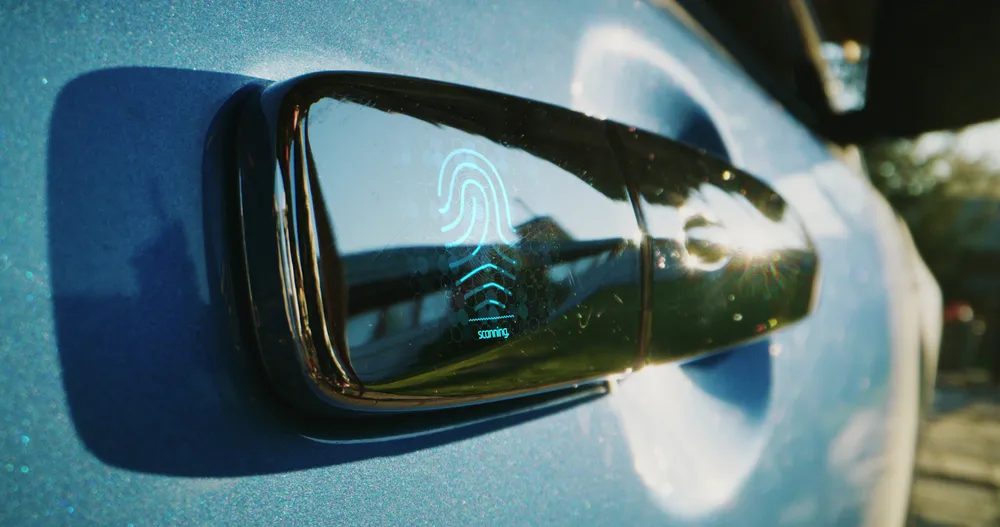
Fingerprint Scanning Is the First Step on the Door Handle
Fingerprint recognition has become the most visible biometric feature in production cars, appearing on the start button or door handle of high-end models. The system compares a live scan against a stored template, letting you unlock or start without reaching for a fob. Automakers position it as a theft deterrent because it is harder to impersonate than a physical key. But the sensor has a known failure mode: a wet fingerprint can be rejected, and poor lighting or dirt on the sensor can stop recognition entirely. For that reason, even vehicles with this feature keep a conventional key as a physical backup. The convenience is real, but the technology is still treated as a supplement rather than a full replacement. This dual approach remains the industry standard, even as more models add the scanner as standard equipment.
- BiometricFingerprint
- AvailabilityHigh-end vehicles
- ChallengeWet sensor failure
- UpsideTheft deterrent
Smartphone Apps Turn Your Phone Into a Key—With a Biometric Check
Some vehicles already let you lock, unlock, and start the engine entirely through a smartphone app, replacing the fob for those functions. To prevent someone who steals your phone from driving off, these apps are often paired with a fingerprint scanner or facial ID on the phone itself. This two-factor approach means the phone provides the digital credential, while your body provides the biometric confirmation. The car's own sensors may then check your fingerprint again before allowing ignition, creating a layered authentication chain. Losing your phone no longer compromises the car, but you now depend on both the device's charge and your biometric data being readable. If the phone dies, you'll still need the physical key, which is why automakers haven't fully abandoned the fob in these systems.
- BiometricSmartphone + fingerpr
- AvailabilitySome models
- ChallengePhone battery depende
- UpsideTwo-factor authenticatio
Interior Cameras Recognize the Driver and Set Your Preferences
Certain models use interior cameras to detect the registered driver the moment they sit down. Once recognized, the car automatically adjusts mirrors, seat position, and cabin temperature to that person's saved profile. This goes beyond convenience—it also acts as a security check, because the car won't change settings for an unrecognized face. Typically, this works alongside a second factor, such as a key fob or a smartphone, so the camera isn't the sole proof of identity. The system requires clear visibility of the face, so hats, masks, or poor cabin lighting can cause it to fail. While this feature is currently found in select production vehicles, automakers are extending it to exterior cameras that could eventually eliminate the need to carry any key at all.
- BiometricFacial recognition
- AvailabilitySelect production
- ChallengePoor cabin lighting
- UpsideAutomatic personalizatio
Voice Commands Can Unlock Doors and Start the Engine
Voice recognition is another biometric layer being added to vehicle access. Some systems now allow owners to unlock doors or start the engine with a spoken command, provided the system identifies the speaker's voice pattern. This relies on the same technology used for hands-free calling, but with a security dimension: it must distinguish between the owner and a recorded playback. That distinction is still a challenge, and voice systems are generally used as an additional method rather than a standalone key. Unlike fingerprints or face scans, voice can be captured without the owner's knowledge, raising security questions. Still, automakers are experimenting with voice as part of a suite of biometric inputs, and it is already available in some commercial vehicles as a convenience feature, even though it hasn't replaced the need for a physical backup.
- BiometricVoice recognition
- AvailabilitySome commercial ve
- ChallengePlayback spoofing
- UpsideHands-free operation
Biometric Data Stays Encrypted Inside the Car, Not in the Cloud
One of the biggest privacy concerns with biometric security is where the data lives. Many manufacturers now store fingerprint or face templates in encrypted form directly inside the vehicle's hardware, rather than uploading them to a cloud server. This design is intended to prevent remote hacking, because an attacker would need physical access to the car to extract the encrypted data. It also means the owner retains control over their biometric information—unless the car is stolen, no external party can access it. However, this approach has a drawback: if the vehicle's hardware fails or is replaced, the biometric data may be lost, requiring re-enrollment. The shift toward on-device storage is a response to earlier fears about centralized databases, but it doesn't solve every issue—encrypted data can still be copied and used in side-channel attacks, though that's far harder than cracking a password.
- StorageIn-vehicle encrypted
- AvailabilityMany manufacturers
- UpsidePrevents remote hacking
- ChallengeHardware failure data
A Stolen Fingerprint Can't Be Changed Like a Password
Biometric identifiers have a fundamental vulnerability: unlike a password or PIN, you can't reset a fingerprint. If a database of biometric templates is compromised, those templates are permanently linked to the individuals' physical traits. Automakers are aware of this, which is why many store data exclusively in the vehicle's secure element. But even that doesn't eliminate the risk—a malicious actor who steals a car could attempt to extract the template and use it to spoof the sensor elsewhere. The industry is also exploring liveness detection to ensure a fingerprint or face is attached to a living person, rather than a silicone mold or a photo. For now, this inalienability is why biometrics are rarely the sole security layer; they're paired with a device or a code to provide fallback when a trait can't be verified.
- SecurityCannot reset biometric
- RiskPermanent data compromise
- UpsideLiveness detection in de
Facial Recognition Is Moving From Inside to Outside the Car
Facial recognition is already used inside the cabin to identify the driver and adjust settings, but the next step is exterior cameras that unlock the car as you approach. Some concept vehicles and a few production models have demonstrated this capability, scanning your face near the door pillar to grant entry without touching anything. The system must work in various lighting conditions and angles, which is a harder problem than interior recognition where the driver is in a known position. Accuracy in bright sunlight or at night remains a hurdle. Automakers are pairing exterior face recognition with infrared sensors to improve reliability. While the promise is a car that recognizes you from a distance, current deployments still require a key or phone at least as a backup, because a face scan can fail if you're wearing sunglasses or a hat.
- BiometricExterior facial recog
- AvailabilityConcept and select
- ChallengeLighting and headwear
- UpsideKeyless approach
Heartbeat and Retina Scans Are Luxury's Next Frontier
Beyond fingerprints and faces, luxury automakers are exploring heartbeat recognition and retina scans for vehicle access. Heartbeat authentication works by measuring the unique electrical patterns of a person's heart using contact sensors, often placed in the steering wheel or door handle. Retina scans require the user to look into a camera, providing a highly accurate identifier but demanding a precise position. These methods are still expensive, and the sensors needed for heartbeat detection are not yet cheap enough for mass production. As hardware costs fall, they could make it to a wider market, but for now they're confined to high-end concept cars and limited production runs. The appeal is a near-impossible-to-forge biometric, but the practical barriers of user comfort and environmental tolerance remain significant.
- BiometricHeartbeat / retina
- AvailabilityLuxury concepts
- ChallengeHigh sensor cost
- UpsideHard to forge
Digital Keys Can Be Shared Electronically—Then Fingerprint-Protected
The combination of digital keys and biometric verification is creating a flexible access system. A smartphone can store a digital key, allowing the owner to share it with family or friends via text or email. Each recipient's phone then carries a virtual credential. To start the car, that phone must be present and the driver must pass a fingerprint scan—either on the phone or on the car's sensor. This gives the owner control over who drives and when, and it can be revoked remotely if needed. While this reduces the need for a physical fob, it still depends on a smartphone's battery life. If the phone dies, the digital key is inaccessible, which is why automakers continue to include a physical key for emergency use. The convenience is substantial, but the reliance on a device's power is a clear weakness.
- BiometricFingerprint + digital
- AvailabilityCurrent systems
- ChallengePhone battery death
- UpsideRemote sharing and revoc
Regulators and Insurers Will Set the Timeline for Keyless Cars
The pace of replacing car keys with biometrics isn't decided solely by hardware engineers. Government regulations and insurance providers have a say in how quickly a mechanical fallback disappears. Theft protection standards, liability for unauthorized access, and data privacy laws all need to be updated for a world where a stolen fingerprint could potentially unlock a car. Insurance companies will need to determine if biometric systems reduce or increase risk—if a sensor can be fooled, they may demand a physical key remain. As smartphone-based access becomes more common, some jurisdictions have already begun updating guidelines, but a full shift away from keys would require new frameworks for what constitutes ownership and consent. Most automakers treat biometrics as an enhancement, not an elimination, because the regulatory and insurance landscape is not yet ready.
- FactorGovernment regulation
- FactorInsurance policy
- StatusNot yet ready for full r