8 numbers and insights that define the Audi A2 e-tron prototype
An early Swedish test drive shows how Audi's entry-level EV plans to balance efficiency, space, and driving appeal.
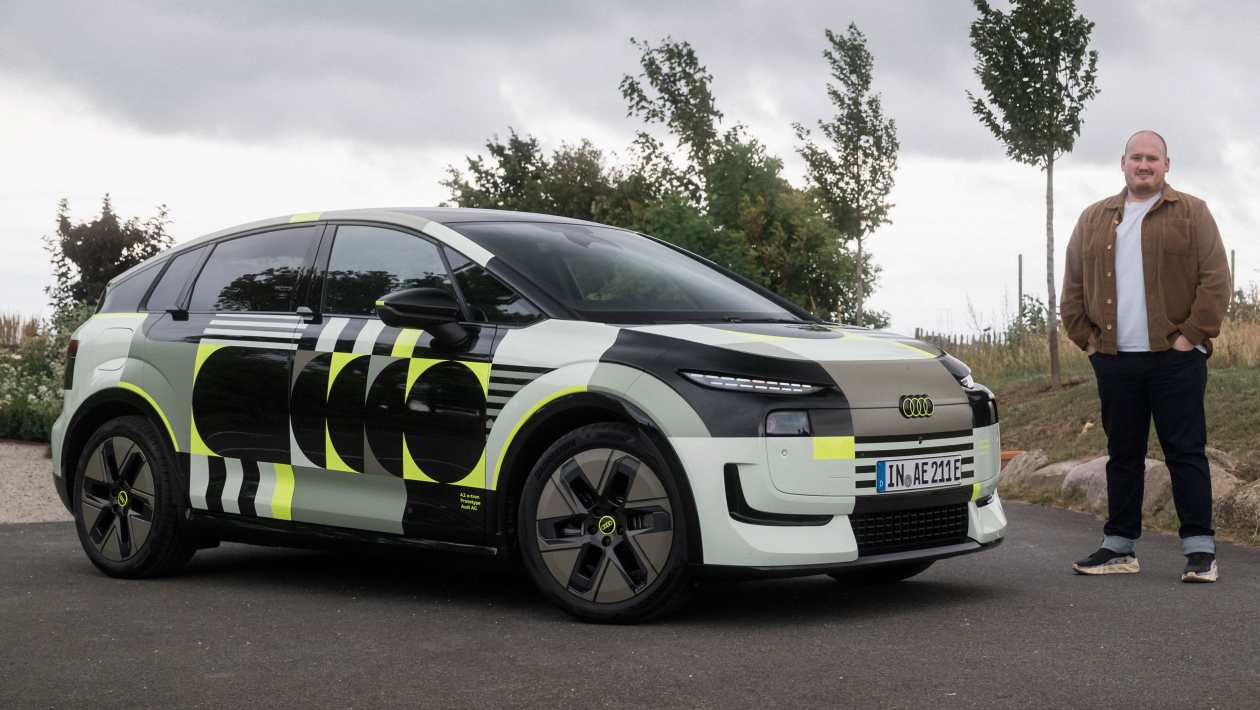
5.5 mi/kWh with the climate control on
On a test drive through rural Sweden, the A2 e-tron prototype returned 5.5 mi/kWh while the air-conditioning kept running and the driver didn't avoid the throttle. That works out to an estimated 315 miles of real-world range from the mid-tier 58kWh battery. Even when the driving was deliberately aggressive—full acceleration onto motorways, hustling through bends—the car still managed 4.9 mi/kWh. That's partly down to the low-drag body, low-rolling-resistance tyres, and a revised rear electric motor with a new gearbox. The same powertrain will appear in the upcoming Volkswagen ID.3 Neo, but Audi's aero work pushes the efficiency higher. The test route was smooth and nearly cornerless, so UK roads may not match those figures, but the numbers suggest the A2 e-tron will be one of the most frugal EVs in its class.
- Real-world economy5.5 mi/kWh
- Hard-driving economy4.9 mi/kWh
- Range estimate315 miles
A platform built for speed to market
The A2 e-tron rides on MEB+, a revised version of the architecture used by the Audi Q4 e-tron, VW ID.3, Cupra Born, Skoda Elroq and Ford Capri. Audi did not start with the intention of reviving the A2; project manager Michael Schurr said the team wanted an entry-level EV as quickly as possible. Normally a new Audi takes five years to develop, but this one arrived in just three-and-a-half because the MEB+ platform gave engineers a head start. They refined it with a new rear-mounted electric motor, a revised gearbox, and improved battery cooling, all aimed at efficiency. These changes will also benefit the upcoming Volkswagen ID.3 Neo. The quick development means the A2 e-tron reaches showrooms years before battery-powered versions of the Mercedes A-Class, BMW 1 Series, or Alfa Romeo Giulietta, all of which are known to be in the works.
- Development time3.5 years
- PlatformMEB+
- Project managerMichael Schurr
A drag coefficient lower than the original
The original A2 was famous for its streamlined shape, but the new e-tron takes it further with a drag coefficient of 0.24Cd, lower than the original's. To achieve that, Audi added active shutters in the front bumper, air curtains that guide airflow along the sides, and a Kammback-style tail that cuts drag by avoiding a rounded rear. The tail-lights take inspiration from the Audi Nuvolari supercar concept, and the tailgate keeps the extra glass panel below the spoiler that improves rear visibility when the roofline slopes heavily. The wheel designs are aero-optimised, and low-rolling-resistance tyres help in town. The result is a hatchback that looks retro-futuristic but with a modern twist. The trade-off is that the car can't be too slippery—Audi had to ensure four adults fit comfortably, so the design balances airflow with interior space.
- Drag coefficient0.24Cd
- Tailgate glassextra panel
- Design cueNuvolari
Digital Stage meets retro proportions
Inside, the A2 e-tron uses Audi's 'Digital Stage' layout, featuring a 12.8-inch touchscreen and an 11.9-inch driver's display mounted in a single curved housing, running Audi's new Android-based infotainment system. The dashboard design, steering wheel, indicator stalk and gear selector are shared with the new Q3. A few parts come from the VW ID.3, including the front quarterlight and a light bar across the dash. Despite the low, sloping roofline, six-foot adults had several inches of headroom in the back, with decent legroom. The prototype's materials included woven fabric on the doors and a matt finish on the plastics instead of the usual glossy black. The car feels narrow, but the slim control podium below the screen keeps the cabin uncluttered. This is a pre-production prototype, so final quality may improve, but the layout promises to be a step up from most small EVs.
- InteriorDigital Stage
- Screens12.8'+11.9'
- Headroom6-foot adults
Rear-wheel drive and a firm sport suspension
The A2 e-tron is rear-wheel drive, and on a smooth Swedish route it felt stable and composed at motorway speeds. The steering is quick and direct, with a pleasant weight to all controls. However, the prototype was fitted with sport suspension, which made the ride excessively firm—every bump was transmitted into the cabin as a thud, and the car bobbed on undulating surfaces. Road noise was also noticeable, more than in many EVs. On a tight corner, planting the throttle will make the rear end step out slightly, a playful trait that adds character. The mid-range version tested had enough punch to zip up to highway speeds, though Audi hasn't confirmed performance figures. The firm ride may be softened for production, but as tested, the A2 e-tron prioritises stability and feedback over comfort. It's a characterful, if not particularly quiet, companion.
- DrivetrainRWD
- Suspensionsport (prototype)
- Road noisepresent
Priced to undercut the Q4 e-tron by £15,000
The A2 e-tron is expected to start at around £35,000, which would place it just above the Volkswagen ID.3 Neo (from £31,580) and potentially eligible for the £1,500 government electric car grant. That would make it comparable to a petrol-powered Audi A3, and about £15,000 cheaper than the current entry-level Q4 e-tron. Audi is hoping to repeat the success of its best-selling electric SUVs by offering a more affordable hatchback. The car is due on sale in autumn 2026, beating battery-electric versions of the Mercedes A-Class, BMW 1 Series and Alfa Romeo Giulietta to market. While Audi hasn't confirmed final pricing, the aim is to make this the most accessible electric Audi without compromising on technology or design. The company says it has made no cuts to innovation, engineering or the materials that customers expect.
- Estimated price£35,000
- Price vs Q4 e-tron-£15,000
- Launchautumn 2026
10-80% in 26 minutes at 105kW
The A2 e-tron's specification sheet lists a maximum charging rate of 105kW, which means a 10-80% top-up takes 26 minutes. That's not the fastest in the class, but it's competitive for a small EV, and the efficiency means fewer stops. The mid-range version tested uses a 58kWh battery with a single rear motor producing 188bhp and 350Nm of torque. Audi estimates a 0-62mph time of 8.0 seconds, which feels quicker in practice thanks to the immediate response of the electric motor. The powertrain is shared with the ID.3 Neo, but Audi's revisions to the motor, gearbox and battery cooling are designed to improve efficiency. No official figures for the full range have been released, but these numbers give a clear picture of what to expect. Charging is via a CCS port, and the car supports the same fast-charging infrastructure as other VW Group EVs.
- Charging105kW
- 10-80%26 min
- Power188bhp
- 0-62mph8.0s (est)
From aluminium flop to efficiency icon
The original Audi A2 was a technical marvel—lightweight aluminium spaceframe, futuristic look, and astonishing fuel economy—but it was also expensive to buy and repair, and it became Audi's biggest commercial failure. The new A2 e-tron acknowledges that history, but takes a different route: instead of bespoke materials, it uses the proven MEB+ platform to control costs. The design brings back the distinctive tailgate glass and sloping roofline, but adds modern aero tricks like active shutters and a Kammback rear. Project manager Michael Schurr said Audi focused on what customers want today: efficiency without sacrificing usability for four people. The result is a car that aims to be genuinely efficient, practical, and attainable—less radical than its predecessor, but far more likely to succeed. The name is a deliberate homage to a car that was ahead of its time.
- Original A2biggest flop
- Constructionaluminium spacefra
- Heritageexplicit