9 Smart Car Features That Keep Seniors Driving Longer and Safer
From automatic braking to heated seats, these in-car technologies address the physical and cognitive changes that make driving harder with age.
Automatic Emergency Braking
The most direct safety net for older drivers is automatic emergency braking, often abbreviated AEB. Sensors mounted on the vehicle watch for an imminent collision and apply the brakes when the driver doesn't react in time. That matters for seniors whose reflexes have slowed or who get momentarily distracted in stop-and-go traffic. Some AEB systems also recognize pedestrians and cyclists, adding protection beyond other vehicles. The system does not require the driver to press the pedal; it acts on its own and can bring the car to a halt before contact. Because it addresses the most dangerous and least forgiving moment in driving — the need to stop suddenly — it belongs at the top of any shopping list for an older driver. No other feature in this list provides a physical intervention when the driver is unable to act.
- FeatureAutomatic emergency bra
- Why it helpsApplies brakes whe
Blind-Spot Monitoring
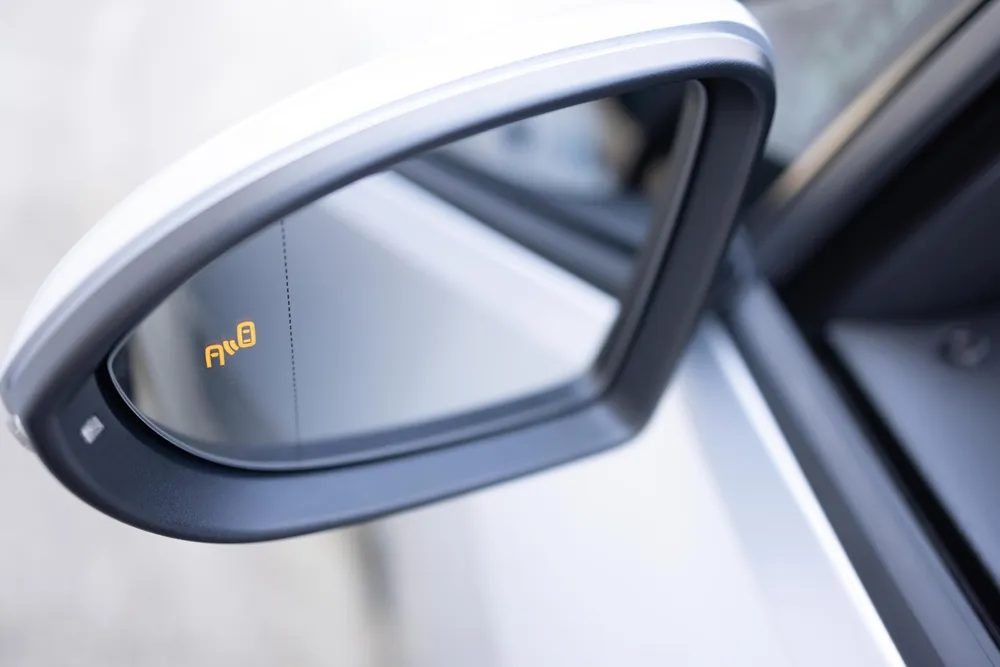
Sensors on the side mirrors track vehicles in the blind spot — the area a driver cannot see through standard mirrors. When a car is there, a light appears in the mirror, often with a sound. For seniors with reduced neck mobility or stiffness in the upper back, turning to check over the shoulder can be painful or incomplete. This feature essentially replaces that check. It is especially useful during highway lane changes, where small gaps and fast-moving traffic leave little room for error. The alert appears before the driver commits to the merge, giving them a second chance to cancel the maneuver. While it doesn't eliminate the need for a careful glance, it reduces the frequency of those head turns and makes the ones that remain less stressful.
- FeatureBlind-spot monitoring
- Why it helpsReduces need for p
Adaptive Cruise Control
Traditional cruise control holds a set speed; adaptive cruise control decides when to slow down. The system uses sensors to read the vehicle ahead, then matches its pace — braking when traffic slows and returning to the preset speed once the road clears. On long highway stretches or commuter routes, this removes the constant brake-and-accelerate cycle that tires the legs and attention. For retirees who still cover hundreds of miles for family visits or trips, ACC keeps a steady distance without the driver's foot hovering over the pedals. It also lowers the risk of rear-ending a slower vehicle when attention wanders. The feature does not replace steering, but it eliminates one repetitive task, and that reduction in workload can keep a senior driver sharper for the decisions that remain.
- FeatureAdaptive cruise control
- Why it helpsEliminates constan
Lane Departure Warning and Lane Keeping Assist
Drifting across a lane line without signaling is a common cause of crashes; lane departure warning exists to catch it. The system alerts the driver when the car crosses a boundary, and lane keeping assist goes further by gently steering it back. These tools are valuable at night and in poor weather, when faded lane markings or headlight glare make peripheral judgment harder. For seniors whose peripheral vision has narrowed, the alert acts as a second set of eyes during long drives when fatigue sets in. The correction is gentle, not a sharp yank, so it supports the driver rather than fighting for control. These features target a common accident type: the car that sideswipes another vehicle or runs off the road because the driver didn't notice the drift.
- FeatureLane departure warning
- Why it helpsProvides backup fo
Rear Cross-Traffic Alert
Backing out of a parking space is a blind spot in its own right; rear cross-traffic alert covers it. Sensors detect approaching vehicles while the car reverses and warn the driver — often before the car has moved far enough to see them. For seniors navigating crowded parking lots or driveways, this provides a warning at the exact moment when neck pain or limited flexibility would otherwise make a full turn to look painful. It works alongside blind-spot monitoring but specifically handles the reversing scenario, where a vehicle can approach from the side at an angle. The alert gives the driver time to stop, wait, and proceed once the path is clear. This feature turns a high-stress situation — backing out between large SUVs — into a more predictable one.
- FeatureRear cross-traffic aler
- Why it helpsWarns when reversi
Backup Cameras
Twisting around to reverse out of a driveway is painful for many seniors; backup cameras remove that need. A camera at the rear projects a view onto the dashboard or center screen, so the driver can see the area directly behind the bumper — space that side mirrors often miss. For those with arthritis in the neck or back, backing into a parking spot no longer requires a painful full-body rotation. The camera also makes parking easier by showing curbs, posts, and low obstacles that would otherwise be invisible. Every time the car is put in reverse, the driver gets a clear picture of what is actually behind them. This cuts strain from the most frequent low-speed maneuver and gives older drivers confidence in tight spaces where guessing used to be the only option.
- FeatureBackup camera
- Why it helpsEliminates twistin
Voice-Activated Controls
Phone calls and navigation adjustments are safer when they don't require a hand off the wheel; voice-activated controls make that possible. Instead of reaching for a touchscreen or phone, the driver speaks a command to make a call, enter an address, or adjust settings. For seniors who are less comfortable with new interfaces or who have arthritis in their hands, speaking is easier than tapping fields or turning knobs. The system keeps both hands at the wheel and eyes on the road, which reduces distraction in unfamiliar areas or heavy traffic. It also removes the need to memorize routes before leaving, because directions can be requested while driving. This feature is most helpful for drivers who otherwise would put off driving to unfamiliar places, since it lowers the mental load of getting there.
- FeatureVoice-activated control
- Why it helpsKeeps hands on the
Heads-Up Display
The distance between the dashboard and the windshield is a risk when eyes need time to refocus; a heads-up display closes it. Speed, navigation directions, and warning icons are projected onto the windshield, so the driver keeps their gaze forward instead of glancing down. For seniors whose eyes take longer to shift focus between near and far objects, this can be the difference between seeing a sudden stop in time and missing it. The display is particularly helpful at night, when looking down at a bright dashboard and then back to dark road forces the eyes to adapt twice. By keeping essential data in line with the road, it shortens the time attention is diverted. Navigation cues appear without the driver having to remember a sequence of turns or look away to check a phone.
- FeatureHeads-up display
- Why it helpsReduces eye refocu
Heated Steering Wheel and Seats
On winter mornings, a cold steering wheel can be more than unpleasant — it can stiffen the hands and make gripping harder. Heated steering wheels and seats provide direct comfort for seniors with arthritis or joint pain, keeping fingers limber and the body relaxed. A driver who is warm is less likely to be shifting position or clenching the wheel, both of which draw attention away from the road. The feature works quietly in the background, but its effect on control is tangible: comfortable hands maintain a steadier grip. For older drivers in colder climates, this can mean the difference between driving and staying home on a chilly day. It is not a safety sensor, but it supports the physical comfort that underlies every safe mile.
- FeatureHeated steering wheel a
- Why it helpsKeeps joints comfo