Ferrari CZ26 Recasts the SF90 as a Low-Slung Two-Box Statement
Ferrari’s Special Projects program turns the SF90 Stradale into a bespoke machine where sculptural design, aerodynamic detail, and collector-grade materials matter as much as outright speed.
A New Shape for Ferrari’s Familiar Hardware
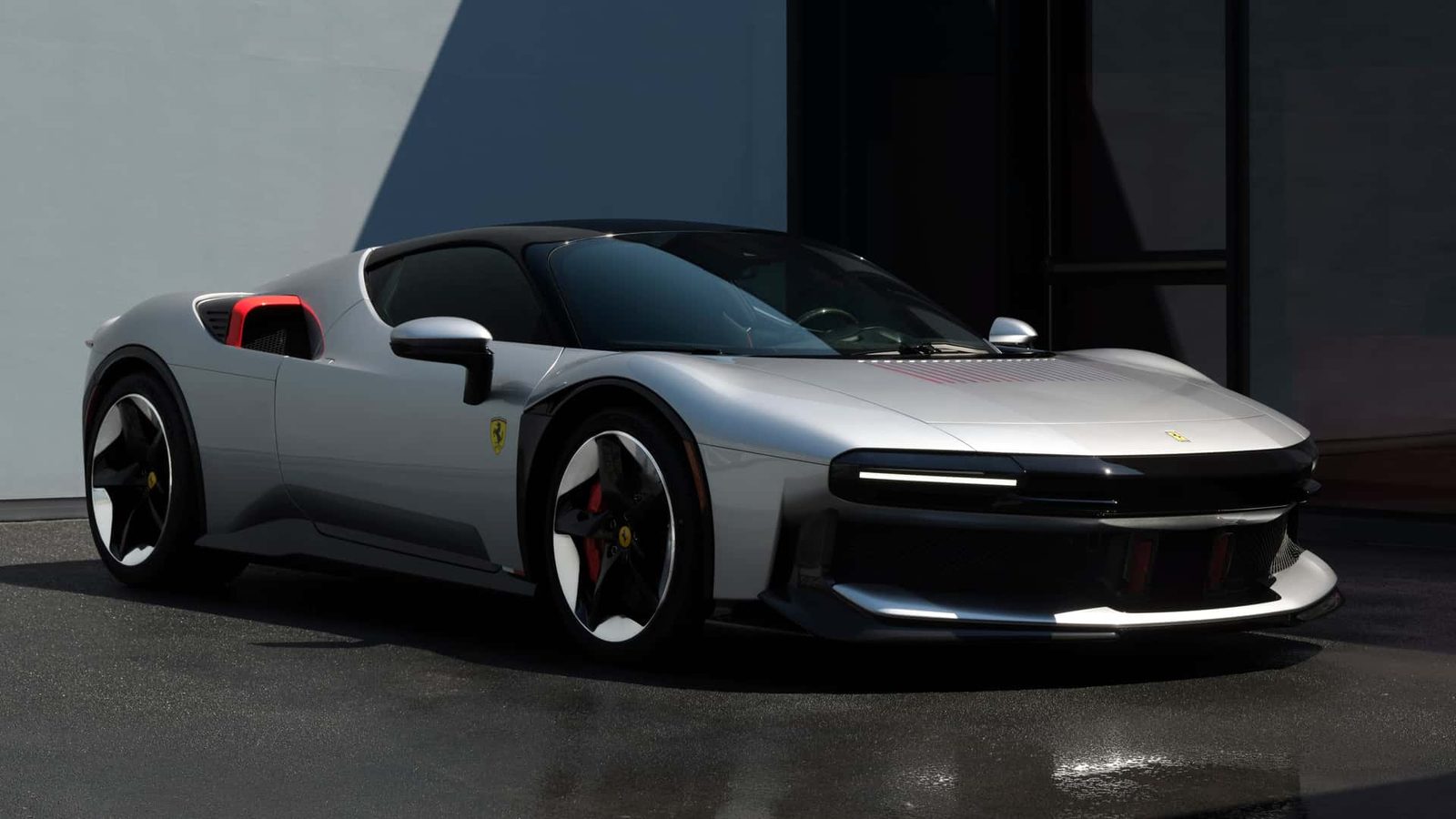
Ferrari unveiled the CZ26 in Monterey as a bespoke berlinetta for a single US buyer, but its significance lies beyond its production count. Developed through the Special Projects program, the car uses the SF90 Stradale as its mechanical foundation while abandoning the donor car’s familiar visual language. Ferrari Design Studio, led by Flavio Manzoni, shaped a new body around a low, horizontal stance and a central capsule volume framed by prominent wheel arches.
The result is neither a conventional shooting brake nor a lightly modified SF90. Its two-box profile gives the roof and rear volume a distinct presence, while the bodywork is engineered to make the car appear wider and closer to the ground. A near-vertical leading edge replaces the SF90’s more recognizable nose, and a full-width front grille conceals slim lighting, brake-cooling openings, sensors, and other hardware.
That separation between platform and appearance is the point. The CZ26 is a design-led Ferrari Special Projects commission, built to give its owner a singular shape rather than another variation on a showroom model.
The Aero Is Built Into the Silhouette
The CZ26’s most consequential changes sit where the body meets the air. Ferrari reworked the underbody and added vortex generators, air curtains at the outer sections of the front bumper, a new upper rear spoiler, and a wide diffuser. Together, those elements are intended to raise downforce without allowing drag to dominate the car’s high-speed character.
The nose uses its full-width grille as more than a styling signature. Brake-cooling intakes and concealed equipment are integrated into the frontal architecture, while the low front treatment directs attention toward the wheel arches. At the rear, cantilevered taillights sit above a truncated tail, giving the car a broad horizontal finish rather than the tapered look associated with many mid-engine supercars.
This is a more involved aerodynamic exercise than adding a larger wing. The vortex generators and underbody revisions work beneath the visible panels; the air curtains manage flow around the front corners; and the diffuser completes the low-pressure structure at the rear. Ferrari’s stated brief was a recognizable identity, and the aero package supplies the mechanism behind that identity.
SF90 Performance Remains Under the Skin
The plug-in hybrid powertrain remains familiar, preserving the CZ26’s connection to the SF90 Stradale. A twin-turbocharged 4.0-liter V8 produces 797 cv, or about 786 horsepower, while electric motors add a combined 162 kilowatts. A 7.9-kilowatt-hour battery supplies the electrical system, and the eight-speed dual-clutch gearbox sends power through the drivetrain.
Ferrari quotes a 25-kilometer electric-only range, equivalent to about 15.5 miles. That figure gives the CZ26 a short-distance electric capability, but the car’s defining performance comes from the combined system rather than battery operation alone.
The manufacturer lists a 0-to-100-kilometer-per-hour time of 2.5 seconds and a 0-to-200-kilometer-per-hour run of 6.7 seconds. Top speed is quoted at 328 kilometers per hour, or roughly 204 mph. Those numbers clarify the car’s position: the bespoke bodywork changes the visual and aerodynamic experience, while the underlying hybrid hardware keeps the CZ26 within the SF90’s performance envelope instead of turning it into a slower styling exercise.
The Chassis Details Define Its Road Reality
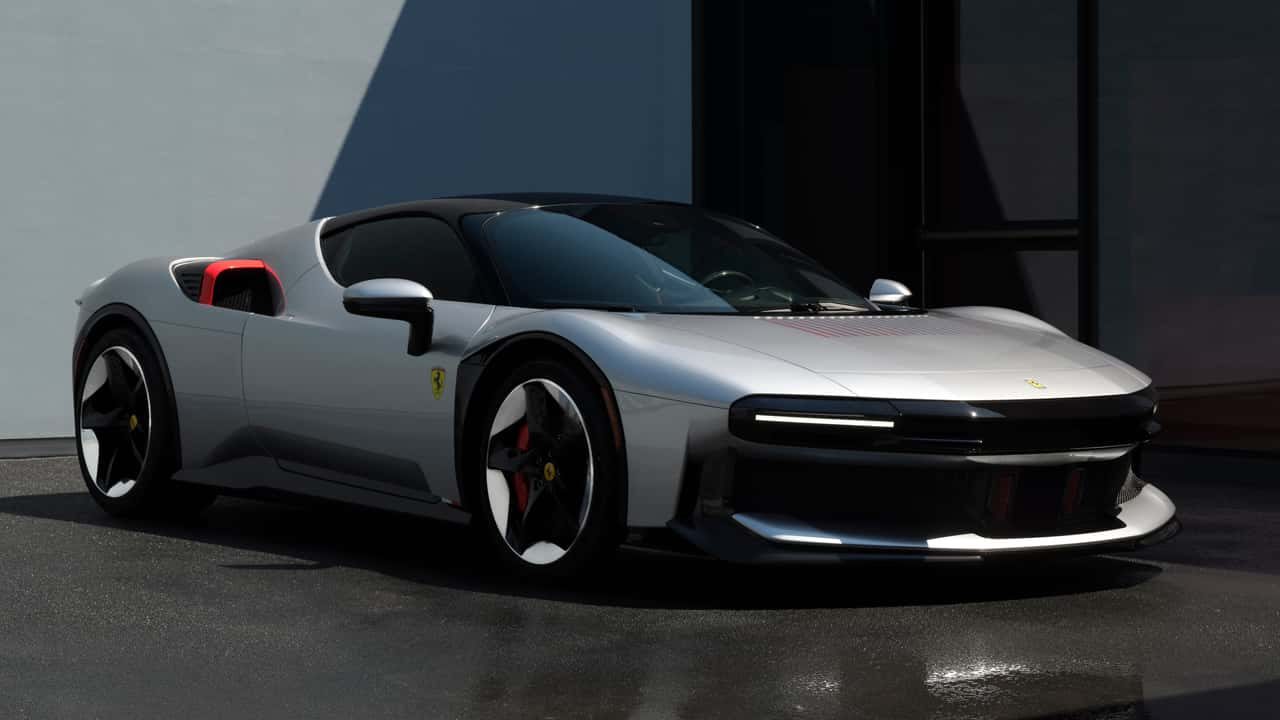
Ferrari lists the CZ26 at about 187.5 inches long, 79.0 inches wide, and 46.8 inches tall, with a 104.3-inch wheelbase. Those proportions create a long, low footprint, and the 45/55 front-to-rear weight distribution reflects the mid-engine architecture beneath the coachbuilt body.
The tire package is staggered: 255/35 rubber at the front and 315/30 at the rear, all mounted on 20-inch wheels. That arrangement places the larger contact patch at the driven end while preserving the visual emphasis on the rear haunches. For owners, these specifications matter more than the exterior finish when the car is being positioned, serviced, or prepared for road use.
Carbon-ceramic brakes provide the stopping hardware. Ferrari says the CZ26 can brake from 100 kilometers per hour in less than 96.8 feet. The combination of low height, substantial rear tire width, and high-performance braking makes the car’s engineering package coherent: its proportions are not merely decorative, and its bodywork is built around a chassis intended to operate at serious speed.
A Collector’s Cabin, Not a Parts-Bin Interior
The cabin receives the same bespoke treatment as the exterior. Black technical fabric forms the dominant surface, with 3D-printed seat inserts adding a patterned, sculptural element. Rosso Lampante details provide the contrast, while an embroidered CZ26 logo identifies the commission without relying on a conventional production trim badge.
Ferrari combines gloss carbon fiber with metallic filaments, satin carbon, and body-colored elements on the dashboard and doors. That mix gives the interior several distinct textures instead of covering every surface in a single material. It also reinforces the car’s central idea: the buyer commissioned a complete design statement, not simply a different shell over familiar mechanicals.
Argento Veloce silver paint supplies the exterior’s liquid-like finish. Rosso Lampante accents and pigmented carbon fiber draw visual lines across the wheel arches and aerodynamic pieces, making those components read as part of the body’s structure. The CZ26 was commissioned for a single US client through Ferrari’s Special Projects program.