Hyundai Creta Electric Buyback: What 60% Value After 3 Years Actually Means
The Creta Electric now comes with an assured buyback guarantee, but the numbers and competing offers tell a more complicated story.
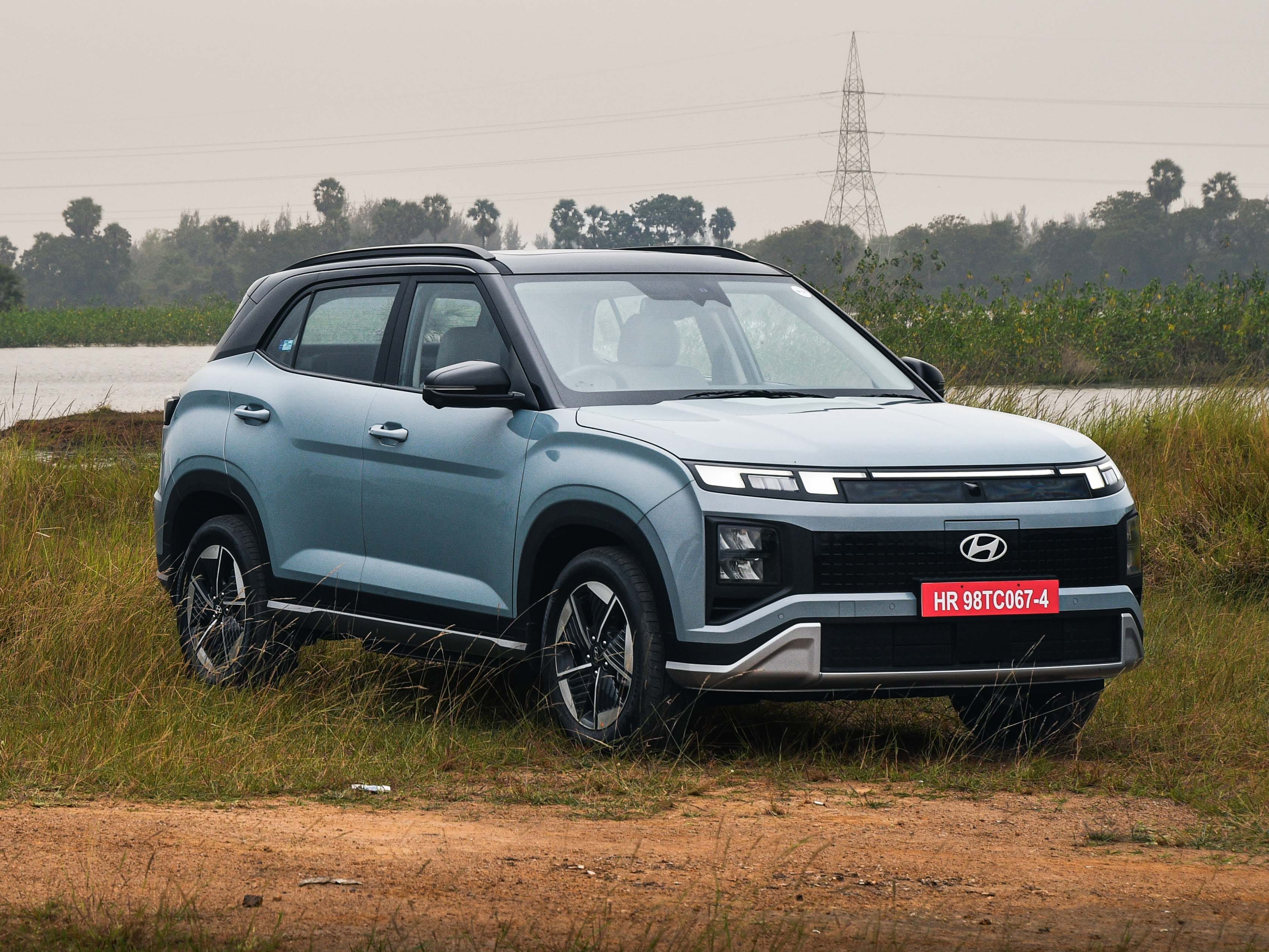
What does Hyundai's assured buyback programme guarantee for the Creta Electric?
Hyundai guarantees 60 percent of the Creta Electric's ex-showroom price as a buyback value, provided the vehicle is returned within 3 years or 45,000km, whichever comes first. This is not a lease; the customer owns the car and can choose whether to return it or keep it at term end. The guarantee removes the single biggest uncertainty for first-time EV buyers — residual value — by putting a floor under what the car will be worth. Standard terms and conditions apply, which means wear-and-tear assessments and mileage verification will factor into the final settlement. With the Creta Electric priced between Rs 18.03 lakh and Rs 23.67 lakh ex-showroom, the guaranteed return covers a substantial portion of the purchase price depending on variant. At the end of the term, the owner simply presents the car for inspection; if it meets the conditions, Hyundai pays out the guaranteed amount — no haggling with used-car dealers, no waiting for a private buyer. The programme effectively underwrites a resale outcome that the thin Indian used-EV market cannot yet deliver on its own. Hyundai is not alone in offering this: Vinfast, MG, Toyota, and Maruti run comparable buyback schemes on their electric SUVs, but Tata and Mahindra do not, so a buyer comparing across the segment will find protection in the minority.
How does Hyundai's Battery-as-a-Service scheme work?
Battery-as-a-Service (BaaS) lets a buyer purchase the Creta Electric without the battery pack, dropping the entry price to Rs 10.99 lakh instead of Rs 18.03 lakh. The battery is then paid for through a per-kilometre charge of Rs 3.9 for the 42kWh pack. The scheme decouples the vehicle cost from the most expensive component — the lithium-ion pack — and shifts the financial risk of battery degradation away from the owner. Hyundai retains ownership of the battery under this model, which means replacement or servicing of the pack falls on the company rather than the buyer. In practice, the buyer drives the car exactly as any other Creta Electric — same charging infrastructure, same performance — but pays for the battery in proportion to how much the car is actually driven rather than in a single lump sum at purchase. The cost scales linearly with distance. The scheme is currently offered only with the 42kWh battery. Higher-mileage drivers should calculate the break-even against the standard purchase, since the per-kilometre charge accumulates continuously with use and at high annual distances could eventually exceed what a financed outright purchase would have cost.
What range does the Creta Electric deliver on a full charge?
The Creta Electric offers two claimed ranges depending on the battery chosen: 420km for the 42kWh pack and 510km for the 51.4kWh long-range version. The 420km variant pairs with a 135hp front-axle motor, while the long-range version gets a 171hp unit. Both use lithium-ion chemistry. For a typical urban commuter, the 42kWh pack easily handles a week of city driving between charges. The long-range version suits buyers who regularly drive between cities or want a larger buffer against range anxiety. Charging the smaller pack from 10 to 100 percent on a 7.4kW AC home charger takes 6 hours; the larger pack takes 7.15 hours under the same conditions — both realistic overnight top-ups. DC fast charging at roughly 100kW takes either battery from 10 to 80 percent in 39 minutes, which makes highway stops practical. The top variant costs Rs 23.67 lakh ex-showroom, so buyers should weigh whether the extra range and additional power justify the premium, or whether the standard battery covers their actual daily driving patterns with room to spare.
How fast can the Creta Electric charge?
Using a 7.4kW AC wall charger — the kind installed at home or in office parking — the 42kWh Creta Electric goes from 10 to 100 percent in 6 hours, while the larger pack takes 7.15 hours. At a DC fast charger, the Creta Electric goes from 10 to 80 percent in 39 minutes, putting it alongside the Mahindra BE 6 and Tata Curvv EV on highway-stop duration. The practical implication: a home overnight charge covers daily use, while highway trips depend on the growing but still patchy DC fast-charging network. Hyundai has not disclosed whether the Creta Electric supports vehicle-to-load (V2L) or bidirectional charging. Buyers planning long routes should map DC charger availability along their regular corridors before committing to the EV over a hybrid or petrol Creta.
Which rival electric SUVs also offer buyback guarantees?
Among the Creta Electric's direct competitors, four others come with buyback or resale assurance schemes: the Vinfast VF6 (Rs 18.19 lakh–20.09 lakh), MG ZS EV (Rs 17.99 lakh–20.75 lakh), Toyota Ebella (Rs 23.60 lakh), and Maruti e Vitara (Rs 15.99 lakh–19.99 lakh). The Tata Sierra EV (Rs 18.79 lakh–26.48 lakh), Tata Curvv EV (Rs 16.99 lakh–19.19 lakh), and Mahindra BE 6 (Rs 18.90 lakh–26.90 lakh) do not offer such programmes. Hyundai's 60 percent over 3 years or 45,000km is a specific, published figure; the exact percentages and mileage caps for Vinfast, MG, Toyota, and Maruti schemes vary and should be compared directly. A buyer weighing two or three shortlisted models should request the written buyback terms from each dealer and compare the percentage offered, the time and distance limits, and the condition requirements side by side.
Is the Creta Electric's buyback value competitive with depreciation on petrol SUVs?
Hyundai's guaranteed buyback on the Creta Electric exceeds typical three-year retention for petrol midsize SUVs in India, effectively underwriting a better resale outcome than the used-car market delivers organically. The guarantee also eliminates the negotiation and uncertainty of private resale, which matters more for EVs because the used-EV market in India is still thin and pricing is opaque. Competitors such as the Vinfast VF6, MG ZS EV, Toyota Ebella, and Maruti e Vitara also offer buyback schemes, but the Tata Curvv EV and Mahindra BE 6 do not — so a buyer comparing across the segment will find Hyundai's programme places it in the minority offering residual-value protection. The programme runs for up to 3 years with a mileage cap, and high-mileage drivers could breach that limit before the term ends, potentially voiding the guarantee. A buyer who expects to drive well beyond that distance should factor the cap into the cost comparison against a petrol SUV, where no such mileage restriction typically applies to resale value.
What happens if I exceed 45,000km before three years?
Hyundai's assured buyback programme caps the guarantee at 3 years or a mileage limit, whichever comes first. Once a buyer crosses the mileage threshold, the buyback guarantee lapses at that point, regardless of how much time remains on the three-year window. The vehicle would then be valued at prevailing market rates, which for a used EV with high mileage could fall well below the guaranteed figure. Buyers who anticipate covering large distances should weigh the Battery-as-a-Service option instead, which charges Rs 3.9 per kilometre continuously with no explicit mileage cap on the buyback. Both paths require calculation against actual driving patterns: the assured buyback suits lower-mileage owners who want a guaranteed exit, while BaaS suits those who prioritise a lower entry price and accept the variable cost of use.