The 2026 BMW iX3's Neue Klasse Debut Mostly Impresses — but the Smart Money Goes Base
BMW's second-generation electric SUV brings 805km range, a 43-inch display and a 4.9-second sprint, yet the $89,900 iX3 40 might be the pick of the range.
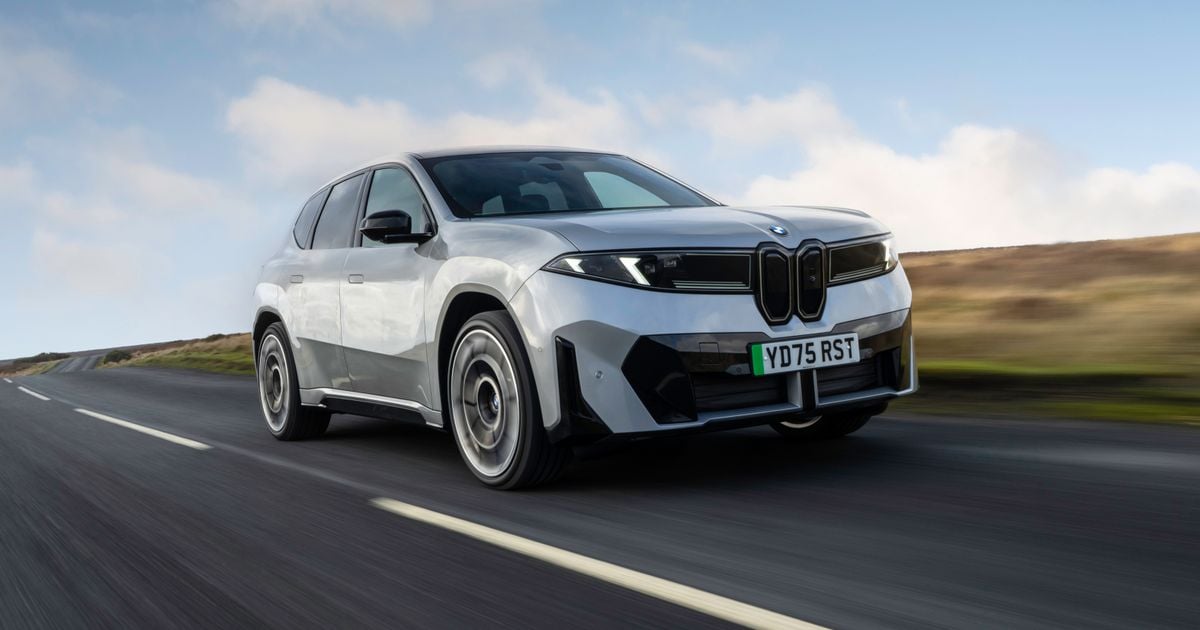
The range crown is its to lose
BMW claims 805km of WLTP range for the iX3 50 xDrive, powered by a 108.7kWh net battery pack using sixth-generation eDrive with cylindrical nickel manganese cobalt cells that deliver 20 per cent greater energy density than the previous generation's prismatic units. That figure towers over the Audi Q6 e-tron and Porsche Macan Electric, neither of which approach the iX3's headline number. The upcoming iX3 40, with its smaller 82.6kWh pack, still manages a claimed 635km — itself a strong showing for the segment. During a local launch drive covering roughly 200km on high-speed rural NSW roads, the 50 xDrive recorded 18.3kWh/100km. BMW also notes that each additional inch of wheel diameter costs roughly five per cent in range, and that aero-design wheel options recover 5-6km compared with non-aero equivalents — meaning the standard 20-inch setup is the one to pick if maximum distance between charges is the priority. For buyers who want that range without the 50's price, the iX3 40 arrives in Q4 2026 with 635km of claimed range from its 82.6kWh battery, covering the same equipment and design at a lower cost of entry.
A 43.3-inch display replaces the instrument cluster entirely
The Panoramic Vision display stretches 43.3 inches from A-pillar to A-pillar along the base of the windscreen, using three separate projection panels rather than a single screen. Speed, time, date, trip data and navigation prompts appear here, keeping the driver's gaze closer to the road. All Australian-delivered iX3s also come with a head-up display, and in practice the driver tends to rely on that rather than the Panoramic Vision panels — which means the system succeeds at its aim of not being distracting. A 17.9-inch central touchscreen running BMW Operating System X handles everything else, from climate to media. Its unusual shape and distinctive user interface avoid the tablet-stuck-to-the-dash look that plagues many modern cars, and an anchored shortcut bar along the bottom provides persistent access to climate controls. Physical buttons are almost entirely absent — just demisters, park brake, hazards and a volume wheel on the centre console. Below the screen sits an upright wireless phone charger and a pair of 45W USB-C outlets, positioned within easy reach rather than buried in a lower console shelf. The approach is a steep learning curve for buyers accustomed to knobs, but BMW argues the voice assistant and head-up display cover most needs. The removal of a traditional instrument cluster also means the only way to view a map is on the central touchscreen; turn-by-turn directions still appear in the head-up display, but a driver who wants a full map view has to glance sideways.
It hits 100km/h in 4.9 seconds and never feels its weight
The dual-motor 50 xDrive produces 345kW and 645Nm, launching to 100km/h in a claimed 4.9 seconds. Kerb weight sits at 2285kg, yet the rear-biased 49/51 weight distribution and default rear-drive torque split give it genuine corner-carving character. Drive is sent to the rear wheels under normal conditions, including when powering out of corners, with the front motor only engaging when necessary — and the distinction is felt from behind the wheel. The so-called Heart of Joy — one of four onboard superbrains — controls drivetrain, brakes, regen and steering, and BMW says it processes data up to 10 times faster than conventional control units. No air suspension or adaptive dampers are fitted, but ride comfort on 21-inch wheels proved surprisingly compliant over potholed NSW back roads. Body control is excellent, roll kept to a minimum in corners, and the iX3 still feels tied down on undulating surfaces. Steering has a natural amount of road feel and well-judged weight even in the default drive mode, rewarding the driver on a winding back road in a way few rivals match. Three levels of regenerative braking plus an adaptive mode are available, though toggling these requires touchscreen presses; pushing the shifter from D to B activates one-pedal mode, which can bring the vehicle to a halt. A Soft Stop feature uses regenerative braking to limit head jerking when coming to rest. Wind noise is minimal thanks to the 0.24Cd body, and tyre roar on coarse-chip surfaces is scarcely noticeable.
The drag coefficient matches some supercars
Aerodynamic work yields a 0.24Cd drag figure — better than the old i8 sports car's 0.26Cd, a comparison BMW makes explicitly to demonstrate its progress. The mechanism behind that number is a closed, smooth underbody, active grille shutters, air curtains and flush door handles that can pulsate back and forth to break free of ice — a feature unlikely to see much use in Australia but technically impressive all the same. All Australian cars wear M Sport or M Sport Pro styling, which arguably suits the design better than the base specification offered overseas. The slim double-kidney grille nods to the original Neue Klasse cars that helped save BMW, the flanks are smooth and the haunches muscular — the concept-to-production transition required remarkably few changes, and the result is more athletic-looking than the melted iX. The overall shape can't be mistaken for any other car on the road, not even the combustion X3 that sits alongside it in the showroom.
The $89,900 iX3 40 could be the smarter buy
Arriving in Q4 2026, the rear-drive iX3 40 costs $89,900 before on-road costs versus $109,900 for the 50 xDrive, while matching its equipment list exactly. Its 82.6kWh battery and single 235kW motor deliver 500Nm, a 5.9-second sprint to 100km/h and 635km of claimed WLTP range, with a kerb weight of 2085kg — 200kg lighter than the dual-motor 50. Maximum AC charge rate is 22kW and DC charging tops out at 300kW, compared with the 50's 400kW peak. Crucially, the 40's price slips under the current Luxury Car Tax threshold, qualifying for Fringe Benefits Tax exemptions that make it especially attractive on a novated lease. Customer deliveries of the 50 xDrive have already commenced; the 40 follows in the fourth quarter. Both share identical interior and exterior design, the same panoramic glass roof, the same 520-litre cargo capacity and 58-litre under-bonnet storage, and the same 4782mm length, 1895mm width and 1635mm height on a 2897mm wheelbase. For buyers who don't need all-wheel drive and want maximum value from BMW's new EV platform, the 40 represents the sharpest entry point in the range.
Five-star safety under ANCAP's toughest protocols yet
The iX3 was the first vehicle assessed under ANCAP's new 2026 testing regime and earned five stars overall: 86 per cent for crash protection, 83 per cent for crash avoidance, 71 per cent for safe-driving systems and 95 per cent for post-crash rescue. Standard kit includes autonomous emergency braking with pedestrian and cyclist detection, lane-keep assist, blind-spot monitoring and a surround-view camera. The sensor suite powering these systems comprises four short-range radar, one mid-range radar, five cameras and 12 ultrasonic sensors. Adaptive cruise with lane-centring activates via a steering wheel button, though braking alone won't disengage it — a behaviour that differs from most rivals, and one that requires the driver to learn a new habit. The Assisted Driving feature keeps the vehicle neatly within its lane once engaged, but pulling off the highway without pressing the button to deactivate it will see the car accelerate back to the set speed. The surround-view camera quality is excellent, though BMW has employed a reversing camera with a distorted, fish-eye-like effect. Child seats can be installed using one of three top-tether or two ISOFIX anchor points.

Servicing is condition-based, not calendar-based
Unlike combustion BMWs, the iX3 has no fixed service intervals — the car monitors its own condition and alerts the driver and dealership when attention is needed via connected services. Pre-paid Service Inclusive plans run $1614 for four years or $2420 for six, covering typical diagnostics. Stepping up to Service Inclusive Plus ($5535 for four years or $6615 for six) adds brake pads, discs and wiper blades. Vehicle warranty covers five years with unlimited kilometres; the battery warranty extends to eight years and 160,000km. Roadside assistance is included for three years. BMW has also introduced an Intelligent Charging Flap that can open the charge-port door automatically when approaching a charging point programmed into the navigation or saved to the vehicle's memory. It closes after a few seconds if no plug is inserted, and AI learning will allow the iX3 to determine other opportune moments to open the door — part of BMW's effort to reduce the friction of the charging process itself. The combination of condition-based servicing, long warranty coverage and the charging-flap intelligence points to a ownership experience designed around minimal owner intervention, though the lack of predetermined intervals means a buyer can't easily predict when bills will arrive outside the pre-paid plans.
M Sport Pro adds $3500 and a more traditional steering wheel
Every Australian iX3 ships with M Sport equipment; the optional M Sport Pro package costs $3500 including GST and LCT and brings a steering wheel with a more conventional four-spoke layout, in contrast to the standard M Sport wheel's four-spoke design featuring two vertical spokes. All three steering wheel designs available locally — plus a fourth base wheel offered overseas — feature BMW's ShyTech controls, where a button only appears when its function is contextually relevant: the Assisted Parking button at low speeds, the Assisted Driving button on the open road. The Enter key on the right-hand spoke is very narrow and sometimes requires a second push, a minor ergonomic stumble. Metallic paint adds $2000 including GST and LCT, BMW Individual frozen matte finishes cost $6000, and leather upholstery is a $4000 option. A Digital White BMW Individual steering wheel is available for $300. Twenty-one-inch wheel upgrades range from $2500 to $3200; 22-inch options climb to between $5300 and $7700, each size available with an aerodynamic variant that recovers 5-6km of range over the non-aero version. Trailer tow hitch preparation is available for $2500, though this excludes the tow bar tongue kit and power cable, which will be sold separately through dealerships at prices not yet announced. The iX3 also offers a choice of 10-way M Sport or 8-way Multifunctional front seats, both with memory, massage and heating, plus four interior colourways — black, Digital White, Agave Green and Castanea — across Veganza leatherette, optional PerformTex suede-like accents or extra-cost Merino leather.