The 3,710-HP Cummins That Had to Lose 200 Pounds Just to Run
Firepunk LLC turned a heavy diesel truck into a four-wheel-drive drag weapon, chasing a weight limit that forced a full teardown before a single pass.
A Weight Limit Dictates the Build
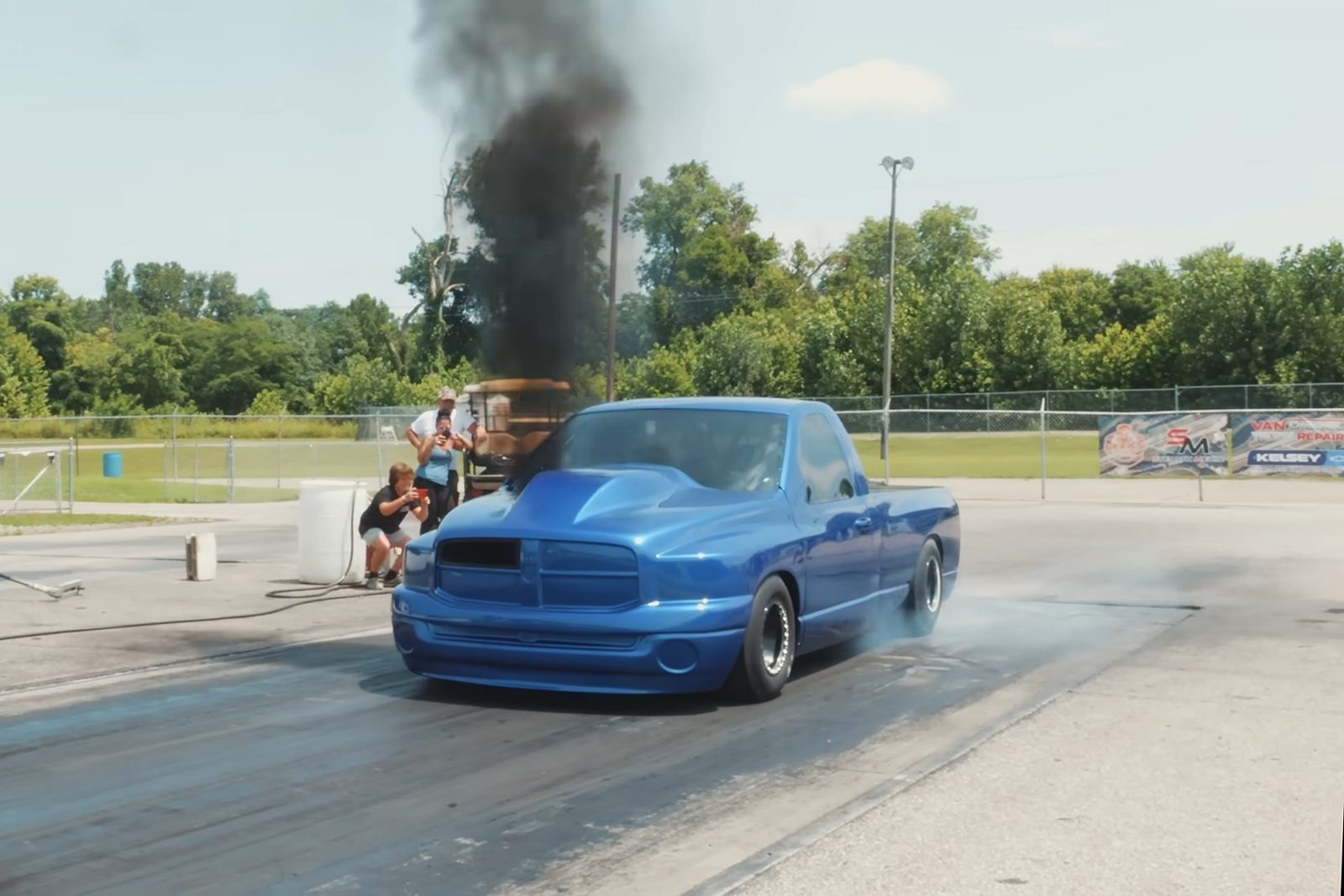
The specification was unforgiving: a 3,600-pound truck with a cast motor to run a 254 certification roll bar. For Firepunk LLC, building David Petrick's four-wheel-drive drag truck started not with adding power, but with subtracting mass. The crew discarded the existing cage in favor of a full 25.4-spec chassis, then went after the body itself. Removing the stock floorpan, firewall, and inner cab structure shed 200 pounds. That commitment to weight reduction created the foundation for everything else; the powertrain would be useless if the chassis couldn't meet the class rules.
Relocating the Drivetrain for Ground Clearance
With a target of 4.5 inches of ground clearance, the original layout was untenable. The front axle pumpkin and the transfer case both migrated to the passenger side, a move that altered the entire weight distribution of the truck. The need to enclose the front driveshaft led the fabricators to build a fireproof tunnel through the firewall. Out back, a Moser 9-inch rearend and a Firepunk Extreme four-link setup were installed to handle the torque. The effort to get the truck low enough for the track shaped the entire chassis architecture, not just the suspension.
Electronics and a 3,710-Horsepower Verification
Before the first track outing, the truck received a MoTeC system to manage the air shifter, transbrake, and fuel parameters. The wiring included a Reverse gear switch connected to a rear camera, a detail that allowed the transbrake to lock automatically during burnouts. The crew then took the vehicle to the S&S hub dyno to verify all systems under load. The result was a verified 3,710 horsepower during the pulls, a staggering number that had to be managed carefully to get the truck down the track.
Testing at Edgewater Motorsports Park
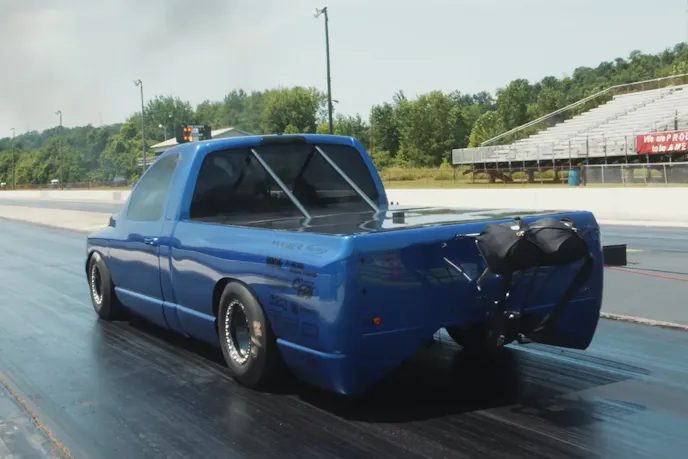
The first test session at Edgewater Motorsports Park was less about setting records and more about learning how to transfer power to the pavement. The initial launches spun the tires, so the crew pulled power out of the early launch strategy. Miller noted, "There's no point in running power out the back until it goes fast early." Across eight passes, the driver began to log consecutive 1.15-second 60-foot times. The day ended with a 6.05-second pass despite a broken clock cap, but the data gathered was the real prize.
The Data Behind the Passes
After pulling power from the early launch to eliminate tire spin, the truck ran eight passes, logging consecutive 1.15-second 60-foot times. A broken clock cap ended the session, but not before a 6.05-second pass. The team compared those results with the earlier hub dyno pulls to calibrate the MoTeC-controlled fuel and shift settings.