406.320 MPH on Hydrogen: The Record, the Driver, and the FIA's Verdict
Andy Green piloted the JCB Hydromax to a two-run hydrogen speed record—now the FIA weighs in on what it means for sustainable motorsport.
The Record: 406.320 mph Over Two Runs
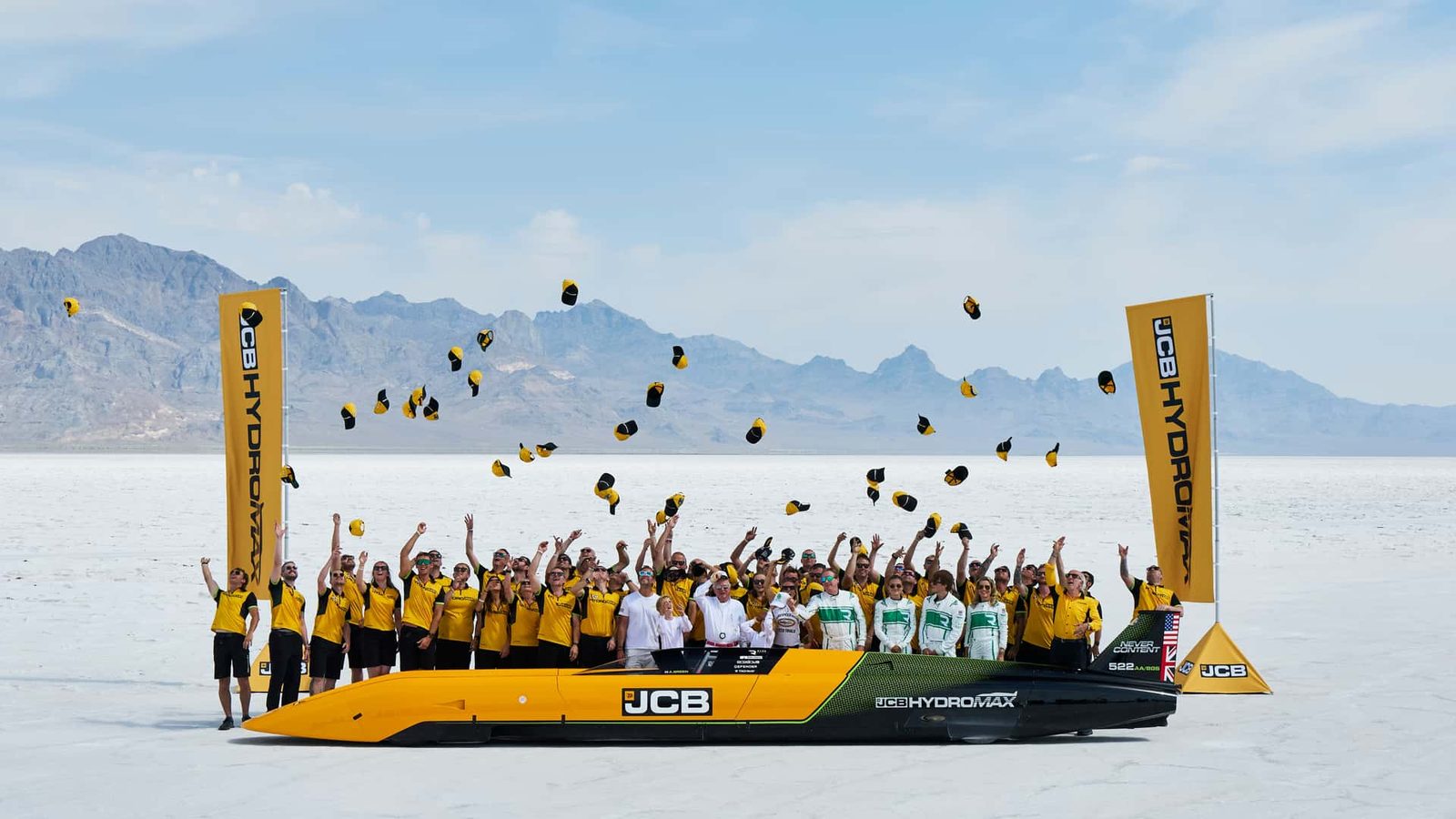
Wing Commander Andy Green piloted the JCB Hydromax across the Bonneville Salt Flats to a two-run average of 406.320 mph, officially making it the fastest hydrogen-powered vehicle in history. The first pass clocked 400.623 mph, and the second improved to 412.135 mph, both completed within an hour of each other. That average toppled every existing hydrogen speed mark regardless of powertrain type. For context, the prior hydrogen internal-combustion record was 185.5 mph, set by the BMW H2R back in 2004. The fastest hydrogen fuel-cell car had reached 303 mph. Green's two runs also satisfied the FIA's requirement for a recognized land speed record, which demands a return run in the opposite direction within a set time window. The Hydromax now holds the outright hydrogen land speed record, a title previously scattered across different fuel-cell and combustion entries.
- Speed406.320 mph
- RecordsTwo-run average
- DriverAndy Green
Emissions: 18 Liters of Water, Zero CO2
Burning hydrogen in an internal combustion engine produces water as the primary byproduct because the fuel contains no carbon. Over the two record runs, the Hydromax emitted 18 liters of liquid water, which is the direct result of combusting two kilograms of hydrogen. The only other notable emission is nitrous oxide, which forms when nitrogen in the air reacts at high combustion temperatures; this gas is a primary driver of smog. In practice, the Hydromax's exhaust is mostly water vapor, with a slight amount of NOₓ. This contrasts sharply with gasoline or diesel, which release carbon dioxide. For a reader assessing the environmental impact, the key numbers are: 2 kg H₂ in, 18 liters of H₂O out, and no CO₂. The nitrous oxide remains a pollutant, but the absence of carbon makes hydrogen combustion a potentially cleaner alternative for high-performance applications. The water produced is the result of the stoichiometric reaction 2H₂ + O₂ → 2H₂O, illustrating the simple chemistry behind the record.
- Emissions18 L water
- FuelHydrogen
- CO2Zero
The Old Records
Before the JCB Hydromax, hydrogen-powered speed records were remarkably low. The previous benchmark for a hydrogen internal combustion engine was the BMW H2R, which hit 185.5 mph in 2004. The fastest hydrogen fuel-cell vehicle had managed 303 mph, meaning no hydrogen machine of any kind had ever exceeded 303 mph. The Hydromax changed that in dramatic fashion. On the Bonneville Salt Flats, it made two passes within an hour: the first at 400.623 mph, the second at 412.135 mph. The average of those runs, 406.320 mph, sits far above both previous records. This wasn't a marginal improvement; it was a generational leap. The specific records show that hydrogen internal combustion, previously slower than fuel cells, has now surpassed them by a significant margin, while the BMW H2R's 185.5 mph from 2004 is left far behind. The Hydromax's average defines the new benchmark, with the two separate passes demonstrating the repeatability of its performance.
- RecordsBMW H2R 185.5 mph
- RecordsFuel cell 303 mph
- Benchmark406.320 mph
The Driver: Andy Green
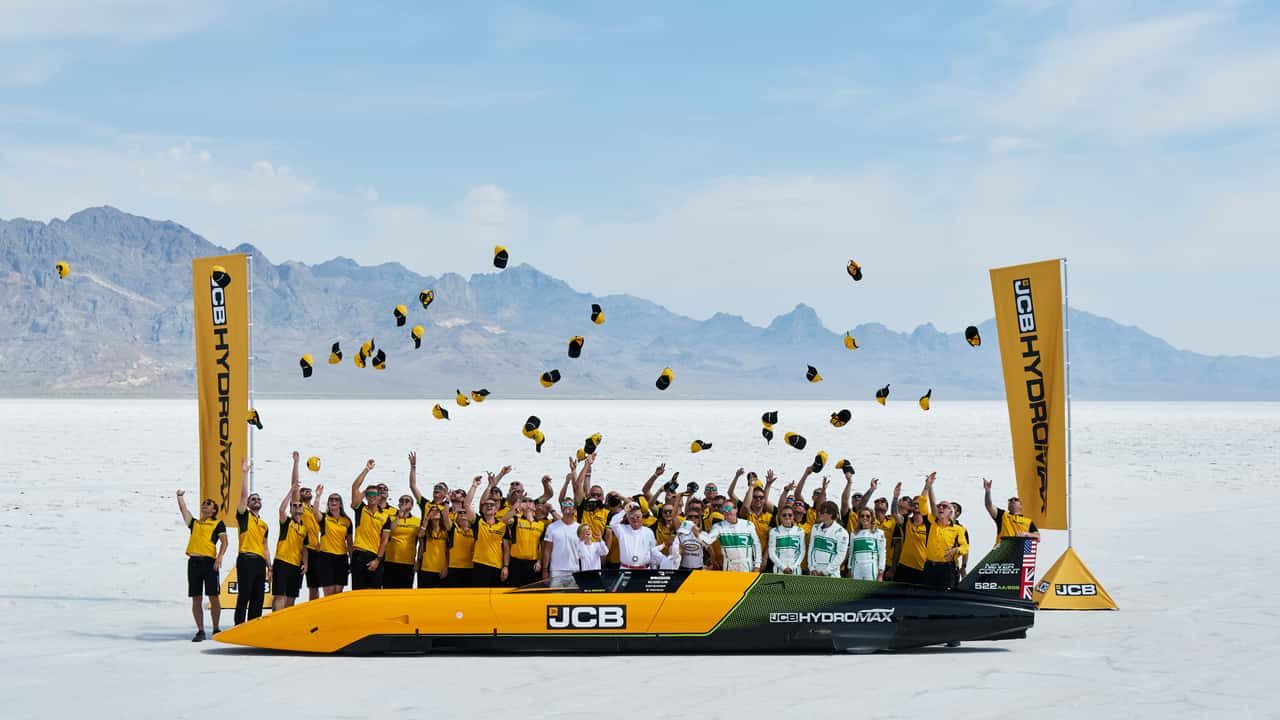
Wing Commander Andy Green, the holder of the all-time land speed record at 763.035 mph, was at the wheel for the Hydromax's record run. That existing record, achieved on land, made him the most qualified driver for any vehicle attempting extreme velocity. His role in this project is not merely ceremonial; he executed the two required passes, ensuring the car remained stable across both runs. Green's ability to manage the immense forces and split-second decisions at high speed was critical to the success of the hydrogen-powered machine. By taking on this challenge, he has extended his legacy beyond conventional powertrains, proving that his skill is not tied to a single technology. The new record, while lower than his own, adds a different dimension to his career, one that highlights the potential of hydrogen combustion. His participation lends the achievement a level of credibility that few other drivers could provide.
- DriverAndy Green
- Pilot record763.035 mph
- ExperienceThrust SSC
What the FIA Says: A Catalyst for Sustainable Motorsport
FIA President Mohammed Ben Sulayem hailed the run as a milestone for hydrogen combustion in motorsport. “Motorsport has always been a catalyst for technological progress pushing the boundaries of what is possible,” he said after the record was certified. “This new land speed record continues this tradition, showcasing the potential of hydrogen combustion for the future of sustainable mobility.” The statement carries weight because the FIA is the governing body for land speed records and most global racing series. Ben Sulayem's explicit endorsement signals that hydrogen internal-combustion engines could gain regulatory support in future championships, just as hybrid and electric powertrains have been integrated over the past decade. For now, the Hydromax's record provides a concrete data point: hydrogen combustion can deliver extreme performance without tailpipe CO₂, a trait that aligns with emerging sustainability mandates in endurance racing and rally.
- IndustryFIA endorsement
- QuoteMohammed Ben Sulayem
- FutureHydrogen combustion
The Auto Industry's Hydrogen Racer: Toyota's TRD Corolla H2
Toyota is already racing hydrogen internal-combustion vehicles, and the Hydromax's record may accelerate those efforts. The company currently fields a liquid-hydrogen-powered GR Corolla H2, which competes using hydrogen directly in an internal combustion engine. Toyota has also unveiled the GR LH2 Racing Concept, a Le Mans-style hypercar designed for the hydrogen era. Unlike fuel-cell vehicles, these cars burn hydrogen, producing water as the primary emission. The Hydromax, using two separate hydrogen engines, has now set a new benchmark for the technology, proving that combustion can reach speeds previously reserved for other fuels. For Toyota, this independent validation supports its continued investment in hydrogen motorsport. The GR Corolla H2 already demonstrates the practical use of liquid hydrogen, while the GR LH2 Racing Concept points to future endurance racing possibilities. The combination of Toyota's ongoing program and the Hydromax's record suggests that hydrogen combustion is a viable path for high-performance racing, with no CO2 and only minimal nitrous oxide emissions. As more teams observe the success of these vehicles, the appeal of hydrogen as a sustainable racing fuel is likely to grow.
- ProgramsToyota GR Corolla H2
- ProgramsGR LH2 Racing Concept
- SeriesSuper Taikyu