6 Reasons NASCAR Shouldn't Shorten Its Cup Races
IndyCar champion Scott Dixon says NASCAR races are long enough for a nap. The case against cutting them is longer than you'd think.
Three crown-jewel races have held their distances for decades — and earned it
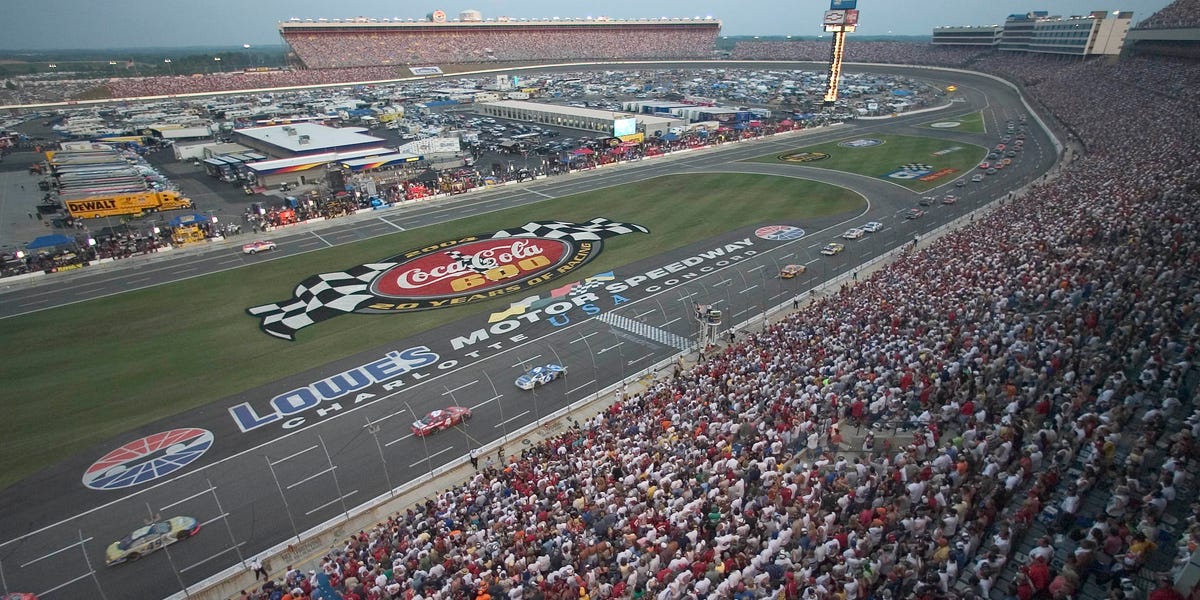
The Daytona 500 (first run 1959), the Coca-Cola 600 (1960), and the Southern 500 (1950) form the sport's triple crown. The Southern 500 is the oldest Cup event on a paved oval longer than a mile. Charlotte Motor Speedway founder Bruton Smith stretched the 600 to 600 miles specifically to outshine the Indianapolis 500. Cutting any of the three would erase distances that have defined stock car racing's identity for more than six decades. The choice NASCAR faces is concrete: shorten the schedule's most historic events to match how some fans now consume sports on screens, or preserve the distances that built the sport's identity. Pocono and Dover were both trimmed from 500 to 400 miles without significant backlash, but those races lacked the historical weight of the crown jewels. The Daytona 500, Coca-Cola 600, and Southern 500 carry a different status — their distances are not arbitrary but earned through decades of tradition, prestige, and the specific role each race plays in the sport's identity.
Larson's sprint-car frame of reference doesn't map onto Cup racing
Defending Cup Series champion Kyle Larson argued that three-hour races are too long, pointing to his sprint-car roots where heat races run eight to 12 laps and features range from 25 to 50 laps. But Cup racing is not sprint-car racing. The longer format is what allows strategy — tire management, fuel windows, pit-call gambles — to separate drivers over distance. A sprint feature rewards raw speed in a single burst; a 400-mile Cup race rewards a team's ability to adapt across changing track conditions, tire wear, and late-race cautions. Larson's preference reflects the discipline he grew up in, not a flaw in the one he now competes in. The distinction matters because it reveals what is actually at stake in the debate: NASCAR's length is not a bug but the mechanism that makes the product different from what sprint-car and short-track formats already deliver. Shorten Cup races to match Larson's reference point and the strategic layer that defines the series thins to match something that already exists elsewhere.
In-person fans drive hours to attend — and expect more than two hours of racing
NASCAR's core audience does not watch from a couch. Many drive three, four, even six hours to reach a track, spend money on tickets, parking, food, and merchandise, and camp for the weekend. A race that clocks in under three hours leaves that audience feeling shortchanged. The Pocono and Dover races were both cut, and longtime journalist Deb Williams — who has covered the sport for four decades and was inducted into the NMPA Hall of Fame in 2024 — wrote that even after adjusting to those shorter events, she still would not pay to attend a sub-three-hour race. The economics are straightforward: a fan who invests a full day of travel and several hundred dollars in a weekend expects a corresponding return in on-track action. Shorten the races and that equation breaks — not for the viewer toggling between apps, but for the person sitting in the grandstands after a six-hour drive. NASCAR cannot ignore the spending patterns of its most loyal customers in pursuit of an audience that may never buy a ticket.
The distance threshold once determined whether a race got national newspaper coverage
In stock car racing's earliest decades, daily newspapers covered only the longest races unless the event fell within their circulation area. Motorsports publications were the primary way fans learned results — television coverage was minimal, with highlights occasionally appearing on ABC's Wide World of Sports. That history baked the longest distances into the sport's DNA. Races shorter than that mark were treated as regional affairs. The effect was self-reinforcing: the most prestigious races got the most coverage, which made them more prestigious, which justified their length. Shortening marquee events today would sever a link to an era when distance was the single clearest signal that a race mattered nationally. The 1965 Southern 500, where Ned Jarrett won by 14 laps, may have been boring — but it was covered because it met the threshold. The threshold itself is what gave the sport its national footprint.
Dixon's nap joke came weeks before he joined a Cup ownership group
Six-time IndyCar champion Scott Dixon quipped that NASCAR races were long enough for a nap. Defending Cup Series champion Kyle Larson agreed the events were too long, especially given the various ways people now consume sports. Less than two weeks after Dixon's remark, it was announced that Dixon had joined the ownership program of Legacy Motor Club, the team co-owned by seven-time Cup champion Jimmie Johnson. The timing undercut Dixon's own argument: if Cup race lengths were truly a problem, aligning his name and capital with a team competing in those events would be an odd business decision. The investment suggests the comment was casual opinion rather than informed critique — the kind of remark a driver makes when asked about a rival series, not a considered assessment of the product he just bought into. Dixon now has a financial stake in the very format he dismissed.
Shorter races risk turning Cup events into the instant-gratification product critics already complain about
Williams argued that races under three hours amount to instant gratification — the very thing she says today's sports culture already overproduces. The Cup Series' longer format is what lets storylines develop: a driver who fades early can adjust and win; a crew chief's mid-race gamble can reshape the finish. Collapse that into a shorter sprint and the strategic layer thins to match what sprint-car and short-track formats already deliver. NASCAR's length is its differentiator — the thing that separates it from the dozens of shorter motorsports products available on any given weekend. The debate is not whether shorter races are more convenient for viewers; they obviously are. The question is whether convenience is what NASCAR should be optimizing for, or whether the sport's value lies precisely in the patience and investment it demands. Trimming the schedule risks flattening the product into something no one needs a four-hour window to watch — and no one remembers the next day.