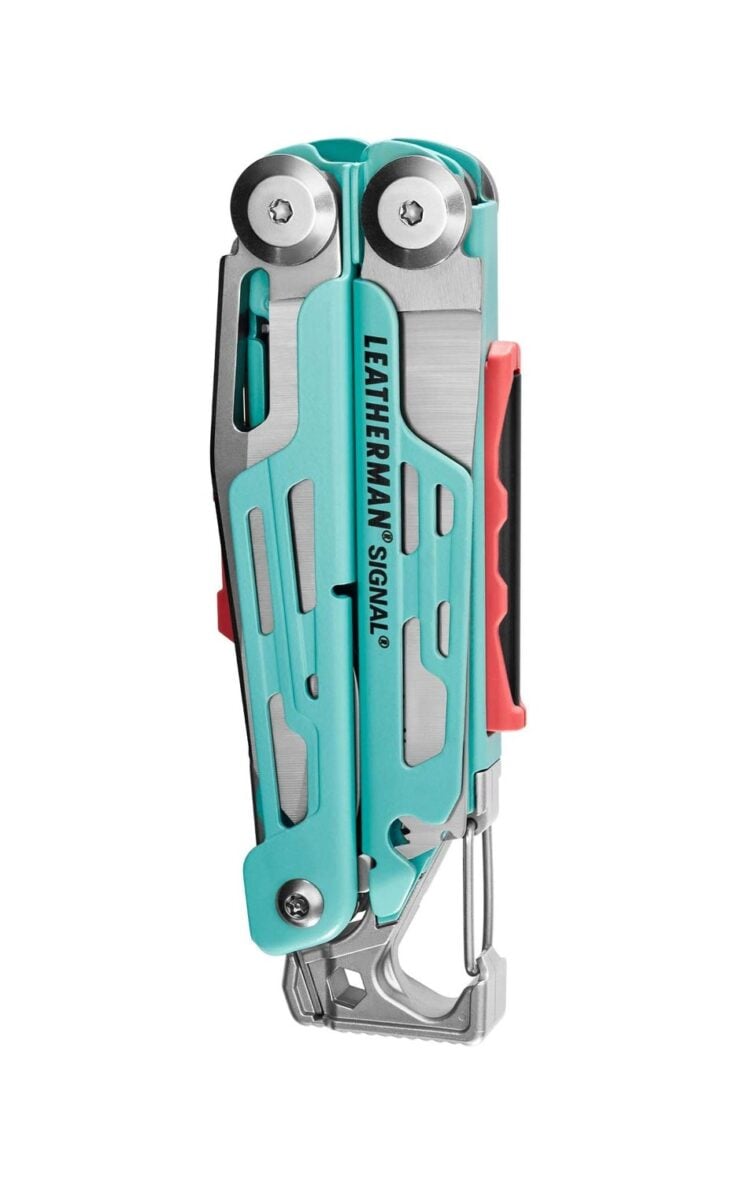
7 Reasons the Leatherman Signal Is Built for the Backcountry, Not the Workbench
From a 3,315°C fire starter to a hammer forged into the frame, this Oregon-made multitool's design choices are all about wilderness survival.
Strike the Saw Spine and Get 3,315°C Sparks
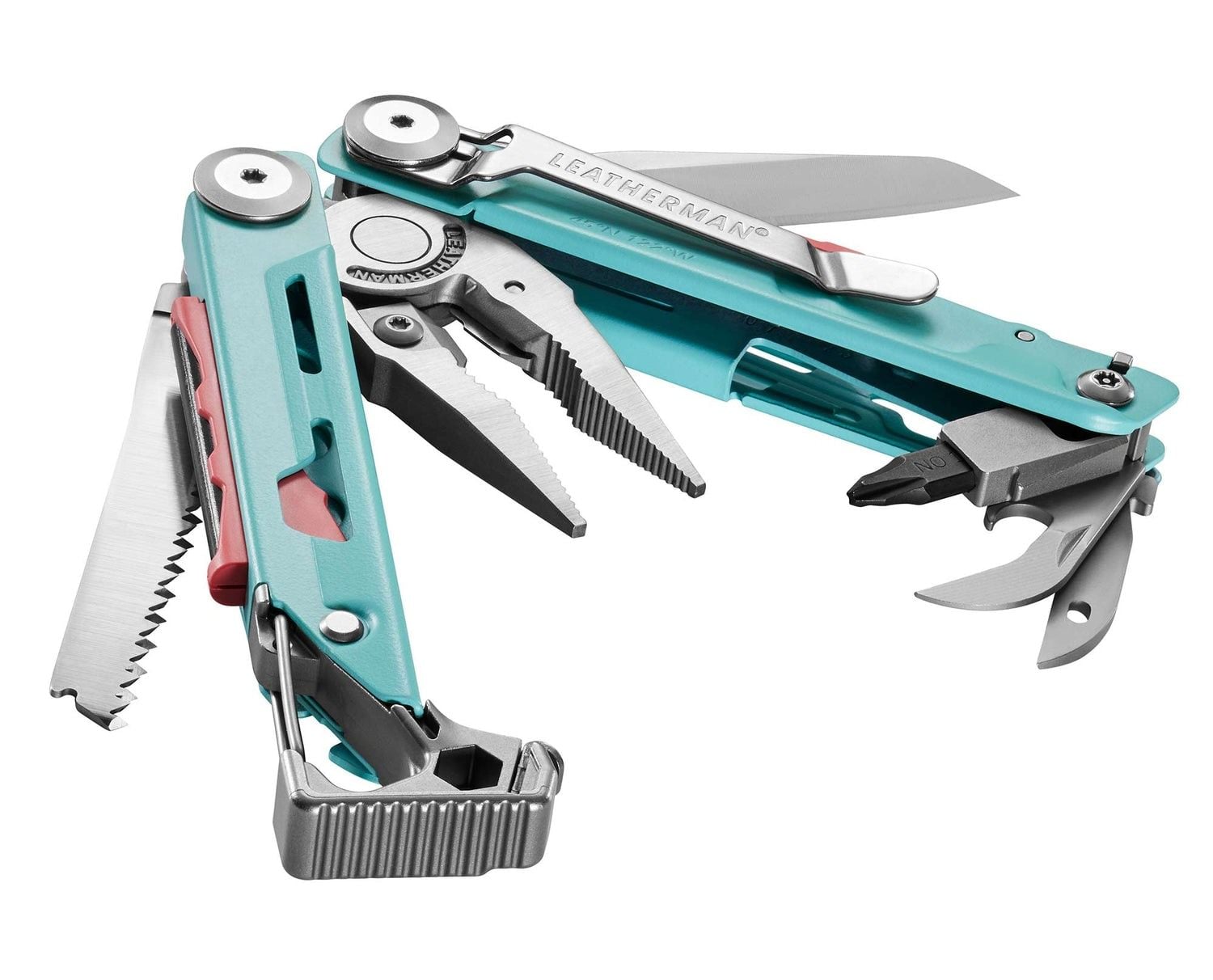
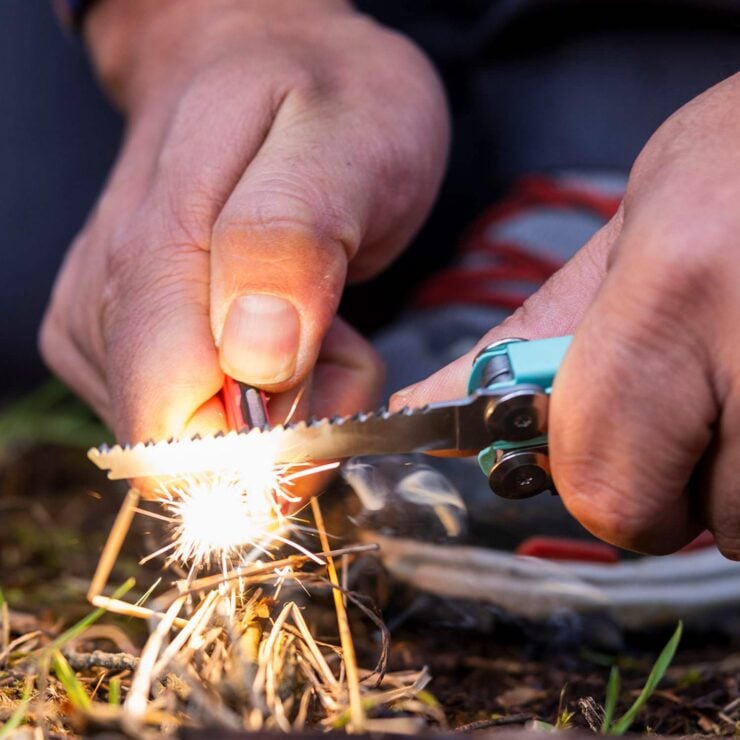
The Signal's most unusual trick is a removable ferrocerium rod — a pyrophoric alloy that throws sparks up to 3,315°C (6,000°F) when scraped along the spine of the saw. That temperature ignites tinder whether it's raining, snowing, or bone-dry, and a single rod typically survives thousands of strikes before needing replacement. Leatherman calls this the first compact multitool with a built-in ferro rod, and it's not a gimmick: the rod slides out of its housing, and the saw's back edge doubles as the striker, so you lose no space to a separate fire steel. The housing also nests a safety whistle, which means signaling and fire-starting share one footprint. For a campfire in a downpour, this beats fumbling with matches — and the rod is replaceable when it eventually burns out.
- Temperature3315°C
- Strike CountThousands
- FeatureFerro rod
From a Cranky Fiat to a 10-Million-Selling PST
Tim Leatherman graduated from Oregon State University in 1970 with a mechanical engineering degree. Five years later, a budget trip through Europe in a broken-down Fiat and with leaky hotel plumbing left him wishing his scout knife had pliers. That frustration became a three-year prototype marathon, and in December 1980 he received US patent 4,238,862 for plier jaws that fold into channel-shaped handles. Knife companies called it a tool; tool companies called it a gadget. After three and a half years of rejection letters, he partnered with college friend Steve Berliner, and in spring 1983 Cabela's ordered 500 units of the first 'Pocket Survival Tool.' The PST stayed in production until 2004, with an estimated 10 million sold. The Signal exists because that original survival-tool concept refused to die.
- PatentUS 4,238,862
- Year1983
- Sales~10 million
19 Tools Counted, From Needlenose Pliers to Box Wrenches
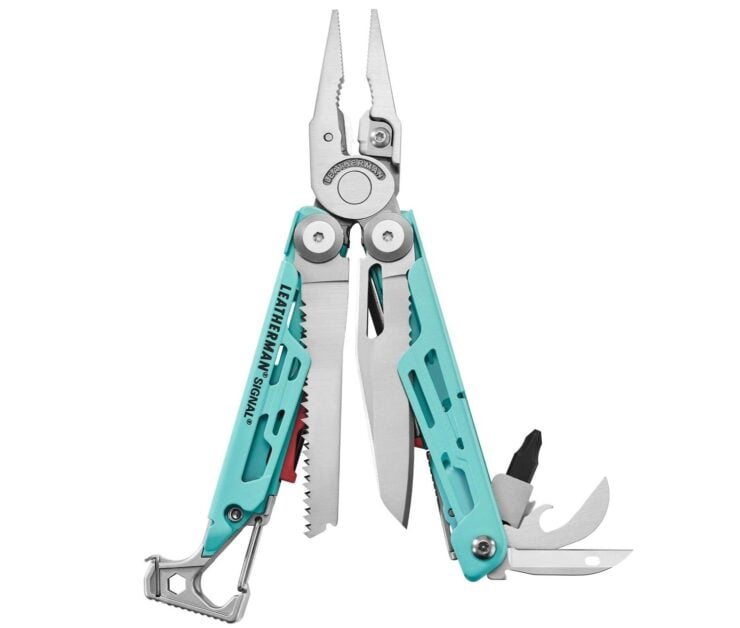
The Signal packs 19 distinct functions, but the tool roster goes far beyond the usual Leatherman lineup. You get needlenose pliers and regular pliers, plus replaceable wire and hard-wire cutter inserts and a wire stripper. The 2.73-inch 420HC combo blade splits into straight and serrated sections, and there's a saw, an awl, can and bottle openers, a 1/4-inch hex driver, a large bit driver, and both 1/4-inch and 3/16-inch box wrenches. A carabiner clips the whole thing to a pack strap. Every tool except the plier head locks in place, a safety detail that matters when you're using the awl to dig splinters or the saw to cut branches overhead. The one-hand blade deployment via thumb hole means you can get to the knife without unfolding the handles first — a design idea borrowed from the company's own bestselling Wave.
- Tool Count19
- Blade Length2.73 in
- LockingAll except pliers
A Hammer on the Frame, a Diamond-Coat Sharpener, and a Whistle in the Rod Housing
Beyond the ferro rod, the Signal's frame itself becomes a tool: the butt of the handle is a hammer surface, good for tapping tent stakes or persuading a stuck zipper. There's also a diamond-coated sharpener built into the body, so you can restore an edge on the 420HC blade without carrying a separate stone. The safety whistle lives in the same housing as the ferro rod, which saves space and keeps two survival essentials in one spot. These three additions — hammer, sharpener, whistle — are what make the Signal a backcountry instrument rather than a garage companion. The hammer is a simple flat surface, but it's one you won't find on any other Leatherman model, and the sharpener's diamond coating handles both straight and serrated edges with a few passes.
- FeaturesHammer, sharpener, whi
Compact and Durable Construction
At 4.5 inches closed and 7.5 ounces, the Signal rides in a pocket or clips to a harness without calling attention to itself. The frame is a corrosion-resistant stainless steel with a hammer surface on the butt—use it to tap in tent stakes or crack kindling. Finishes include a tough DLC coating or Cerakote, a thin ceramic layer that resists scratches and moisture; the Cerakote line comes in eight colorways. Inside, every tool except the plier head locks into place, and the blade and saw are reachable without unfolding the handles—the blade deploys one-handed via a thumb hole. The fire-starting ferro rod, 1.75 inches long, is struck with the saw's spine and throws sparks up to 3,315°C—hot enough to ignite wet tinder. That rod is good for thousands of strikes, making the Signal a self-contained survival kit that's built to last.
- DeploymentOne-hand
- AccessWithout opening handles
Built in Portland, Backed by a 25-Year Warranty, and Sold in 80 Countries
Leatherman still manufactures all its tools in Portland, Oregon, where it employs more than 540 people. The company sells in over 80 countries and backs every product — including the Signal — with a 25-year warranty. That warranty is the kind of commitment you don't see from many outdoor-gear makers, and it reflects the company's engineering-first culture. The Signal is a direct descendant of the original Pocket Survival Tool, which shipped in 1983 and spawned an industry. For an adventurer, the practical takeaway is that if the ferro rod fails or a plier jaw breaks, Leatherman will repair or replace it for a quarter century. That's a concrete safety net for a piece of gear you're relying on in the backcountry.
- Warranty25 years
- Employees540+
- Countries80+
The Wave Set the Template, and the Signal Runs With It
The Signal's one-hand blade access and accessible knife/saw layout didn't appear out of nowhere. The Leatherman Wave, introduced in 1998, was the first Leatherman whose blades could be reached without unfolding the pliers first — and it became the company's best seller. New York's Museum of Modern Art holds a 2004 Wave in its design collection, credited to engineer Benjamin Rivera, who later went on to run the company. The Signal takes that same unlock-without-opening philosophy and pushes it into outdoor territory by adding the ferro rod, hammer, and whistle. It's a direct lineage: the Wave proved that a multitool could be fast to deploy in the field, and the Signal applies that lesson to survival-critical tasks, not just shop work.
- PredecessorWave 1998
- Design CreditBenjamin Rivera