9 Safety Upgrades That Reduce Falls at Home and Distractions on the Road
Renovating a home and updating a car's display can address the two biggest risks for older adults.
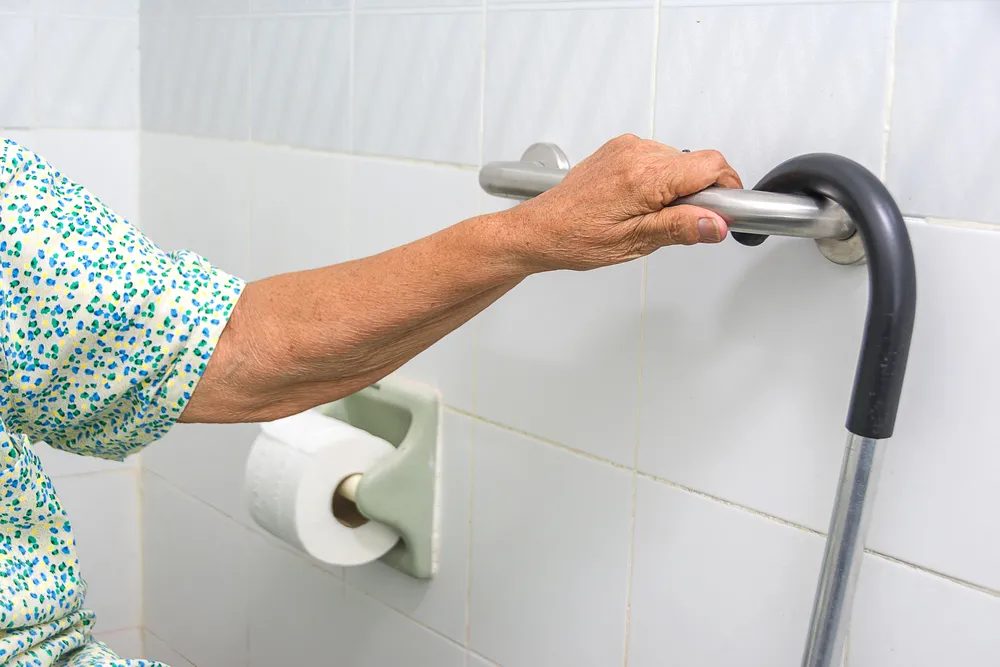
Bathroom Grab Bars and Walk-In Showers
Bathrooms pose the highest risk of injury in a senior's home. Wet floors, tight spaces, and low toilet heights make even simple routines hazardous. Installing grab bars next to the toilet and inside the shower or tub gives steady support for moving and seated transfers. A walk-in shower with no raised edge is a popular upgrade because it eliminates the step-over that causes many falls; adding a built-in bench and a handheld shower head allows bathing while seated, cutting slip risk further. Raised toilet seats and anti-slip mats add protection without major construction. These changes target the most dangerous room first, letting seniors continue daily hygiene routines independently. Families often start here because the return on safety per dollar is immediate, and the modifications can be done incrementally—starting with grab bars and a mat, then moving to a full walk-in shower when a full renovation is possible.
- ContextHome
- BenefitReduces bath falls
- FeatureWalk-in shower
How a Heads-Up Display Puts Data in Your Line of Sight
A heads-up display (HUD) projects driving information directly onto the windshield or a transparent panel near the driver's field of vision. Instead of glancing down at dashboard gauges, the driver sees speed, navigation directions, fuel data, and safety warnings without losing sight of the road. The concept came from military aviation, where pilots needed to monitor flight data while keeping their eyes on the sky. Automakers adapted the technology for cars. A projector inside the dashboard sends an image through a series of mirrors and reflective surfaces to a combiner screen. The display appears to float several feet ahead of the vehicle, which reduces the need for the driver's eyes to refocus between near and far distances. The system automatically adjusts brightness for sunlight or nighttime, keeping the information visible without glare. This constant availability of key data means a driver can monitor speed or directions while maintaining awareness of nearby traffic, pedestrians, and road hazards.
- ContextVehicle
- BenefitKeeps eyes on road
- FeatureWindshield projection
Slip-Resistant Flooring and Flat Thresholds
Slippery surfaces, uneven edges, and bulky rugs are major fall hazards for seniors. Replacing slick tile or worn carpet with slip-resistant flooring—such as textured cork or low-pile carpet—reduces the risk of losing balance. Thresholds between rooms should be as flat as possible so a walker or wheelchair can roll across without catching. Widening walkways and removing clutter gives mobility aids extra space to maneuver. In smaller homes, built-in storage can keep everyday items accessible without crowding the floor. These changes address the surfaces most walked on and directly lower the chance of a fall during daily movement. For homes with existing hard floors, adding anti-slip mats in high-traffic areas is a low-cost interim step, while a full flooring replacement can be planned when a room is already being redone.
- ContextHome
- BenefitPrevents slips
- FeatureCork or low-pile carpet
HUDs Can Flash Collision Warnings Right in Your View
Modern heads-up displays often work with advanced driver assistance systems (ADAS). Instead of only showing speed or navigation, these HUDs can alert the driver about potential hazards using visual warnings on the windshield. Collision warnings, lane departure notifications, blind spot alerts, and adaptive cruise control updates are commonly integrated. For example, if another vehicle enters a blind spot or traffic suddenly slows ahead, the HUD flashes a warning directly in the driver's view. This integration puts multiple safety signals into one interface, allowing the driver to react faster while keeping attention on the road. Some systems even display navigation arrows on the projected area, helping drivers avoid last-second lane changes or missed turns. By combining these alerts into a single display, the HUD reduces the cognitive load of checking separate dashboard lights and mirrors, which is especially valuable during heavy traffic or stressful driving conditions.
- ContextVehicle
- BenefitFaster hazard response
- FeatureADAS integration
Motion-Activated and LED Lighting for Nighttime Visibility
Dim rooms and dark hallways increase the risk of trips and falls for older adults. Renovating with brighter, energy-efficient LED fixtures helps seniors see better throughout the day. Light switches should be easy to reach and clearly labeled. In hallways, closets, and bathrooms, motion-activated lighting is a smart choice: the lights turn on automatically when someone enters, so there's no need to fumble for a switch. Reducing glare also matters—soft lighting and matte finishes protect aging eyes from the bright reflections that impair depth perception. These changes are relatively low-cost and can be completed in a weekend. For seniors who get up at night, a motion-activated hallway light can mean the difference between a safe trip and a stumble in the dark. Pairing LED bulbs with dimmer switches gives control over brightness without harsh glare.
- ContextHome
- BenefitBetter visibility
- FeatureMotion sensors
What Can Go Wrong With a Heads-Up Display
Heads-up displays improve safety, but they have limits. Bright sunlight, poor calibration, or windshield damage can reduce the visibility of the projected image. An improperly replaced windshield may cause distortion or blurry displays because the HUD relies on the windshield's specific curve. Some drivers find the HUD itself distracting until they get used to it, and if the display is overloaded with too much information, it becomes less useful. Cost is another barrier—advanced HUDs often appear only in higher trim levels or luxury vehicles. As technology improves and production costs drop, HUDs are becoming more common across a wider range of cars, but these limitations remain for now. For an older driver considering a HUD, it's worth checking how the system behaves in direct sunlight and whether a aftermarket replacement windshield could affect the image.
- ContextVehicle
- FeatureSunlight sensitivity
Handrails on Both Sides and Ramps at Entrances
Steps at the entrance or inside a home become dangerous as mobility declines. Adding a sturdy handrail on both sides of a staircase improves stability for climbing and descending. For outdoor steps, lighting and railings are just as important, especially in rain or snow. Seniors who use wheelchairs or walkers may need a ramp at the front or back door; ramps can be permanent or portable depending on the home and budget. Inside, a stair lift can safely move someone to an upper floor without climbing. These larger investments can extend the time a person remains comfortably in their home. A permanent ramp is typically built from aluminum or concrete, while a portable ramp can be moved from one doorway to another. Handrails should be continuous and easy to grip, with a textured surface to prevent a hand from slipping.
- ContextHome
- BenefitStable stair use
- FeatureDual handrails
Smart Smoke Detectors, Video Doorbells, and Medical Alerts
Technology can support safety quietly. Smart smoke detectors that alert both the resident and a family member speed up emergency responses. Video doorbells let seniors see who is at the door without getting up, and some systems allow remote check-ins. Medical alert systems and voice-activated assistants are another layer: many devices let users call for help, control lights, or set reminders using simple voice commands. While these aren't traditional renovations, they pair well with physical updates to boost independence. They add a connected safety net for seniors who live alone. A smart smoke detector might send a phone alert to an adult child, while a voice assistant can turn off a stove timer or make a call when the user struggles to reach a phone. These devices are relatively inexpensive and can be installed without any construction.
- ContextHome
- BenefitFaster emergency alerts
- FeatureSmart detectors
The Next Generation of HUDs: Augmented Reality Navigation
Heads-up displays are evolving. Future versions may include augmented reality navigation that overlays directional arrows and hazard highlights directly onto the roadway visible through the windshield. Expanded communication with other driver assistance systems could let the HUD warn about upcoming hazards in real time. Automakers continue refining interfaces to balance usefulness with simplicity, and as production costs fall, these advanced features will likely appear in more mainstream vehicles. Even now, the basic HUD provides meaningful safety benefits by keeping a driver's eyes on the road. The potential for AR overlays to mark a pedestrian in a crosswalk or highlight a sharp curve ahead suggests that the next decade will bring HUDs that do far more than display speed—they'll become an active layer of situational awareness, reducing the reaction time needed for unexpected events.
- ContextVehicle
- FeatureAugmented reality