Koenigsegg CCGT1 Brings GT1 Aerodynamics and a Sequential Shifter to the Street
Based on the CC850, the road-legal CCGT1 pairs a twin-turbo V-8 with adjustable downforce, two transmission interfaces, and an optional track package.
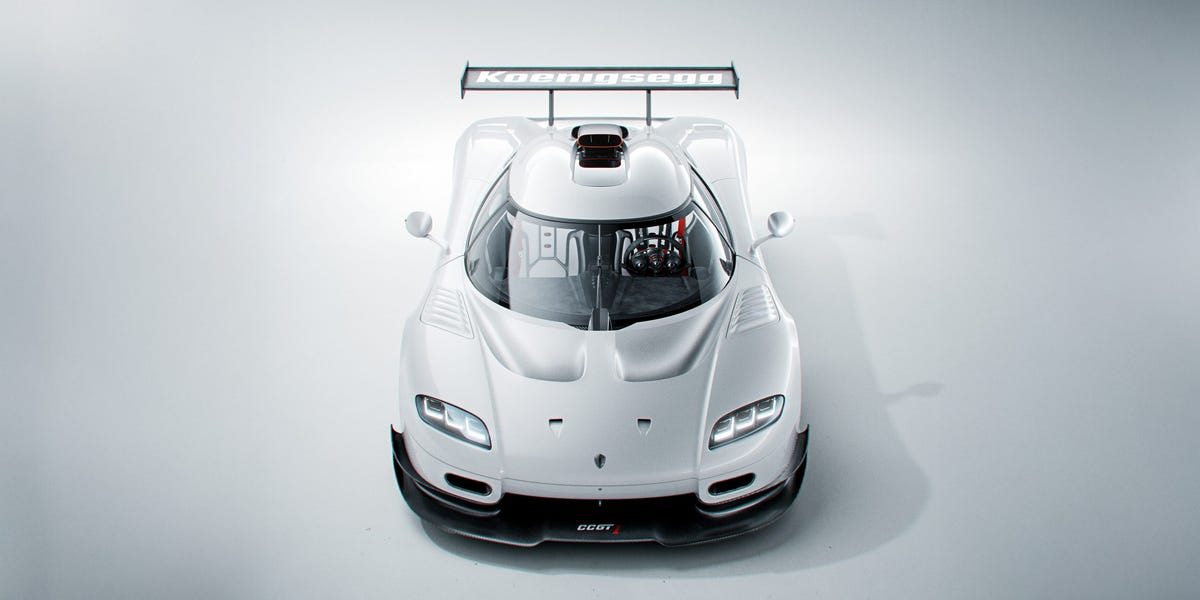
What is the Koenigsegg CCGT1?
The Koenigsegg CCGT1 is a road-legal, track-focused hypercar based on the CC850 and inspired by Koenigsegg’s abandoned CCGT GT1 race-car project from the Aughts. The company calls it the fastest vehicle it has created for a racetrack, while retaining the equipment needed for road use. Production is limited to 70 cars, and every example has already been spoken for. Nearly every exterior panel is unique to the CCGT1, so its relationship to the CC850 is mechanical as much as visual. The design also preserves a direct connection to endurance racing: the car can be configured with its roof panel on or off, changing the character of the road-going machine without turning it into a dedicated competition car. That combination defines the model’s appeal: it is not merely a stripped track special, but a grand tourer with a serious racing identity.
How powerful is the CCGT1?
The CCGT1’s twin-turbocharged V-8 produces 1,280 horsepower on pump gasoline and 1,600 horsepower when running E85. Koenigsegg has also upgraded cooling beyond the CC850’s powertrain specification, giving the engine greater endurance during extended track use rather than concentrating only on a short acceleration run. Fuel choice therefore changes the headline output, while the revised thermal management addresses the sustained loads that come with repeated laps. The engine remains familiar Koenigsegg hardware, but the CCGT1’s mission changes how that hardware is used. A road car can make extraordinary power for brief bursts; a track-focused car must manage heat through braking zones, corner exits, and successive laps. The cooling work is consequently as important to ownership as the peak figure. On public roads, pump gas supplies the lower output; at a circuit, E85 unlocks the car’s maximum stated power.
Does the CCGT1 have a sequential gearbox?
Yes. The CCGT1 uses Koenigsegg’s nine-speed Light Speed Transmission with a separate Koenigsegg Sequential Shift interface. The driver uses a clutch pedal for take-off, then changes gear through a lever positioned close to the steering wheel. Subsequent shifts operate without clutch input, with an ignition cut accompanying each change. That arrangement gives the car the rhythm and physical action of a sequential race transmission while retaining the underlying nine-speed system. The lever’s placement matters during circuit driving because it reduces the distance between steering corrections and gear changes. It also preserves the CCGT1’s link to the original CCGT project without requiring a conventional racing gearbox. For an owner who wants a track-focused experience but still needs road legality, the system provides a clear distinction between launching the car and shifting it once underway.

Can the CCGT1 be ordered with a manual transmission?
A buyer can replace the sequential interface with Koenigsegg’s Engage Shift System, a six-speed gated manual arrangement. It offers a conventional clutch-and-gate experience for drivers who want more direct control over each gear, but it is not locked into manual operation. The system can switch to automatic mode when the car is being driven in traffic or when the driver wants the vehicle to select the cogs. This makes the transmission choice a question of interface and use rather than a simple division between a race car and a road car. The sequential setup uses rapid clutchless changes and a compact race-style lever. Engage Shift provides a visible, mechanical gate while retaining automatic convenience. Koenigsegg therefore gives the CCGT1 two distinct personalities at the transmission level: sequential operation for circuit work or a gated manual experience for drivers who prioritize involvement.
What aerodynamic equipment does the CCGT1 use?
The CCGT1 uses a large active rear wing, a substantial front splitter, a unique underfloor, and a bespoke rear diffuser to generate its track-focused aero balance. The wing adjusts through 30 degrees. On a straight, it moves toward a low-downforce setting; under braking, it works as an air brake; through corners, it seeks maximum downforce. Koenigsegg claims 1,764 pounds of downforce at 155 mph. That figure is lower than the Sadair’s Spear’s peak, but the company says the CCGT1 is designed to produce more useful downforce at lower speeds. For owners choosing between the standard car and the optional track equipment, that distinction matters: the CCGT1’s aerodynamic concept is intended to work on tighter circuits, not only at very high-speed venues.
What does the CCGT1 Track Package include?
The optional Track Package turns the CCGT1 into a more fully equipped circuit car. It adds a full carbon roll cage, HANS-compatible racing seats, a fire-suppression system, race exhaust, air jacks, track-focused suspension and brakes, enhanced aerodynamics, and a second set of wheels fitted with track-optimized tires. Buyers also receive an invitation to exclusive CCGT1 track days with full factory support. The package is not a permanent conversion: Koenigsegg says it can install or remove the equipment as needed. In practice, an owner could have the package fitted for a circuit event, use the factory-supported track-day program, then have the car returned to its road-oriented configuration afterward. The standard car remains road legal, while the package adds the equipment and setup intended for more demanding track use.
What is the CCGT1 interior like?
The CCGT1 cabin combines racing controls with Koenigsegg luxury. Its equipment includes a fuel-pump priming toggle, a covered red ignition switch, and the third-generation Chronocluster, whose analog G-meter sits at the center of the driver’s view. The standard seats are carbon-fiber buckets, while the Track Package replaces them with more intensive racing seats compatible with HANS equipment. That split gives the interior two defined roles. The standard cabin keeps the car suitable for road use without abandoning meaningful lateral-acceleration information or secure seating. The track configuration concentrates more heavily on restraint and competition hardware, matching the roll cage and fire-suppression system. The ignition cover and pump toggle also make the cabin feel like a working race machine rather than a luxury interior decorated with motorsport themes. The result is a cockpit whose controls explain the CCGT1’s purpose before the car leaves the garage.