Before the Showroom: How Ford Turned Sketches Into Cars in 1952
A restored Ford film reveals the long, tactile design process behind every control, contour, clay model, and running prototype.
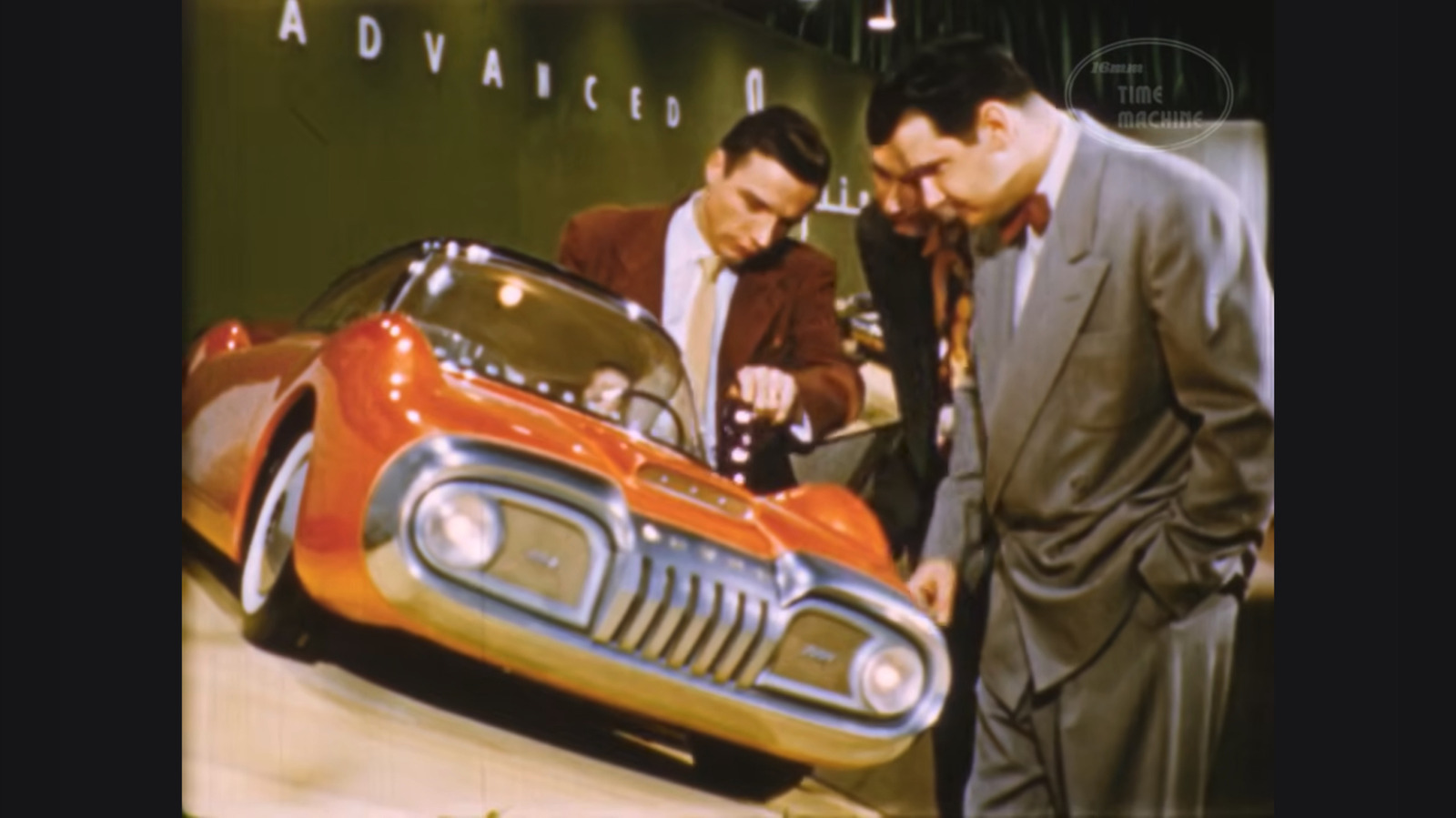
The Finished Car Conceals Years of Work
A production car arrives as a finished object, but Ford’s 1952 design process began years earlier. The auto industry typically needed **four to five years** to move from a blank sheet to a production vehicle, leaving buyers with little sense of the labor behind a switch, instrument, or body line.
That hidden work is the subject of *Tomorrow Meets Today*, a short film restored by **16mm Time Machine**. Its central point is direct: a car’s details must first exist as ideas before they can exist in metal. Ford’s designers were not simply styling a shell. They were coordinating engineering, materials, packaging, and appearance long before a vehicle reached a showroom.
The film also puts a price on the scale of the undertaking, referring to the **millions of dollars** and extensive forward planning required to create a modern automobile. Its surviving footage offers a rare view of design as a chain of decisions rather than a single flash of inspiration. The film ends before the full story is complete because of reported damage, but the surviving section captures the crucial transition from imagination to physical object.
A Pencil Starts the Vehicle’s First Version
Ford’s earliest design tool was strikingly simple: a person seated at a drafting table with a large sheet of paper, a pencil, and measuring instruments. That arrangement made proportion and geometry visible before any material was cut or shaped. A proposed roofline, fender, or cabin could be revised on paper before the next stage consumed time and money.
Selected drawings moved into sculpture. Clay modelers transformed promising ideas into smaller vehicle forms, adding simulated body panels and faux chrome trim so the design could be judged as a complete object rather than an isolated sketch. The scale models gave designers a physical way to inspect surfaces, transitions, and ornament.
More advanced proposals became full-size clay bodies or interior models. At that scale, designers could examine the relationship between the exterior and the space occupants would use. A design that survived those reviews could then become a real metal prototype with a powertrain. Engineers could install different engines and other components, then compare how the hardware worked inside the proposed vehicle. The process linked visual judgment to mechanical reality.
Ford’s Modern Studio Still Builds the Interior
The same physical thinking appeared decades later during Ford’s **2022 Mustang** design presentation. Digital tools had become essential, particularly after COVID-19 pushed design teams toward more screen-based collaboration. Software helped people work from separated locations and keep files aligned while the development process continued.
When teams could gather in person, Ford built a full interior model that resembled a Mustang opened from above, with the cabin removed and placed on the floor. Its fabrics, plastics, and touch points matched the materials intended for the production car. That arrangement allowed designers to experience the cabin at human scale instead of judging it only through a monitor.
The physical model mattered because interiors are encountered through hands, eyes, posture, and reach. A digital image can show the shape of a dashboard, but it cannot reproduce the feel of a surface or the position of a control under a driver’s hand. Ford’s presentation showed that even a digitally enabled studio still relied on a tangible cabin to test the parts occupants would use every day.
The Showroom Test Begins Before Production
General Motors used its design center in **Warren, Michigan**, as a stage for evaluating future vehicles. The facility’s famous dome could be arranged like a real auto show, including lighting designed to resemble events in Detroit, Chicago, Los Angeles, and other cities. Designers examined clay and full-size vehicles under conditions intended to expose how each proposal would appear in public.
That setting made design review more demanding than a quiet studio inspection. A vehicle had to hold its shape under bright, exhibition-style illumination, while designers discussed the models around it. The procedure treated presentation as part of the design rather than an afterthought.
Digital modeling has reduced some of the physical work and accelerated collaboration, but the old method remains relevant because a vehicle is ultimately operated in the real world. A running prototype can reveal issues that a drawing cannot: how a powertrain fits, how components interact, and whether the finished form works as an object rather than an image. The 1952 film’s lasting lesson is that automobiles become credible through repeated physical checks, not through styling alone.