Big Mama Rattler: How a Single Lift Spec Changes Everything
Howards Cams sells two small-block Chevy cams that look identical on paper, but the valve lift tells a different story.
What are the part numbers and engine fitments for the two Big Mama Rattler cams?
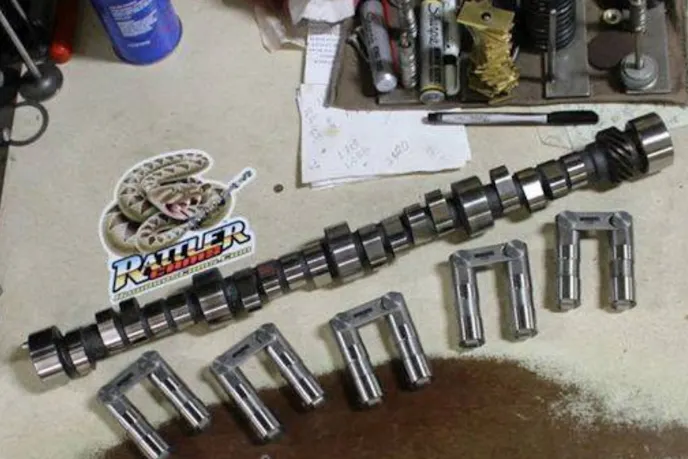
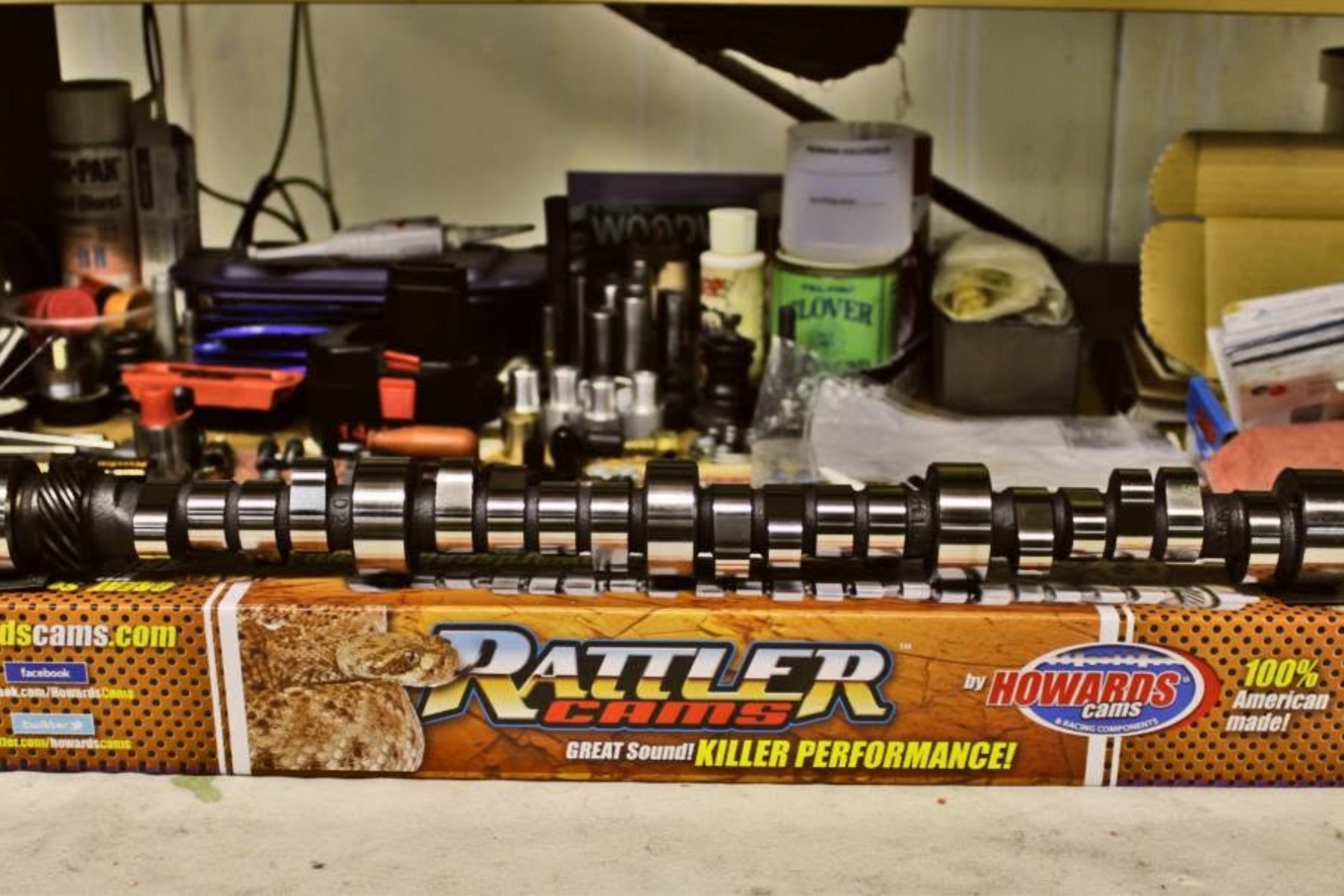
The hydraulic flat-tappet Big Mama Rattler is CL118041-09, while the hydraulic roller is CL118045-09. Both are cut for 1955-1998 Chevy small-blocks from 262 to 400 cubic inches, and both carry the same requirements: at least 9.0:1 compression, a 2,500-rpm stall converter, and a lopey idle for street or street/strip use. The part numbers are not interchangeable because the two cams work with different lifter systems. The flat-tappet drops into a standard block with plain lifters, while the roller is a retrofit design that needs either a factory roller block or a conversion kit with lifter guides and dogbones. That mechanical difference comes down to the lifter itself: a flat-tappet lifter has a slight crown and rides on a tapered lobe, which makes it spin as it slides. That sliding contact limits how steeply Howard's can grind the ramps. The roller lifter uses a wheel on a needle-bearing axle, eliminating the sliding friction and allowing steeper ramps that open the valve faster and farther. So the part number tells you not just which cam you're getting, but also which valvetrain and block provisions you need. Ordering the right one is the difference between a drop-in swap and a retrofit project.
Why does the roller design allow more lift without sacrificing durability?
A flat-tappet lifter isn't actually flat; it has a slight crown that rides on a tapered lobe, forcing the lifter to spin during operation. That sliding contact limits how aggressively the cam lobe can be shaped. If Howards ground steeper opening ramps, the lifter's edge would scrape into the lobe surface. The hydraulic roller lifter uses a needle-bearing wheel that rolls across the lobe, eliminating that friction limit. With no sliding wear, Howards can grind steeper acceleration ramps that open the valve faster and hold it open longer within the same duration window. That's exactly how the roller reaches .530-inch lift while the flat-tappet stays at .488/.480. The roller's wheel also reduces friction at the lifter lobe, which helps it survive higher spring pressures over the engine's life.
Do the two cams share the same duration and lobe separation specs?
Yes, but with one small difference in advertised numbers. The flat-tappet lists 289 degrees intake and 297 degrees exhaust advertised duration; the roller lists 288 and 296. That one-degree gap is essentially negligible. What matters for idle quality and drivability is duration at .050-inch tappet lift, and there the two cams match exactly: 235 degrees intake, 243 degrees exhaust. The lobe separation angle is identical at 109 degrees, and the intake centerline is 103 degrees on both grinds. Because those numbers control when the valves open and close relative to piston position, the timing events are effectively the same. That means the power curve comes in at the same rpm, and the idle behavior is the same lopey cadence. The only difference is valve lift, which is higher on the roller. So while the engine will feel similar down low and at idle, the roller's extra lift lets it make more peak power and torque through the middle and top of the band. For a builder, this means you can choose based on valvetrain cost and block compatibility rather than on cam timing.
How does the break-in procedure differ between the two cams?
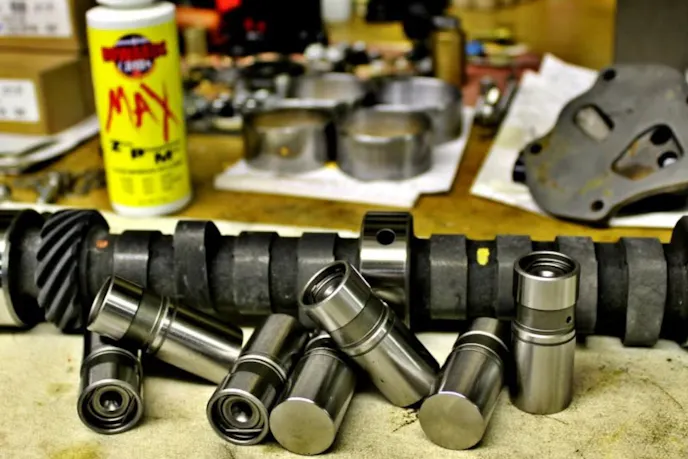
The flat-tappet Big Mama Rattler demands a specific break-in sequence. With new lifters installed, you coat the cam lobes and lifter faces with the supplied moly lube. Then you start the engine and bring it straight to around 2,500 rpm, holding it there for the first 10 to 15 minutes. That high-rpm hold is essential because it lets the lifter faces mate to the lobes while the oil splash is at its most effective. If you let it idle too long, the wear pattern can be irregular and lead to premature lobe failure. After that, you drain the oil and change the filter to remove any particles from the initial wear. The hydraulic roller cam skips that mating process altogether. Because the roller wheel rolls on a needle bearing instead of sliding, there's no surface-to-surface wear-in. Howards' instructions for the roller are simply to do a standard oil and filter change and run a normal warm-up before loading the engine. No special high-rpm hold, no moly lube on the wheel. The roller's break-in is just a matter of fresh oil and a reasonable warm-up cycle.
Which cam makes more horsepower, and where does the gain show up?
The roller version produces more peak horsepower and torque because its higher valve lift increases airflow potential at the same rpm points. Since both cams share identical duration at .050-inch, lobe separation, and intake centerline, the power curve has the same shape and comes on at the same rpm. The gain appears in the middle and top of the rpm band, where the valve is open far enough to let more air-fuel mixture through. Beyond the lift, the roller design reduces friction at the cam lobe, which cuts parasitic loss and allows the valvetrain to handle sustained high spring pressure over a long service life. That means the roller's advantage isn't just peak numbers—it also holds up better under the stress of high-rpm operation.
What valvetrain upgrades do I need for the roller Big Mama Rattler?
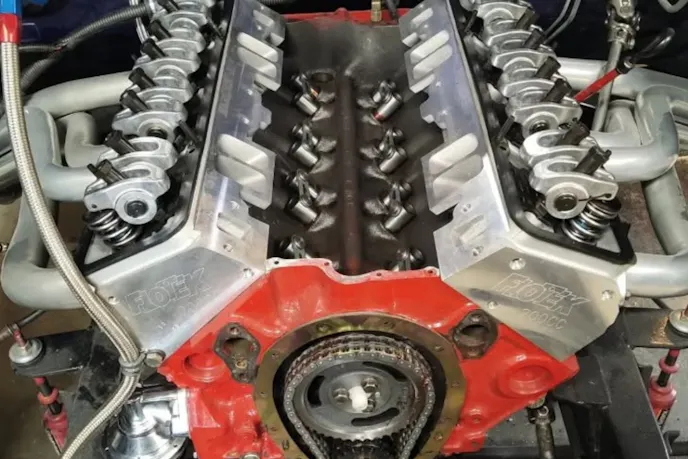
The roller Big Mama Rattler needs valvetrain parts that can cope with its more aggressive lobe profile. Valve springs must be rated for the higher lift and the steeper acceleration ramps, or valve float will set in at high rpm. Pushrods and rocker arms also have to handle the increased open pressure. The block itself must have provisions for roller lifters—either a factory roller cam block or a retrofit kit with lifter guides and dogbones, which adds cost. The flat-tappet version, by contrast, drops into a standard block with simple lifters and requires only modest spring pressure. And because a flat-tappet lifter relies on spinning to distribute wear, it has a lower limit on spring pressure and lift, so you can't simply bolt on the roller's springs and expect it to survive.