The Chevrolet Shirt That Failed Its Own Truck Lesson
An unauthorized design turned a basic Silverado terminology lesson into a retail and licensing problem.
The artwork gave away the problem
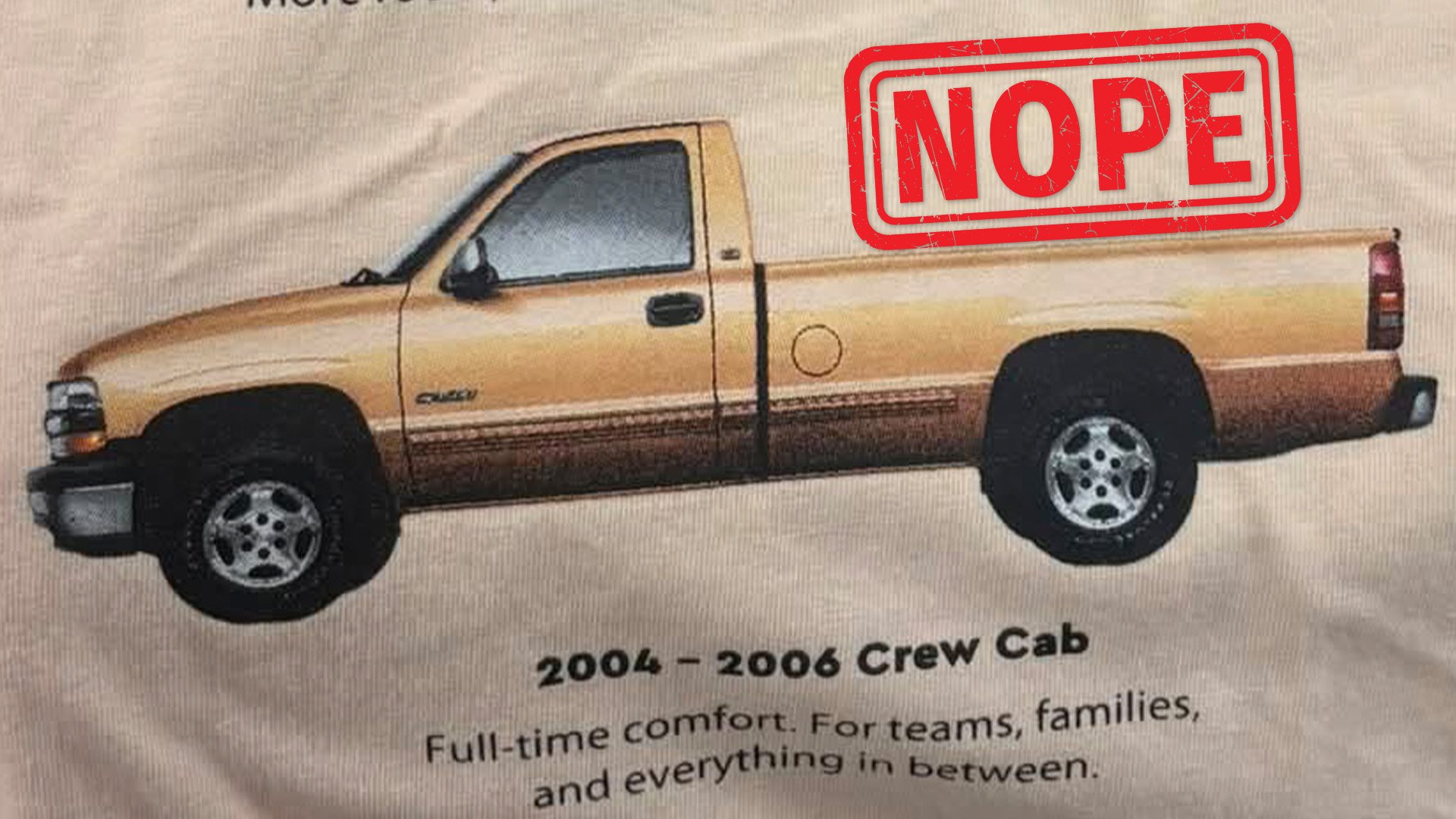
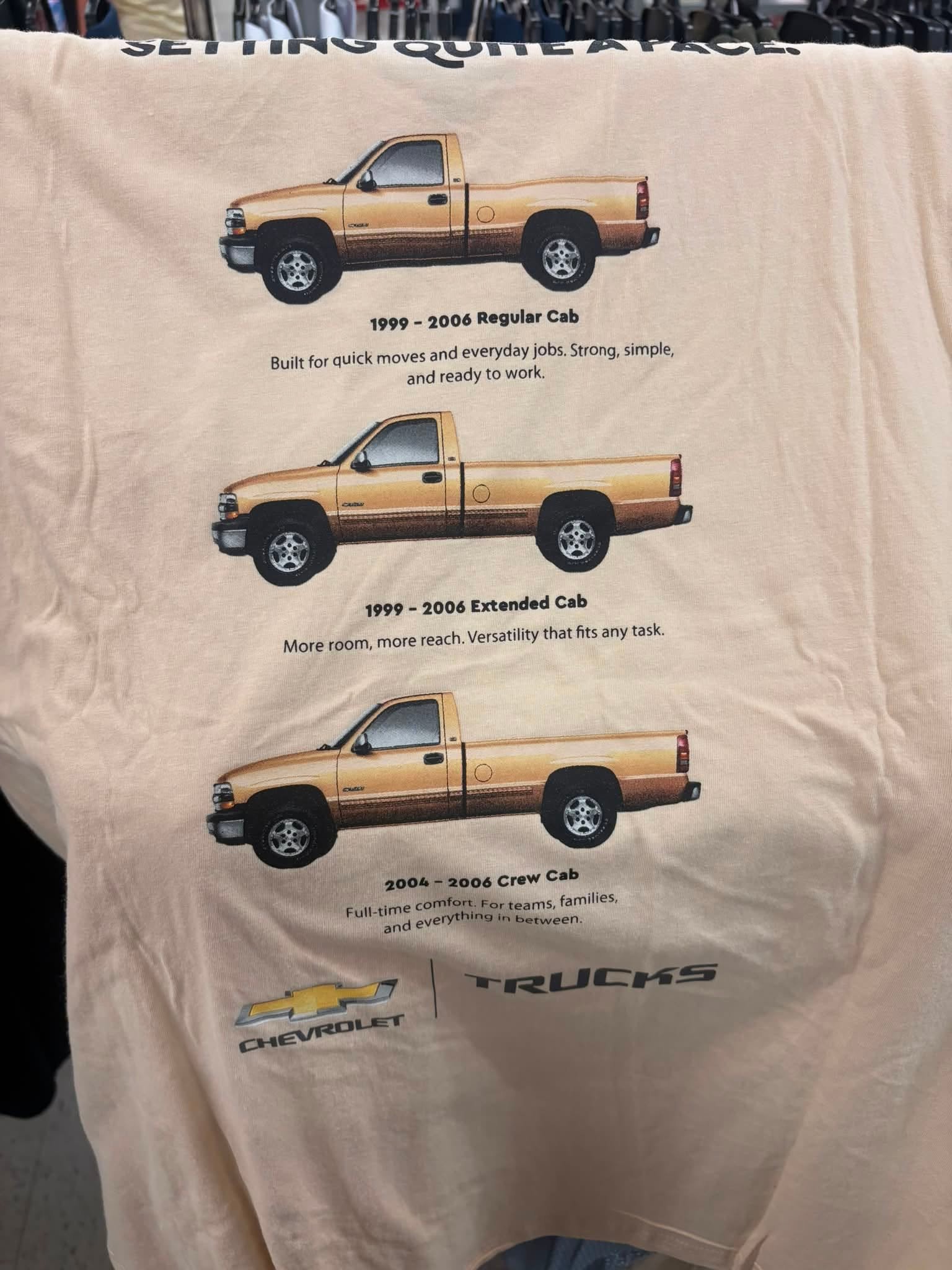
The shirt’s central joke collapsed at the cab labels. It presented a GMT800-generation Chevrolet Silverado in three supposed forms: regular cab, extended cab, and crew cab. Each illustration, however, showed only two doors. The only visible change was a progressively longer bed.
That is not a minor styling mistake. The labels describe different Silverado configurations, so changing the bed length does not turn one cab type into another. The design treated pickup terminology as interchangeable when the entire point of the graphic was to distinguish the trucks.
The error also made the garment easy to question without any specialized inspection. A buyer did not need to decode a production code or compare engine specifications. The mismatch appeared directly in the drawings and in the words printed beside them. A shirt claiming official Chevrolet status was using a familiar truck name while presenting an incorrect visual explanation of it. The more confidently the garment stated its labels, the more conspicuous the mistake became.
A retail discovery reached Chevrolet’s desk
The shirt surfaced at TJ Maxx and Marshalls, where shoppers encountered it while browsing in stores. Its retail presence raised a straightforward question: was this an odd but genuine piece of Chevrolet merchandise, or had the official-licensing language been added without approval?
That question prompted an inquiry to Chevrolet’s public-relations team. The timing was notable because the inquiry followed a blog post written earlier this week about the shirt’s obviously AI-designed appearance. What began as a curious find among off-price merchandise became a direct check with the automaker responsible for the name and truck depicted on it.
The retail setting matters because the garment was not merely circulating as an isolated image. It was being offered for sale under the names of two established chains, giving the “officially licensed” claim a commercial setting. Chevrolet’s answer settled the narrow issue of authenticity: the company did not recognize the shirt as approved merchandise. The next question was not whether the artwork was embarrassing, but how it had entered stores.
GM says the licensing gate was never cleared
A Chevrolet spokesperson said the product did not pass through GM’s official licensing approval process and did not meet GM’s licensing standards. That statement separates the shirt from an authorized design that happened to contain a bad illustration. The problem begins earlier: the claimed approval was absent.
The automaker also said it was working with its partners to investigate how the product reached retail. That places the immediate focus on the route from merchandise production to store shelves, rather than on Chevrolet’s design department. The company’s stated position is that its trademarks require proper use, including on apparel carrying Chevrolet branding and truck imagery.
Chevrolet said it would take action as appropriate. The response also included legal steps aimed at removing the shirt from stores. For the garment, the practical outcome is clear even before the investigation identifies every link in the supply chain: an “officially licensed” label did not establish authorization, and the company whose marks appeared on the shirt says the licensing process was bypassed.
The pickup-shirt problem has a recent precedent
The episode has an earlier parallel in Ram’s sale of a patriotic T-shirt featuring an AI-generated Toyota Tacoma. That design involved one truck brand selling apparel built around another manufacturer’s pickup, making it a more conspicuous brand and image failure than the Chevrolet shirt’s cab mistake.
The comparison also shows why automotive apparel can carry more than decorative value. A pickup illustration may use a familiar grille, body shape, or cab label to signal what vehicle it represents. When those signals conflict, the shirt stops functioning as a reliable piece of brand merchandise and becomes evidence of its own production error.
In the Chevrolet case, the incorrect cab depictions and the absent GM approval process pointed in the same direction. One problem was visible on the fabric; the other came from the automaker’s licensing response. Together, they turned a novelty garment at TJ Maxx and Marshalls into a trademark dispute involving a recognizable Silverado generation.