How does the £30k Dacia Bigster stack up? And is a 1997 Land Cruiser worth it?
We break down the Bigster's sub-£30k pricing and the 80 Series Land Cruiser's enduring appeal, with all the numbers that matter.
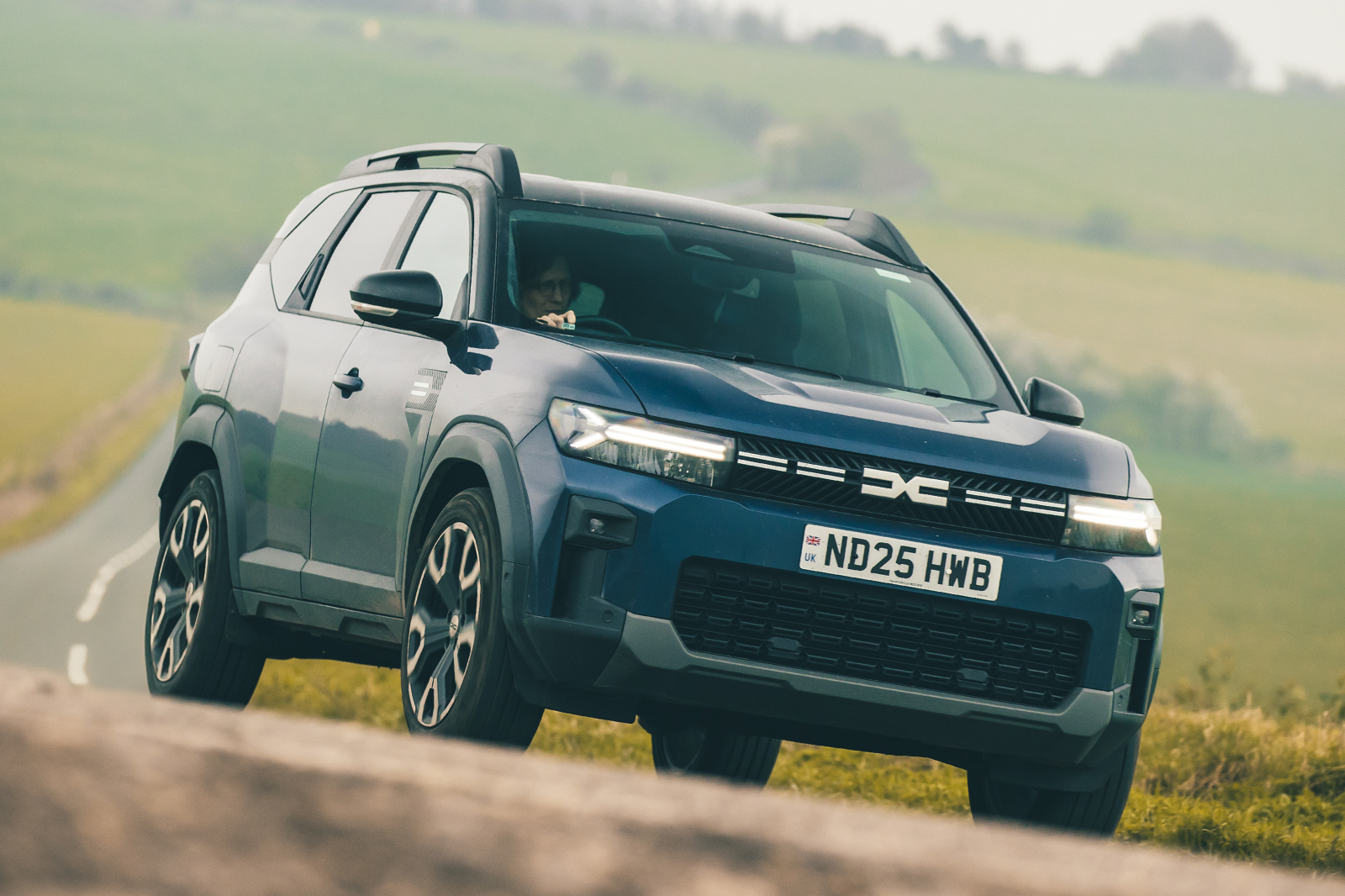
What is the Bigster's hybrid powertrain, and how does it perform?
The Bigster's Journey hybrid combines a 1.8-litre four-cylinder petrol engine with an electric motor. The engine delivers 106bhp at peak and 129lb ft of torque. The electric motor, fed by a 1.4kWh battery, contributes an additional 50bhp and 151lb ft. The combined system produces a 0-62mph time of 9.4 seconds. This performance is adequate for a family SUV. The electric motor's higher torque figure (151lb ft versus 129lb ft) means it can assist the engine effectively from low speeds. The small 1.4kWh battery limits the electric motor's role to supporting the engine, rather than driving the car on its own. The motor's 151lb ft of torque exceeds the petrol engine's 129lb ft, providing strong low-speed response. This hybrid setup is the latest 1.8-litre unit from Dacia.
Why is the Dacia Bigster so much cheaper than its rivals?
Dacia keeps costs down by reusing the CMF-B platform that underpins all its models, meaning many components are shared with the Duster and other Dacias. All Dacias are extremely similar from the beltline down, using tried-and-tested parts from across the Renault Group. That engineering reuse, rather than cutting corners on safety or basic equipment, is the main reason prices stay low. The Bigster also avoids expensive marketing and premium branding, positioning itself as a no-frills value option. While rivals like the Qashqai and Sportage load up on standard tech and styling, the Bigster focuses on the essentials. You still get a full suite of safety systems and a functional infotainment screen, but the materials are hard plastics and the design is simple. That's the trade-off for a £25,000 starting price.
What is the 80 Series Toyota Land Cruiser, and why is it so sought after?
The 80 Series Land Cruiser, built from October 1989 to 1997, introduced coil springs while retaining solid live axles at both ends—a combination that off-road enthusiasts still prize today. It also offered full-time four-wheel drive and, on higher grades, factory locking front and rear differentials, giving three locks on one truck. This 1997 example has just 4,700 miles on the odometer, making it nearly time-warp condition. It's powered by a 4.5-litre 1FZ-FE twin-cam inline-six rated at 212bhp and 275lb ft, paired with a 4-speed automatic and a dual-range transfer case with a locking center diff. The combination of coil springs, live axles, and locking differentials is why the 80 Series remains a benchmark for serious off-roaders. This specific example is particularly coveted due to its extremely low mileage, which is rare for a vehicle of this age.
What does a 1997 Land Cruiser with very low mileage include?
This 1997 Land Cruiser, which has just 4,700 miles on the odometer, is finished in Super White over an Oak leather interior. Equipment includes air conditioning, cruise control, a sunroof, power-adjustable front bucket seats, folding third-row seating, a CD/cassette stereo, and power-adjustable side mirrors. It also has a receiver hitch, roof rack, running boards, a rear wind deflector, and a rear window wiper. The truck rides on 16-inch alloy wheels and has four-wheel disc brakes with ABS. It's now set to cross the block with Mecum in mid-August, and its exceptionally low mileage for a nearly 30-year-old vehicle makes it a collector's prize. The 80 Series was also sold as the Lexus LX 450 in the United States, and this example benefits from the full-time four-wheel drive that American and European buyers got.
What were the major improvements in the 80 Series Land Cruiser's history?
The 80 Series wasn't perfect at launch. Australian reviewers encountered a problem they called 'Land Cruiser Lurch'—a combination of body roll and rear bump-steer on bumpy roads. Lower rear damper mounts could break off the axle housing, even on press cars, and the turbo-diesel surged and idled badly. Toyota addressed these issues in a 1992 revision, which brought a new engine (the 1FZ-FE), a new manual gearbox, recalibrated suspension, bigger brakes, and side-intrusion bars. The top Sahara VX gained anti-lock brakes and optional satellite navigation. This 1997 model is the mature variant, with all the fixes in place and the reliable 1FZ-FE engine that many consider the best petrol option in the range. The 80 Series thus evolved into a more dependable and capable off-roader, cementing its reputation among enthusiasts.
How did the Land Cruiser line evolve to the 80 Series?
Toyota's 4x4 heritage began with the BJ in 1951, powered by a 3.4-litre Type B inline-six, developed after the company reverse-engineered a captured American Jeep. The vehicle was renamed Land Cruiser in 1954 following Willys-Overland's trademark protest. The 20 Series followed in 1955, then the 40 Series in 1960, which ran for 24 years. The FJ55 of 1967 introduced a wagon body for civilian comfort, and the 60 Series arrived in 1980 with optional air conditioning and power steering. The 80 Series replaced the 60 in October 1989, bringing coil springs and, on higher models, full-time four-wheel drive with a center differential. It stayed in production until 1997, when the 100 Series took over with independent front suspension. This lineage shows how the Land Cruiser continuously evolved to meet both civilian and off-road needs.