Hennessey's Blackbird Makes a 9000rpm V8 and Six-Speed Manual the Point of a Modern Supercar
The 850bhp Blackbird pairs exposed mechanical controls, adaptive aero and four exhausts with long-distance manners, instrument-led cabin design and unobtrusive electronic aids.
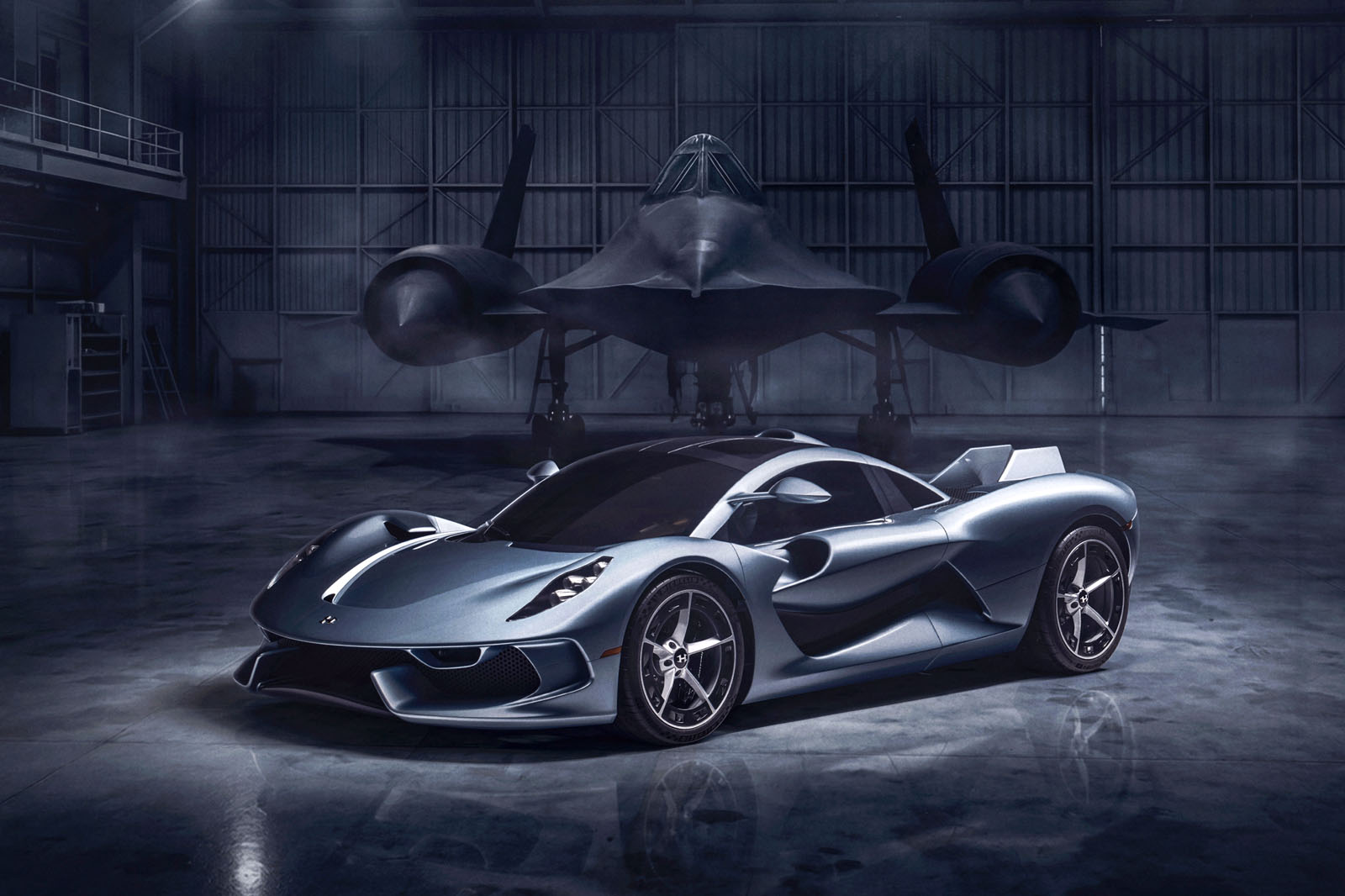
A 9000rpm V8 drives the mission
Hennessey has built the Blackbird around an engine that prioritises response over convenience. The naturally aspirated V8 is being developed with Ilmor Engineering, the company associated with Nascar powertrains, and its target red line is 9000rpm. That high-revving character gives the car a clear mechanical identity before the driver reaches the gearbox. Output is expected to land between 800bhp and 850bhp, enough to place the Blackbird among the most serious road-going supercars without relying on turbochargers or electric assistance. Hennessey is targeting a 0-60mph time below three seconds, but the headline acceleration figure is only part of the proposition. The engine's appeal is the rising intensity as the revs build, with no forced-induction system separating the throttle from the combustion process. It is a deliberate alternative to the increasingly automated powertrains appearing elsewhere in the class.
- Power800-850bhp
- EngineNaturally aspirated V8
- Red Line9000rpm
The six-speed manual is fully exposed
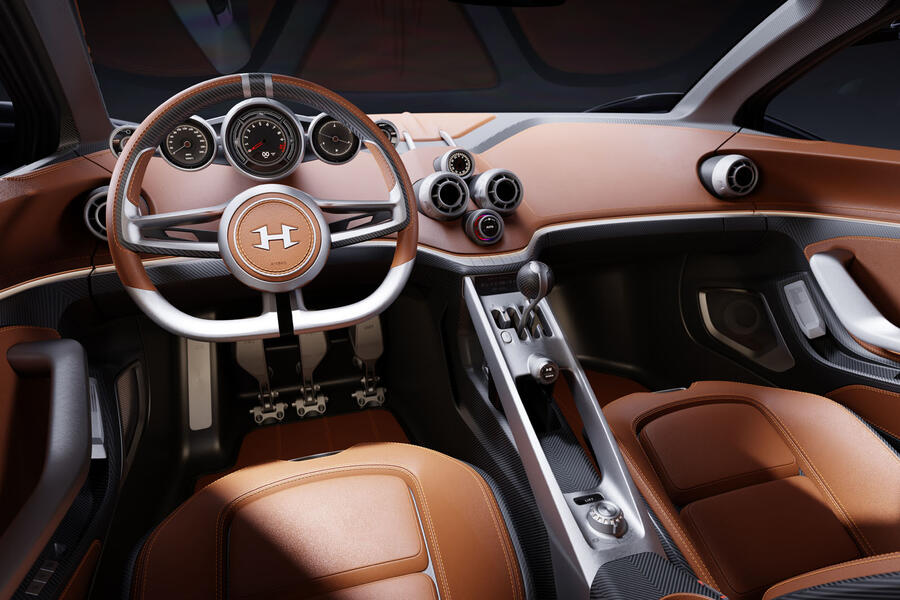
The Blackbird sends its power to the rear axle through a six-speed manual gearbox with an open gate and exposed linkage. That arrangement makes the shift mechanism part of the car's experience rather than a hidden component operated through paddles or a software-managed transmission. The driver chooses every ratio, coordinates the clutch and controls the timing of each upshift and downshift. Rear-wheel drive completes a layout built around direct involvement, while the visible linkage gives the centre of the cabin a functional, almost aircraft-like quality. Hennessey has removed buttons and switches from the steering wheel as well, so the hands are not surrounded by a collection of selectable modes. The result is an unusual specification for a modern supercar: a very high-output engine, a conventional clutch-operated transmission and a physical shift pattern that remains visible every time the car is driven.
- TransmissionSix-speed manual
- DriveRear axle
- GearboxOpen-gate linkage
Carbon fibre keeps the mass below 1360kg
A bespoke carbonfibre tub forms the Blackbird’s structural core, while carbonfibre bodywork extends the weight-saving construction across the exterior. Hennessey is targeting a dry weight below 1360kg, or 3000lb, making the figure a development goal rather than a confirmed production specification. The lightweight structure is part of a broader engineering brief that also includes a high-revving naturally aspirated V8, rear-wheel drive and a six-speed manual gearbox. The car is intended to remain usable as a road car, with development prioritising refinement, visibility and luggage space. Hennessey says the cabin will have enough capacity for two full-size carry-on bags, despite the focus on keeping the structure and bodywork light. Buyers will need to treat the quoted mass as a target until final production details are confirmed.
- WeightBelow 1360kg
- StructureCarbonfibre tub
- BodyworkCarbonfibre
Long-distance use is part of the brief
The Blackbird is intended to function as a road car first, not as a barely civilised track machine that happens to carry number plates. Its development programme gives refinement, visibility and luggage space explicit priority. Hennessey says the car is meant to cover more than 800 miles in a single day comfortably, an unusually direct statement of touring intent for an 800bhp-plus machine. The cabin is roomier than the Venom F5, and the luggage area is sized for two full-size carry-on bags. Those details change the ownership proposition. A driver can use the car for a substantial journey without treating every trip as a special logistical exercise, while the improved outward view should make low-speed manoeuvres less intimidating. The long-range objective does not dilute the performance brief; it defines the Blackbird as a fast road-going grand tourer with unusually serious mechanical hardware.
- RangeMore than 800 miles
- LuggageTwo carry-on bags
- DevelopmentRoad-car priority
The rear aero moves like an aircraft tail
Aerodynamics on the Blackbird are not confined to a fixed wing or a discreet splitter. Active rear stabilisers, shaped in reference to the tail fins of the Lockheed SR-71 Blackbird, tilt upwards through 71 degrees once the car exceeds 71mph. Their job is to maintain downforce while the car is moving quickly, giving the rear end an active aerodynamic device that is both functional and unmistakable. The sidepods carry deep creases that reinforce the aircraft connection, but the moving stabilisers are the more consequential feature because their geometry changes in response to speed. The numbers are deliberately linked: 71 degrees and 71mph echo the SR-71 name without turning the system into decoration. This is a road car whose visual signature changes while it is being driven. The mechanism provides a visible expression of the high-speed work happening around the bodywork.
- AeroActive stabilisers
- Angle71 degrees
- ActivationAbove 71mph
Four exhausts salute the sound barrier
The aviation references continue at the back of the car, where the Blackbird uses a quad exhaust layout. Hennessey links that arrangement to the Bell X-1, the rocket-engined aircraft that became the first to break the sound barrier in 1947. The detail gives the exhaust system a historical reference as well as a packaging role, tying the engine's output to the aircraft theme running through the design. Unlike the SR-71-inspired stabilisers, the four outlets do not alter the car's aerodynamic behaviour. Their importance is sensory and symbolic: they frame the rear of a naturally aspirated V8 machine and make the aviation influence legible from behind. The choice also suits a car that places mechanical theatre ahead of visual minimalism. With exposed linkages, visible carbon fibre and analogue instruments elsewhere, four prominent exhausts belong to the same vocabulary of machinery shown rather than hidden.
- ExhaustsFour outlets
- ReferenceBell X-1
- Date1947
The cabin replaces screens with instruments
Inside, Hennessey has resisted the standard supercar move toward a large central display and a fully digital driver interface. The Blackbird uses a smartphone mount for infotainment instead of a central touchscreen, leaving the phone responsible for connected functions while the car's own controls remain focused on driving. A suite of clearly presented dials and clocks takes the place of a digital driver display. The cabin also exposes carbonfibre and pedal linkages, making the construction and control hardware visible from the seat. There are no buttons or switches on the steering wheel, an omission that simplifies the driver's immediate hand position and removes mode selection from the rim. This is not nostalgia applied as trim. The choices establish a hierarchy: engine sound, gear selection, pedals and analogue readings occupy the centre of the experience, while infotainment is handled by a removable device mounted separately.
- InfotainmentSmartphone mount
- DisplaysAnalogue dials
- Steering WheelNo switches
Electronic aids stay, but they do not take over
The Blackbird is not a primitive machine. Hennessey plans to include active suspension, anti-lock braking and traction control, giving the car the electronic support expected of a road-going supercar. The distinction is where those systems sit in the driving experience. They are intended to manage suspension behaviour, braking stability and rear-axle grip without replacing the driver's central role. The manual gearbox keeps the shift decisions physical, while the rear-drive layout leaves throttle control as a meaningful part of the car's balance. That combination creates a specific compromise: assistance remains available for safety and control, but the cabin does not bury the driver beneath layers of automated interaction. The Blackbird therefore aims at maximum man-machine connection rather than maximum system intervention. Its hardware acknowledges modern road demands while its operating philosophy points back to direct inputs, visible mechanisms and deliberate decisions.
- SuspensionActive
- BrakingAnti-lock
- TractionElectronic control