Ingrassia Recounts the Seconds After Ogier's Toyota Left the Road at 140 km/h
The retired co-driver describes the collapse, the fire risk, the OK button that nearly let the stage continue, and the young trees that absorbed the impact.
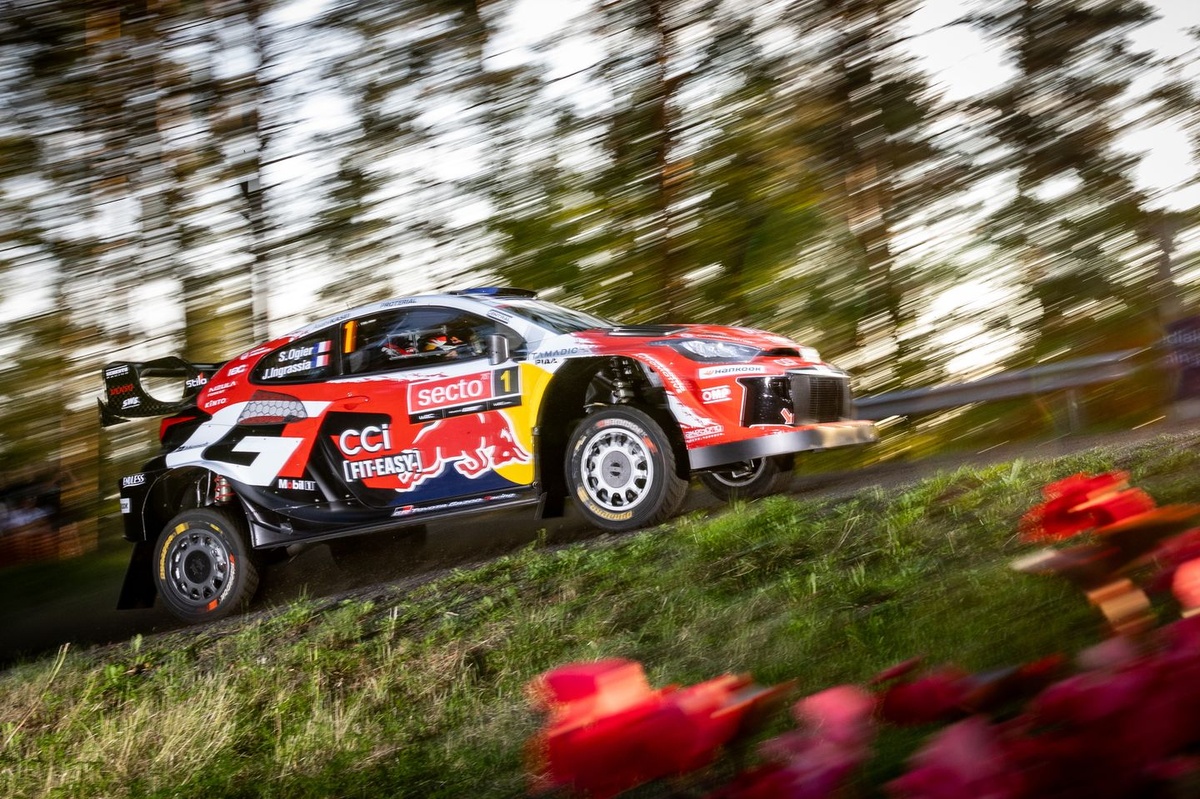
Ogier collapsed after exiting the car
Sebastien Ogier managed to climb out of the wrecked Toyota Rally1 car under his own power after the crash. But within moments, co-driver Julien Ingrassia watched him lie down in the grass and lose consciousness. Ogier's eyes stopped blinking and he was completely unresponsive — no sound, no movement. Ingrassia, who had not competed in the World Rally Championship for five years before this event, described the moment as taking on "a whole new dimension." The nine-time WRC champion spent the night in hospital as a precaution and was the more badly shaken of the two crew members. The pair had been leading Rally Finland when the crash happened. Ingrassia had entered the corner at approximately 140 km/h. Toyota issued a reassuring update on Sunday morning confirming both men were safe. Ogier's full-time co-driver Vincent Landais, who was not in the car for this one-off entry, is expected to rejoin for the remainder of the season. Ingrassia came out of retirement for a single reunion weekend that neither man anticipated ending in hospital.
The OK button nearly let the stage continue unchecked
Ingrassia's first instinct after confirming he was uninjured was to follow standard rally procedure: he pressed the car's "OK" button, a signal to race control that the crew does not need emergency medical assistance and that the stage can resume for following competitors. At that point Ogier was still standing. By the time Ingrassia looked up again, Ogier was on the ground and unresponsive. Ingrassia immediately activated the car's emergency beacon, overriding his earlier signal and triggering a full medical response. The OK button is a standard safety feature in Rally1 cars, designed to let race officials quickly assess whether a stage needs to be stopped for medical intervention. In this case, Ogier's condition changed so rapidly between pressing the button and turning around that the initial signal would have painted a dangerously incomplete picture. The emergency beacon, by contrast, halts the stage entirely and dispatches medical crews to the car's exact location via GPS. Ingrassia's decision to switch from one signal to the other happened within seconds, but those seconds mattered: without the beacon, the stage would have continued while Ogier lay unconscious on the grass.
Pace notes became a makeshift fan
While two or three spectators helped hold Ogier's head in a stable position to protect his neck and spine, Ingrassia used his pace notes — the thick booklet of corner descriptions and speed notes that co-drivers read aloud during stages — to fan air toward his stricken teammate. It was the only tool immediately at hand. Ingrassia said he had never dealt with anything like it in his career. Ogier gradually regained consciousness as people around him kept talking and the emergency services closed in. Pace notes are the detailed, page-by-page corner-by-corner instructions that co-drivers compile before a rally, describing every turn's angle, speed, and hazards. They are printed on sturdy paper and bound into a thick booklet that sits in the co-driver's lap throughout the stage. Ingrassia grabbed his and used it to push air toward Ogier's face while others kept his head immobile — a makeshift measure born of urgency and whatever was within reach. The fact that Ogier was breathing and gradually responding to voices around him suggested his condition was improving, but until emergency crews arrived with proper equipment, Ingrassia kept fanning.
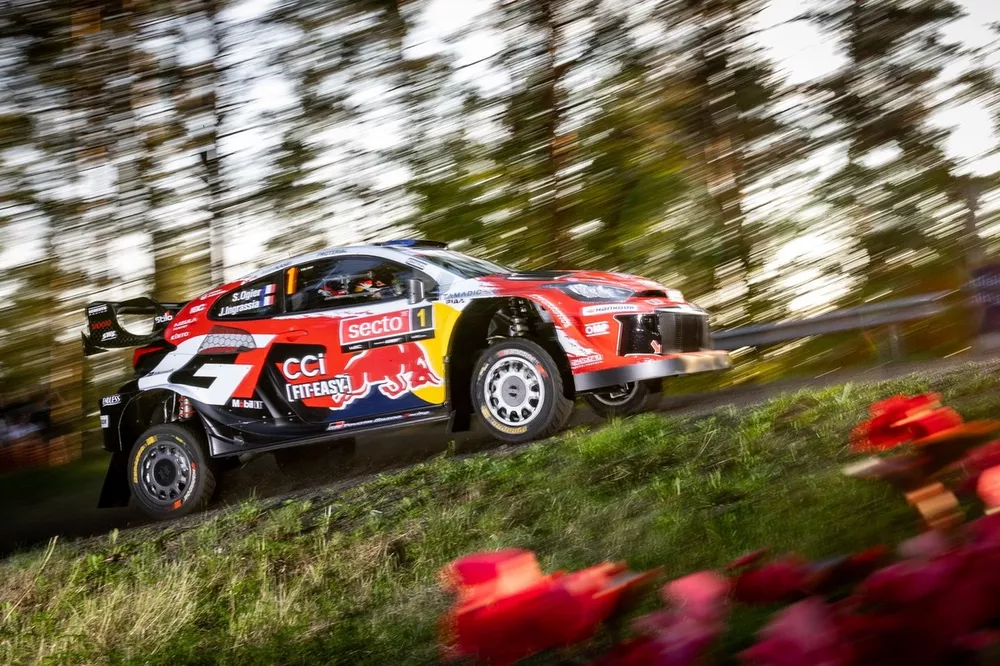
Ingrassia shut down the car over fire risk
Beyond managing Ogier's condition, Ingrassia had to address a secondary hazard. The Toyota's fuel cell and electrical systems posed a fire risk after the impact, so Ingrassia switched the car off while simultaneously relaying a medical assessment of Ogier's condition to the Toyota Gazoo Racing team over the radio. He described staying calm as the critical factor in handling both tasks at once. Rally1 cars run on a hybrid powertrain that combines a turbocharged internal combustion engine with an electric motor and a high-voltage battery pack. After a heavy impact, any of these systems — particularly the fuel cell and battery — can become a fire hazard. Shutting the car down removes the electrical load and reduces the chance of sparks igniting leaked fuel. Ingrassia managed this while also speaking to the team, giving them a running account of Ogier's unresponsive state so that medical staff could be briefed before the helicopter or ambulance arrived. He described the sequence as something he knew he had to do calmly, even as Ogier lay motionless nearby.
The car entered a right-hander at 140 km/h and went left
The crash occurred while Ogier and Ingrassia were leading Rally Finland. Ingrassia told L'Équipe they were doing around 140 km/h when the car reached the corner. A rut had formed in the road surface, and when the Toyota's wheels hit it, the car launched to the left instead of tracking through the right-hand bend. Ingrassia said the onboard footage looks strange as a result. As of Toyota's post-incident review, no technical failure, driver error, or co-driver error has been identified. Rally Finland is run on fast, flowing gravel roads through Finnish forests, and the repeated passage of cars through the same corner can carve deep ruts into the loose surface. When a car's wheels drop into a rut at speed, the steering input no longer matches the direction the car actually travels — the wheels are effectively locked into the groove. Ingrassia's description of the car launching left into a right-hander points to a rut deep enough to physically redirect the Toyota's trajectory before Ogier could correct. The onboard footage, which Ingrassia said looks strange, likely shows the car steering right but moving left — the visual signature of a rut-induced loss of directional control.
Young trees absorbed the impact that older ones would not
From inside the car, Ingrassia said all he could see through the windscreen were trees directly ahead. The Toyota ploughed off the road and into a forested area, but the trees it struck were relatively young — and crucially, they broke on impact rather than stopping the car dead. Ingrassia credited this with preventing far worse injuries. The current-generation Rally1 car's reinforced survival cell also held together through the sequence of impacts, something Ingrassia called "incredibly strong." Older, mature trees have thick trunks that do not break — a car hitting one at speed would absorb the full force of the impact in a near-instant stop, transmitting catastrophic deceleration forces to the occupants. Younger trees have thinner trunks that snap on impact, which extends the deceleration over a longer period and reduces the peak force. The Toyota went through several small trees in succession, each one absorbing some energy and breaking before the next. Its Rally1 survival cell, designed to withstand exactly this kind of sequential impact, kept the cockpit intact throughout.
Vincent Landais will return as Ogier's regular co-driver
Vincent Landais is expected to return alongside Ogier for his remaining WRC appearances this season. Toyota's Sunday update confirmed both crew members were safe but gave no timeline for Ogier's return to competition. The team said it would support their recovery. Ogier was the more badly shaken of the two after the crash, which left him unconscious and requiring emergency medical attention at the scene. He will need time before returning to the cockpit. The impact occurred while leading Rally Finland at around 140 km/h, cutting short a reunion with Ingrassia that neither man anticipated ending in hospital. Ingrassia will not continue in the co-driver role — his participation was always intended as a one-off for this single weekend event.