LED Lighting Moves From Race Cars to Road-Car Rules
The shift toward LED headlights brings longer service life and sharper beam control, but Australian retrofit rules still limit what owners can legally install.
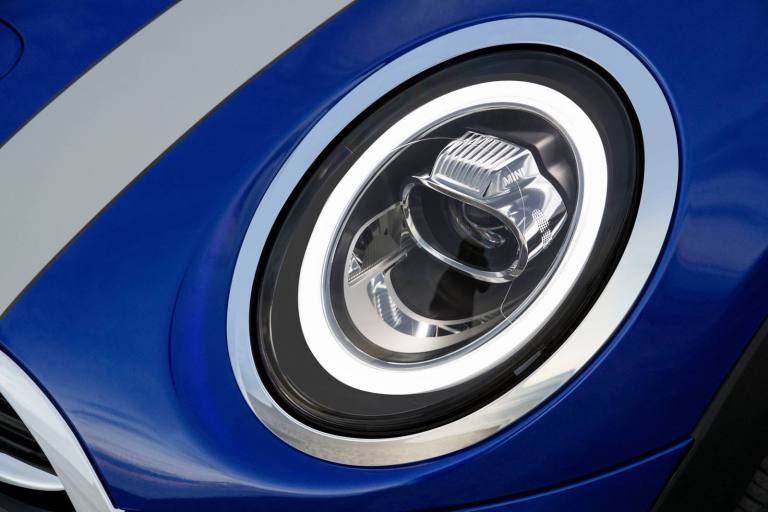
Retrofit kits face an Australian road-use barrier
LED conversion kits are widely marketed in Australia, yet the fine print on many products says they cannot legally be installed on on-road vehicles. Drivers have also been booked after fitting replacement LED headlights to cars that were not designed for them. The central issue is not simply brightness: a headlamp assembly must produce a compliant beam pattern, and replacing its original light source can defeat that design.
Light bars remain a separate legal pathway
Additional LED light bars and driving lights can be fitted to vehicles in Australia when their installation meets the applicable requirements. They must occupy compliant positions, operate only with high beam, and switch off automatically as high beam is cancelled. That makes an auxiliary lighting system legally distinct from inserting an LED bulb into a headlamp built around older technology.
The light begins at a semiconductor junction
An LED produces light when current crosses from a p-type semiconductor to an n-type semiconductor. At that p-n junction, electrons lose energy and release photons, a process called electroluminescence. The semiconductor’s bandgap determines the energy of the transition and therefore the colour produced. Unlike an incandescent bulb, the device has no filament that can burn out.
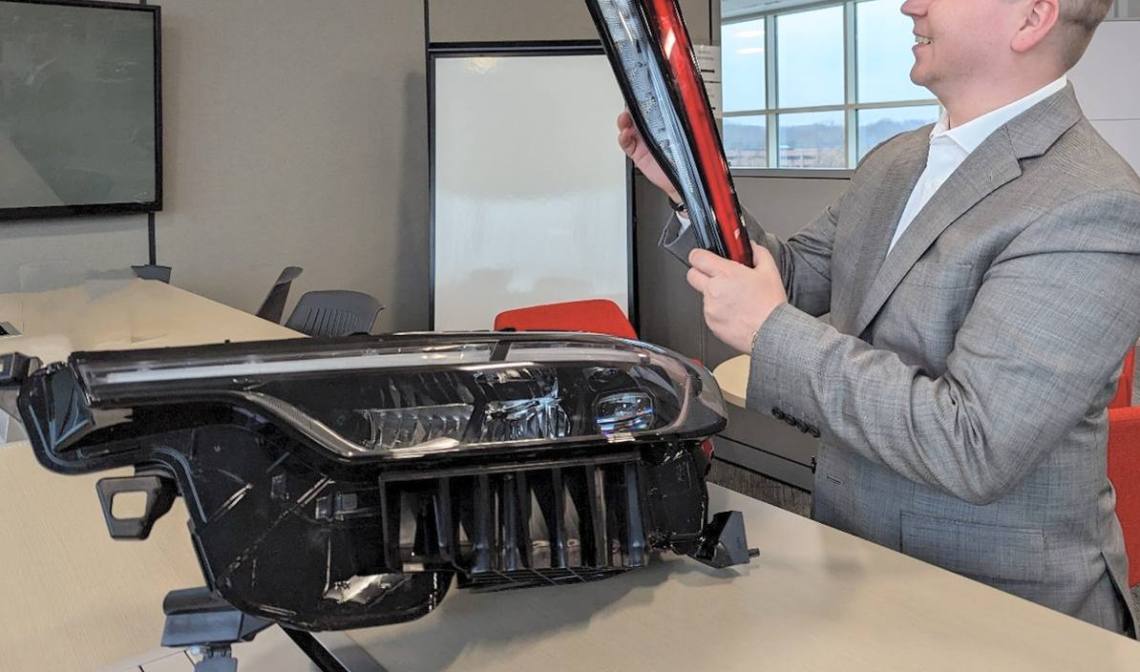
Long life is a major ownership advantage
LEDs can last around 50,000 hours while requiring little energy to operate. They also produce little heat compared with conventional bulbs. At equal brightness, measured in lumens, their lower energy demand can contribute to fuel-efficiency gains in vehicles. Their compact size gives designers more freedom, while the white output is closer to natural light than many older lighting sources.
Motorsport opened the door to white LED headlights
White LED light became practical in 1995, after decades in which LEDs were mainly suited to electronics and low-brightness applications. Audi adopted the technology on its R18 endurance racer in 1997, establishing a motorsport route into road-car lighting. LEDs had already reached vehicle brake lights and indicators before they could deliver enough illumination for headlamps.
Audi turned individual diodes into adaptive beams
The 2013 Audi A8 demonstrated how LED clusters could do more than illuminate a fixed area. Its Matrix LED system used a windscreen-mounted camera to detect vehicles and city limits, then switched off or dimmed selected LEDs while leaving surrounding areas lit. The arrangement could also shift the beam’s focal point around a bend using predictive route data from the navigation system.
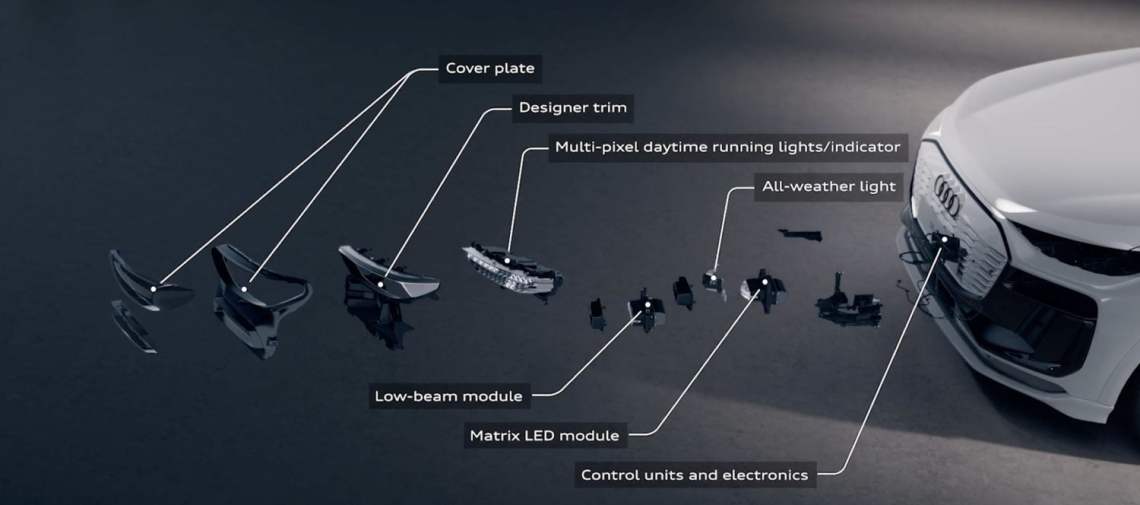
The A8 later gained finer beam control
Audi’s newer-generation A8 used HD Matrix LED high beam, with 32 individually controllable LEDs in each headlight. The diodes were arranged in two rows, and the low beam also gained variable control. This architecture allows the headlight to alter its output across changing traffic conditions instead of treating high beam as a single undivided light source.
Blue LEDs were tested for endurance drivers
BMW announced in 2017 that its endurance drivers would use special glasses fitted with blue LEDs. Blue light can interfere with the circadian rhythm by resembling early-morning light, a response associated with wakefulness and concentration. The same concern explains why tablet makers introduced blue-light filters for nighttime reading. In this application, the diode was used for alertness rather than road illumination.
