A New Course Rebuilds Faded Leather Seats in Place
A step-by-step video course shows the full process of refreshing faded car seats, from stripping old finish to sealing new colour.
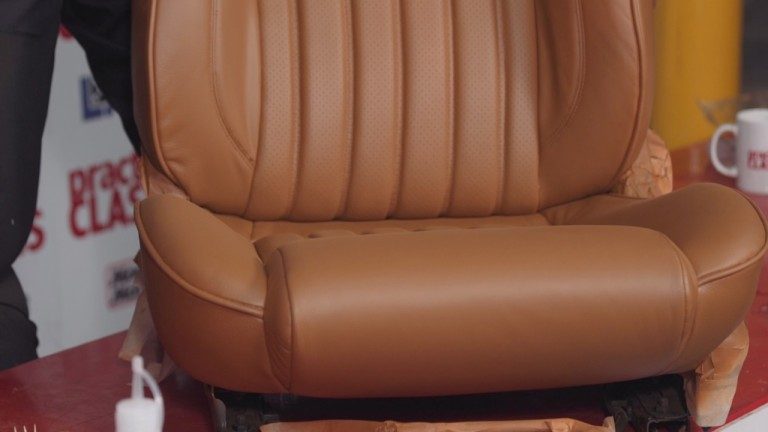
Course Overview
Skill Shack's leather recolouring course is taught by Matt Tomkins, workshop editor at Practical Classics magazine, and Brad from the Leather Repair Company. The video walkthrough covers stripping old colour, laying down new colour in stages, and sealing it with a protective lacquer. Each step is demonstrated on real seats, with attention to the tools and products involved. The instruction is designed for anyone wanting to refresh worn leather trim without replacing it.
Cost vs Retrim
The course is promoted as a way to renew leather seats for a fraction of the price of a retrim. Instead of paying a shop to remove and recover the seats, the DIY process works on the existing hide, cutting material and labour costs. The savings come from doing the stripping, recolouring and sealing yourself with the course's guidance. For classic car owners facing expensive retrim estimates, this presents a budget-friendly alternative.
Vinyl Applicability
The techniques demonstrated in the course are explicitly stated to also apply to vinyl seats and interiors. Vinyl is common in many classic cars, and the same stripping, colouring and sealing steps carry over. The course treats leather and vinyl together, so owners of either material can follow the same process. This widens the course's reach beyond leather-only vehicles, covering a broader range of interior materials.
Layering New Colour
New colour is applied in layers, not in a single heavy coat. Each layer sets before the next is added, preventing streaking and producing a uniform, factory-like surface. This layering distinguishes a proper job from a quick spray-over.
Sealing with Lacquer
After the new colour is built up in layers, a clear lacquer is applied to seal the surface. This final coat locks in the layered colour and shields it from wear.
Self-Paced Video Format
The course is delivered as self-paced videos that can be paused, rewound and restarted at any moment. The instructors acknowledge that viewers are unlikely to master each technique on first viewing. The ability to go back at any point allows learners to practise each step before moving on. This design makes the workshop accessible to beginners who want to work at their own speed.