The Talladega Was Too Fast for NASCAR—and Too Much for Its Own Brakes
Ford's 428 Cobra Jet and wind-tunnel aero got the car banned, but street tires and brakes couldn't handle the power; now 750 units are making collectors pay up.
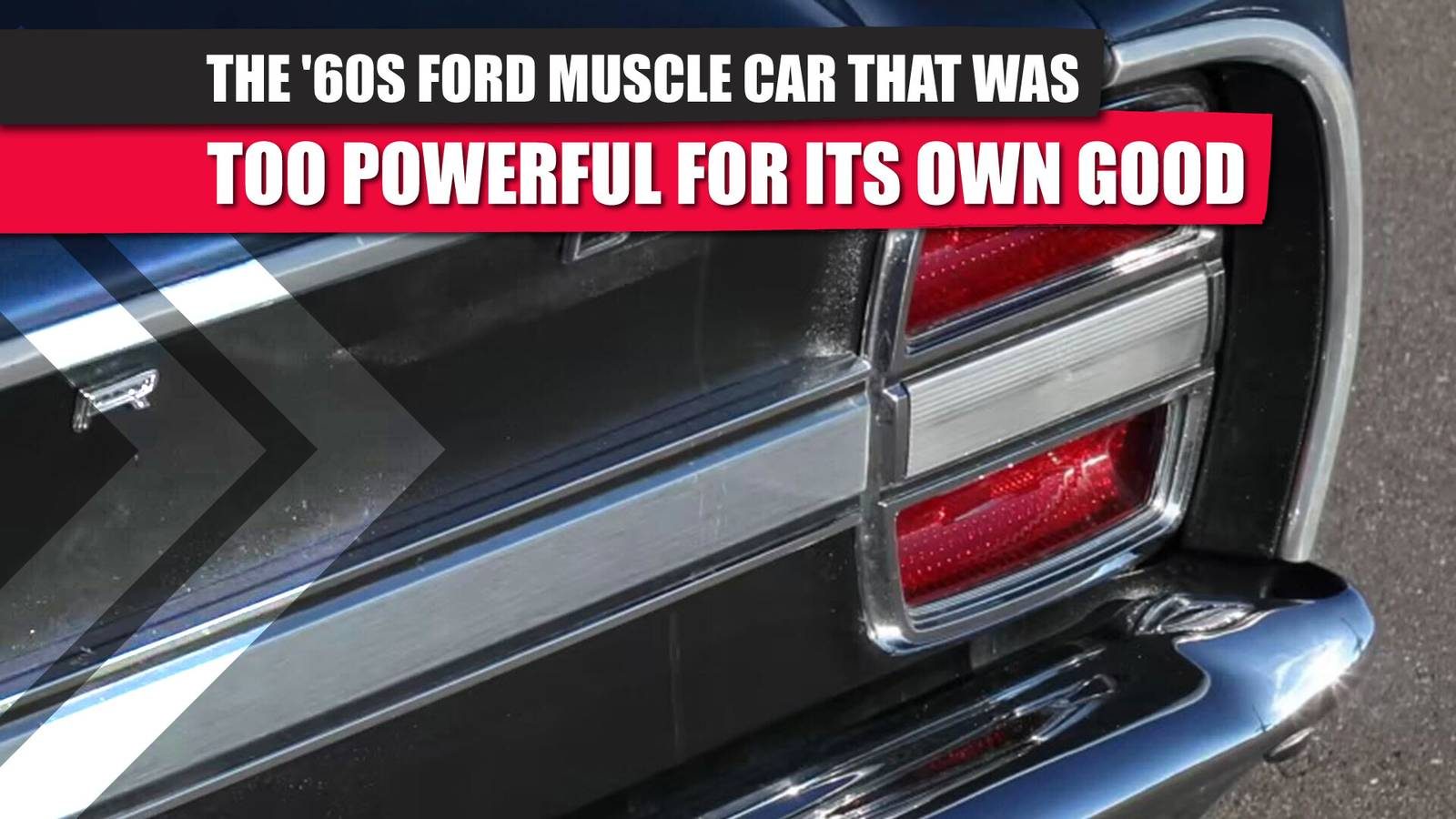
NASCAR banned it for being too fast
The 1969 Ford Talladega did its homologation job so well that it helped trigger NASCAR's Aero Wars, a brief arms race where manufacturers pushed speed and design to extremes. By 1971, NASCAR responded by banning extreme aero cars with big-block engines, citing safety concerns and competitive imbalance. The Talladega, with its ability to top 140 mph, had made the rule book look obsolete. That ban wasn't a penalty—it was a confirmation that Ford had built something too effective. The car wasn't just winning; it was making the competition pointless. When officials outlawed a car for being faster than the regulations could accommodate, they paid it the highest compliment a race-bred machine can receive. The Talladega's legacy is forever tied to that moment when its own success became the reason it had to be stopped.
- Era1960s
- SignificanceNASCAR ban
- Speed140+ mph
Aerodynamics that only a wind tunnel could love
The Talladega's extended nose wasn't cosmetic. Ford reshaped the front end, lengthening it six inches beyond the standard Torino's, and installed a flush-mounted grille and headlights to smooth airflow. The short chrome front bumper doubled as a spoiler, and the rocker panels were modified to lower ride height. The rear bumper came from a 1969 Mercury Cyclone, narrowed and modified to cut drag. Every change reduced air resistance and improved high-speed stability, letting the car slice through superspeedway air at triple-digit speeds. On a street car, such obsessive aero work meant nothing at legal speeds—but on a banking, it was the difference between running with the pack and escaping it. Ford built these changes not for showroom appeal but for competition rules, and it showed in every panel gap.
- DesignAero package
- PartMercury Cyclone bumper
- Measurement6-inch nose extensi
The 428 Cobra Jet's underrated muscle
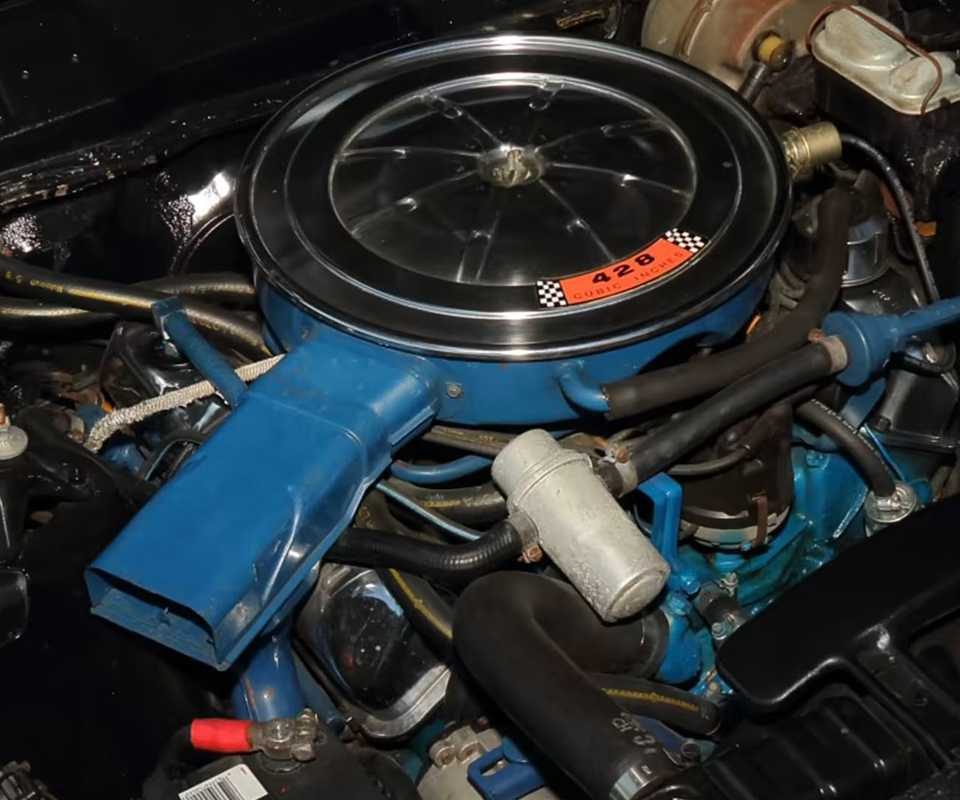
Under the hood sat Ford's 428 cubic-inch Cobra Jet V8, a cast-iron brute with a 10.6:1 compression ratio and a Holley 735 CFM four-barrel carburetor. Factory ratings claimed 335 horsepower at 5,200 rpm and 440 lb-ft of torque at 3,400 rpm—numbers Ford admitted were conservative to keep insurance rates manageable. In real-world testing, the engine routinely produced more. The Cobra Jet delivered strong low-end grunt and mid-range punch, exactly what you wanted for pulling out of a corner on a fast track. Ford paired it with a C6 Select Shift three-speed automatic as standard; only the NASCAR-spec racecars offered a manual. The combination was durable enough for the track and ferocious enough on the street, even if the rest of the car couldn't always keep up.
- Engine428 Cobra Jet
- Output335 hp / 440 lb-ft
- InductionHolley 735 CFM
Street brakes and tires that couldn't cope
The Talladega's high-speed capability exposed a fatal flaw on public roads: it was simply too fast for its brakes and tires. Standard street rubber and modest drum brakes meant that at the upper end of its speed range, the car became unstable and difficult to control. Emergency braking was an exercise in luck. Ford stripped out comfort features like air conditioning and power windows to save weight, making it clear this was a race car first and a street car second—but the race car didn't need to stop for red lights. The average driver found the Talladega demanding and unforgiving, a machine that rewarded the prepared and punished everyone else. It wasn't a car you cruised; it was a car you wrestled. And if you weren't ready for it, it let you know.
- SafetyDrum brakes
- LimitationStreet tires
- ComfortNo AC or power windows
750 units built—exactly enough to race
NASCAR's homologation rules required Ford to produce at least 500 road-legal units of any model it planned to race. Ford built 750 Talladegas, plus four prototypes for development, bringing the total to 754 cars. That number was a business decision, not a performance benchmark—each car was purpose-built to satisfy the rule book and then go win races. The limited run means that today, every Talladega is a piece of racing history. Ford wasn't interested in selling thousands of these to commuters; it wanted to dominate superspeedways. The 750-car figure, small even for a niche muscle car, ensures the Talladega's scarcity and its status as a homologation special, a car that exists because of a rule and then made the rule obsolete.
- Production754 total
- Homologation500 required
- Rarity750 units
Collector values climbing 5% since October 2025
Hagerty's valuation data puts a 1969 Talladega in good condition at $68,300, with excellent-condition examples reaching $97,300 and concours cars commanding $124,000. The highest recorded sale since 2020 was $132,000 for a prototype. Values have risen 5% since October 2025, signaling renewed interest in homologation specials from the muscle car era. That uptick reflects a market mechanism driven by scarcity: NASCAR required at least 500 road-legal units, but Ford built only 750 to dominate the speedways, and each car was purpose-built with an extended nose, flush grille, and lowered ride height—not styling flourishes but wind-tunnel solutions. For a collector, the Talladega offers a tangible piece of the Aero Wars, a car banned for being too fast for the rule book. In practice, values climb because these cars are rarely sold, and when they appear at auction, they draw serious bidding from enthusiasts who want a documented racing pedigree. A buyer should expect to pay a premium over a standard Torino, but the history justifies it. The prototype sale at $132,000 shows how far top-tier examples can go.
- Value$68,300 good
- Value$124,000 concours
- Trend+5% since Oct 2025
Drivetrain choices: auto for the street, manual for the track
Every road-legal Talladega came with the C6 Select Shift three-speed automatic transmission. The only way to get a manual was to buy the NASCAR-spec racing version, which Ford kept for actual competition. Behind the transmission sat Ford's vaunted 9-inch rear end, with a standard 3.25:1 gear ratio and an optional 3.50:1 ratio for quicker acceleration. Gearing like that made highway cruising perfectly reasonable—the 3.25:1 kept revs down—while the optional 3.50:1 delivered more launch off the line. Owners who wanted street manners picked the standard ratio; those who planned to chase quarter-mile times or emulate the race cars optioned the steeper gear. But the automatic itself was no compromise: the C6 was a rugged, torque-converter gearbox designed to handle the big-block's low-end grunt without slipping. First gear provided strong off-the-line thrust, second pulled hard through mid-range, and third cruised effortlessly. The manual's absence on street cars meant buyers couldn't row their own gears, but the C6's shift points were tuned for performance, and its durability became legendary. The drivetrain package was as practical as a big-block muscle car could get, but it still demanded respect—especially when you considered that 440 lb-ft of torque could overwhelm the rear tires if you were careless with the throttle.
- TransmissionC6 3-speed auto
- Axle9-inch rear
- Gear ratio3.25:1 or 3.50:1
Competition suspension was standard—and essential
Ford equipped every Talladega with its Competition Suspension Package, which included heavy-duty shocks, stiffer springs, and upgraded sway bars. This wasn't a factory option you could skip; it was mandatory, and for good reason. The big-block Cobra Jet produced so much torque that the chassis needed serious discipline to keep the car stable at speed. The stiffer springs reduced body roll, the heavy-duty shocks kept the tires planted over bumps, and the upgraded sway bars counteracted the engine's weight transfer during hard cornering. On a superspeedway banking, that suspension was the difference between holding a line at 140 mph and losing control in a heartbeat. The lowered ride height, achieved through modified rocker panels, lowered the center of gravity and worked with the aerodynamic nose to minimize lift. On the street, that setup translated into a harsh, unyielding ride—no one bought a Talladega for comfort—but it was a deliberate trade-off for a car engineered to win races. The shock valving was stiff enough to resist bottoming out on the worst pavement, and the springs were selected to prevent the body from leaning into the high banks. Ford knew the car would only be a footnote if it couldn't handle its own power, so it made sure the underpinnings could take the punishment, both on track and on the roads leading to it.
- SuspensionCompetition package
- HandlingHeavy-duty shocks
- StandardStandard on all