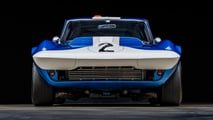
Secret 1,900-Pound Corvette That Ate Shelby's Cobras Could Fetch $13 Million
Zora Arkus-Duntov's secret lightweight Corvette, built to outrun Carroll Shelby's Cobras, is now a collector prize.
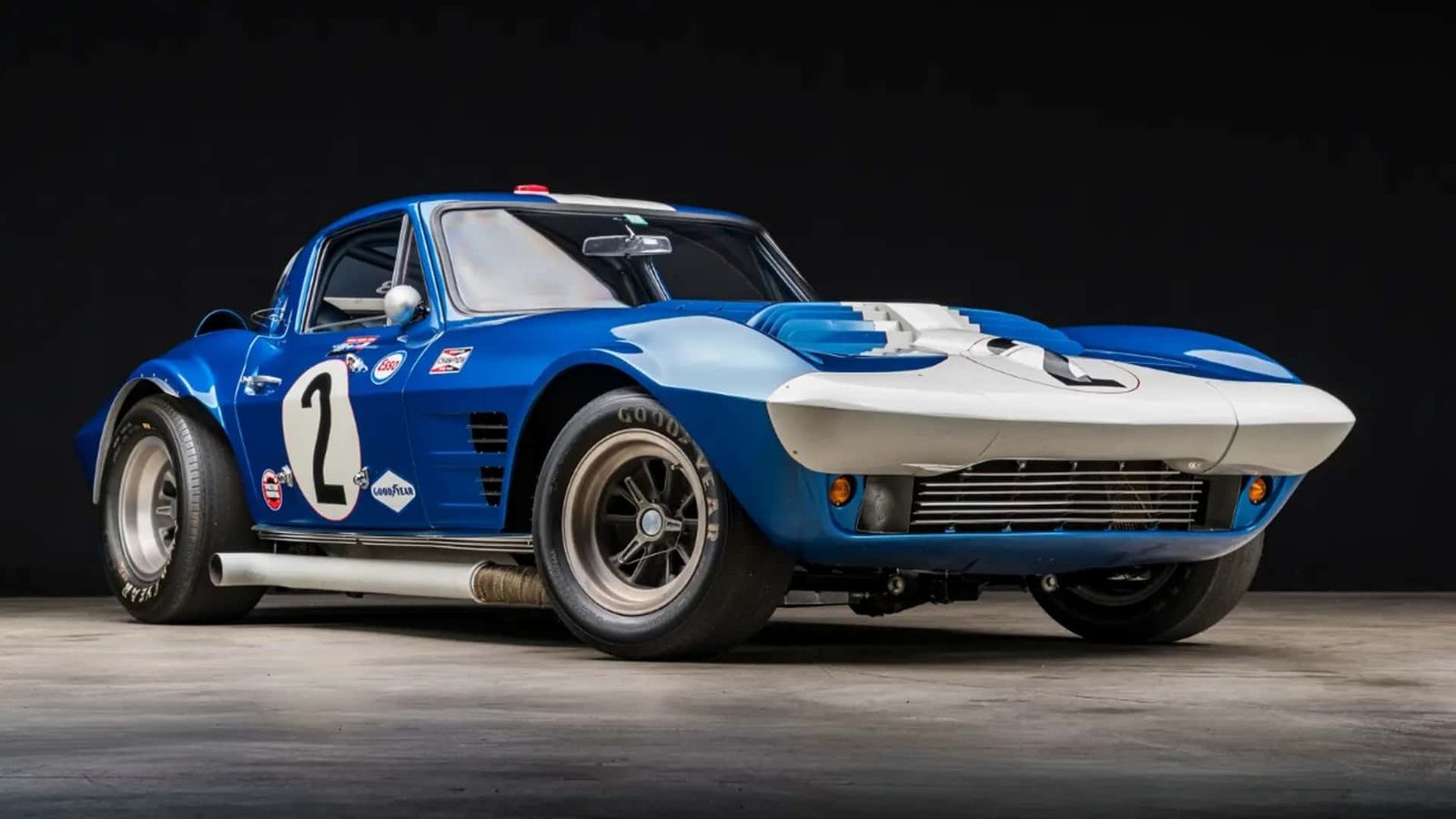
Nassau, December 1963
Carroll Shelby was among the rivals who scrutinized the three Corvette Grand Sports when they unloaded at Nassau in December 1963. His Cobras had been the class of American sports-car racing, and these new Corvettes looked like no showroom Sting Ray anyone had seen. They were low, wide, and clearly designed for one purpose. On the long straights of the Bahamas Speed Week, the Grand Sports pulled away from the Cobras. The paddock gave them the nickname Snake Eater, and it stuck to the model for life. The fight was personal: Shelby had built the Cobra to humble the Corvette, and Zora Arkus-Duntov had built the Grand Sport to answer him. The race week that followed defined how the Grand Sport is remembered, not as a homologation special but as a machine built to chase down a specific enemy.
Zora's Answer to the Racing Ban
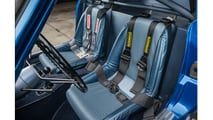
Zora Arkus-Duntov joined Chevrolet in 1953 with a Le Mans class win already on his record. He pushed the small-block V8 into the 1955 Corvette and built the SR1, SR2, and Corvette SS experimental racers. When Shelby's Cobra showed the Sting Ray Z06 was too heavy, Duntov received quiet backing from Chevrolet general manager S.E. "Bunkie" Knudsen to build a competition-only Corvette. General Motors had an official ban on factory racing, so the work stayed out of sight. The Grand Sport kept the Sting Ray silhouette but swapped the production frame and body for a tubular steel chassis and a one-piece fiberglass shell with wider fenders. Weight fell from about 3,200 to roughly 1,900 pounds. Girling disc brakes with aluminum calipers, reinforced suspension parts, lightweight radius arms, a relocated fuel tank, fixed headlamps, and Plexiglas side and rear windows completed the package. GM chairman Frederic Donner canceled the program after five chassis were built.
Chassis 003 Goes Privateering
Zora Arkus-Duntov did not stop when the shutdown order came. He pushed the program through unofficial channels, lending cars to privateers he trusted. Chassis 003 went to Dick Doane, an Illinois dealer whose showroom called itself the "World's Best Known Corvette Dealer." Doane entered the car in SCCA C-Modified with an iron-block 327-cubic-inch V8, chosen for reliability rather than peak output. It won its class at Wilmot and Greenwood, then led 93 laps of the Road America 500 before the engine failed. That failure produced one of the Grand Sport's defining repairs. Doane punched eight cooling holes in the rear valance under the taillights, and the overheating problem disappeared. Every remaining Grand Sport adopted the same fix. Chassis 003 had also been driven by A.J. Foyt and John Cannon at the 1964 Sebring 12 Hours.
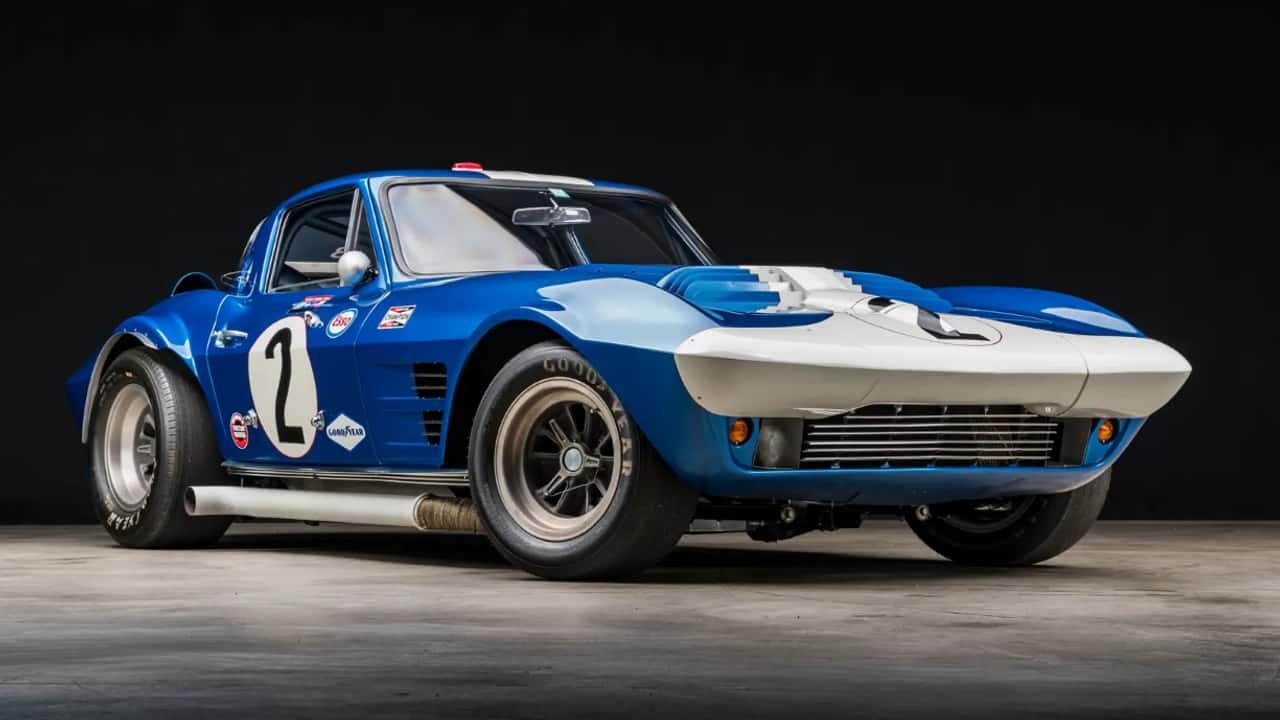
The Bahamas Rework
By late 1963, 003 and 004 were reworked alongside the newly completed 005 for the Bahamas. The cars gained wider wheels with Goodyear Stock Car Special tires, extra cooling vents, and all-aluminum 377-cubic-inch V8s fed by four Weber 58 DCOE carburetors on cross-ram intakes. Early races exposed rear differential overheating. Engineers solved it overnight with an external oil cooler and a radiator mounted in the decklid. In the 112-mile Governor's Cup, Augie Pabst drove 003 to 4th overall. In the 252-mile Nassau Trophy, John Cannon took 2nd in class and 8th overall in 003, while Dick Thompson won the class in 005. The overnight repairs became part of the car's story, not a footnote. The decklid radiator and external cooler were not factory accessories; they were race-week improvisations that made the cars fast enough to beat Shelby's Cobras on the straights.
Why the Fixes Are the Value
The $13 million figure on this Grand Sport is a bet on process, not polish. A car that exists because one engineer worked around a corporate prohibition, then kept racing after the official cancellation, carries a different kind of provenance. Collectors pay for the chain: race entries, class wins, breakdowns, and fixes applied between practice sessions. That is why the 1963 Grand Sport remains a museum piece and a practical lesson in focused race car design. His small team ignored corporate limits, invented lightweight solutions, and learned faster on the track than on the drawing board. The car that came out of that process is now one of the most valuable American racing Corvettes in existence.