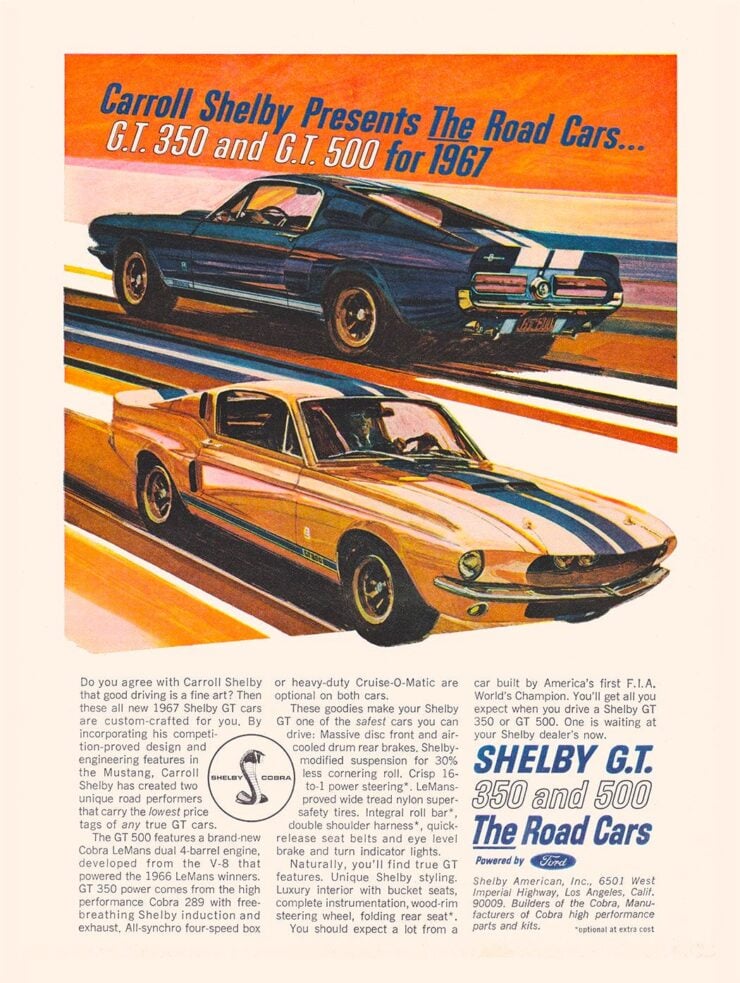
Shelby GT500s Connect 1967 Muscle, 1969 Preservation, and a Possible 2026 Return
This week’s Shelby file spans a rare 1967 four-speed GT500, a long-dormant 1969 survivor, and Ford’s reported plans for another high-output Mustang.
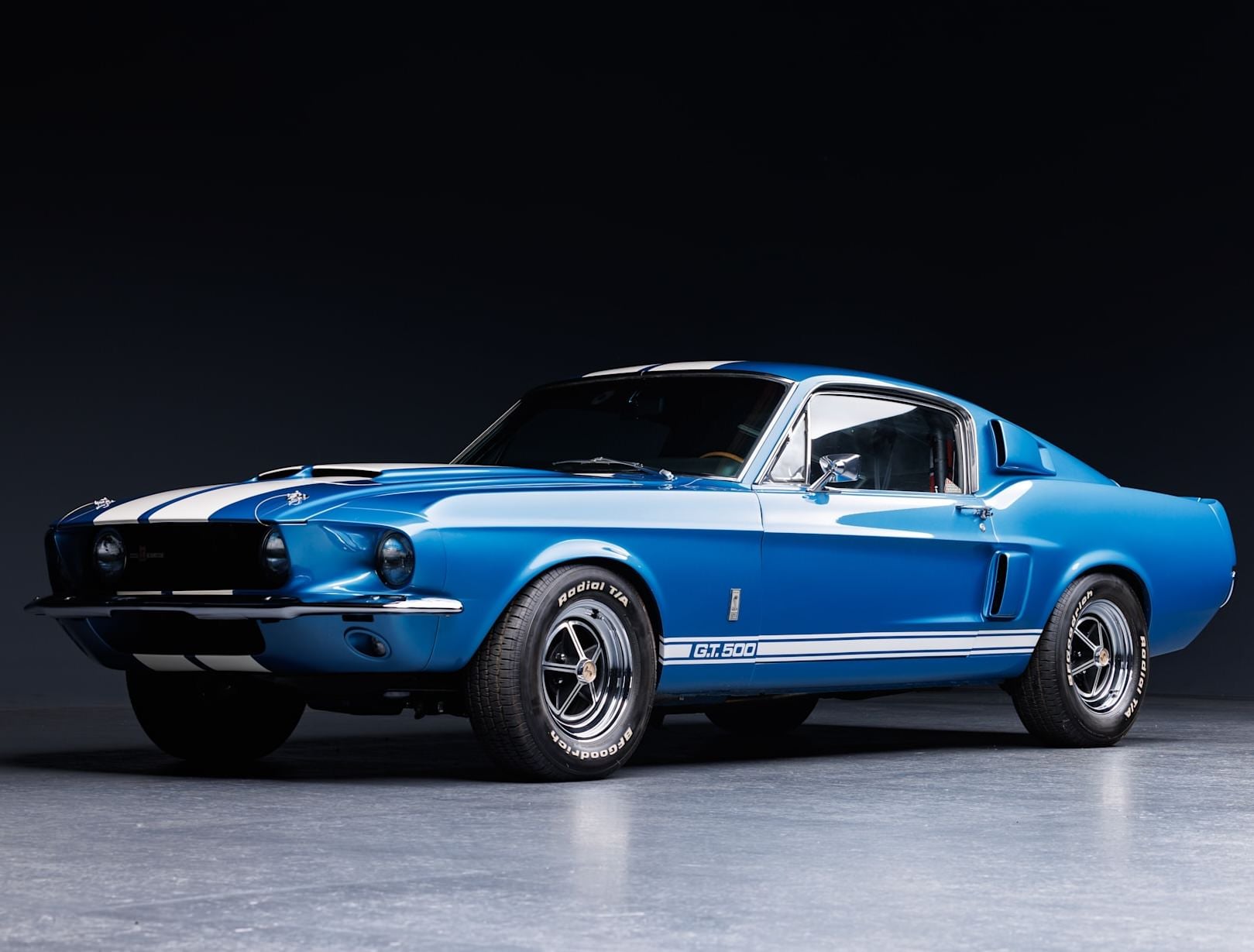
A 1967 Shelby Heads Toward Mecum’s Block
Shelby No. 02502 is scheduled to cross the Mecum auction block in mid-August. Delivered new to Stark Hickey Ford in Royal Oak, Michigan, the 1967 fastback wears white Le Mans stripes and carries the 428 Police Interceptor V8, aluminum medium-rise manifold, twin 600 cfm Holley carburetors, and a four-speed manual. Ford’s published rating was 355 bhp and 420 lb ft.
The Big-Block Shelby Arrived for Straight-Line Speed
The 1967 Shelby GT500 expanded the Mustang performance formula with Ford’s FE-series 428 Police Interceptor engine. Hydraulic lifters, an aluminum medium-rise intake, and dual four-barrel Holleys gave the car a factory rating of 355 bhp at 5,400 rpm and 420 lb ft at 3,200 rpm. Period road tests recorded 6.5 seconds to 60 mph and quarter-mile passes near 15 seconds at approximately 95 mph, placing the GT500 among America’s quickest production cars of its period.
Shelby’s First Mustang Was Built for the Track
Lee Iacocca approached Carroll Shelby in 1964 about creating a competition Mustang, producing the 1965 GT350. Its K-code 289 V8 received an aluminum high-rise intake, Holley four-barrel, and Tri-Y headers, with output listed at 306 bhp and 329 lb ft. SCCA rules required the first car to omit a rear seat, and the GT350 captured the B-Production championship three consecutive years. Customer demand soon pushed Shelby toward greater comfort and broader usability.
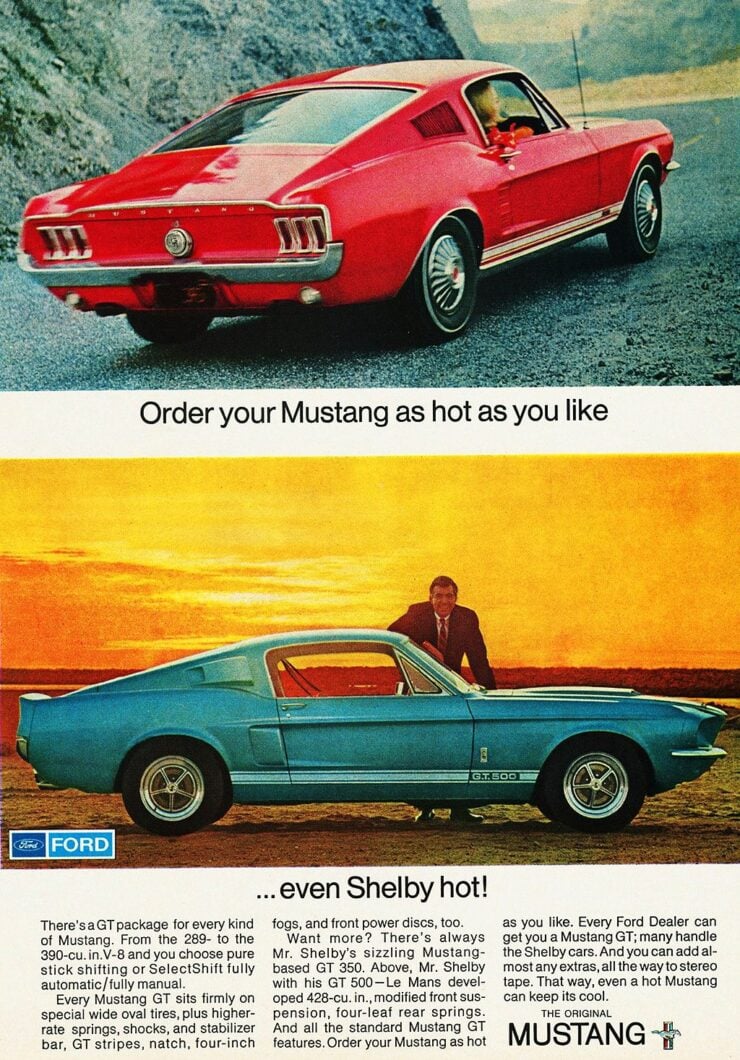
The 1967 Redesign Made Room for an FE V8
Ford’s 1967 Mustang body redesign created enough space between the front shock towers for an FE-series big-block V8, making the GT500 practical. Shelby American completed 2,048 fastbacks that year, while the GT350 accounted for 1,175 cars. New exterior components included a fiberglass front end, hood, side scoops, quarter-panel extensions, ducktail deck lid, and a tail panel using Mercury Cougar lamps. A padded roll bar carried inertia-reel shoulder harnesses adapted from aircraft practice.
The 1969 Shelby GT500
Ford handled the 1969 redesign in-house, while the Shelby GT500 retained the 428 Cobra Jet rated at 335 bhp and 440 lb ft. Shelby terminated his agreement with Ford in the summer of 1969, and the program ended that fall.
A Failed Coil Nearly Stopped the Resurrection
The dormant 1969 Shelby initially fired after the Hagerty team hand-rotated the crankshaft, replaced fluids, and primed the lubrication system through a modified distributor shaft. Marvel Mystery Oil produced heavy smoke as it burned away, but the engine showed strong oil pressure and no troubling knocks. Later test drives exposed heat-related stalling traced to a deteriorated ignition coil. Replacing that component improved reliability and returned the Cobra Jet engine to usable road manners.
Ford’s Next Shelby Mustang May Use the Legend Engine
A United Auto Workers memo reportedly referred to a 2026 Mustang Shelby model and an engine named “Legend,” while Ford’s Dearborn Engine Plant is already associated with the supercharged V8 used in the GTD. Spy shots described by Motor1 show larger grille openings, a revised hood, wider fenders, a low front lip, reshaped bumpers, and a revised rear diffuser. The expected car would occupy the gap between the Dark Horse and GTD.