Xpeng Maps a Wider Electric-SUV Future Across Australia and New Zealand
The next phase pairs two recently launched models with a compact SUV, a larger family vehicle and a new mid-size arrival.
A rollout built for two markets
Xpeng’s expansion is no longer resting on a single model launch. At the company’s first Australia Brand Day, global Vice Chairman and President Brian Hongdi Gu announced a five-model showroom expansion spanning Australia and New Zealand.
Sean Tupp, Xpeng’s local sales manager in New Zealand, set the same rollout ambition for that market. The parallel approach gives both countries a shared product sequence rather than separate regional plans, although each will still have its own currency, retail network and local launch process.
Australia’s planned dealer footprint of 25 to 50 outlets adds a practical ownership dimension to the announcement. A broader range needs more than showroom space: the retail structure determines where prospective owners encounter the vehicles and how the brand establishes a presence beyond its initial launches.
The strategy also gives Xpeng several ways to cover the SUV market. Its programme includes a smaller compact model, a larger vehicle aimed at families and a mid-size SUV, alongside the models already introduced. That spread is the central change: buyers will see a developing range rather than a single choice carrying the entire brand.
The current price ladder starts with G6 and X9
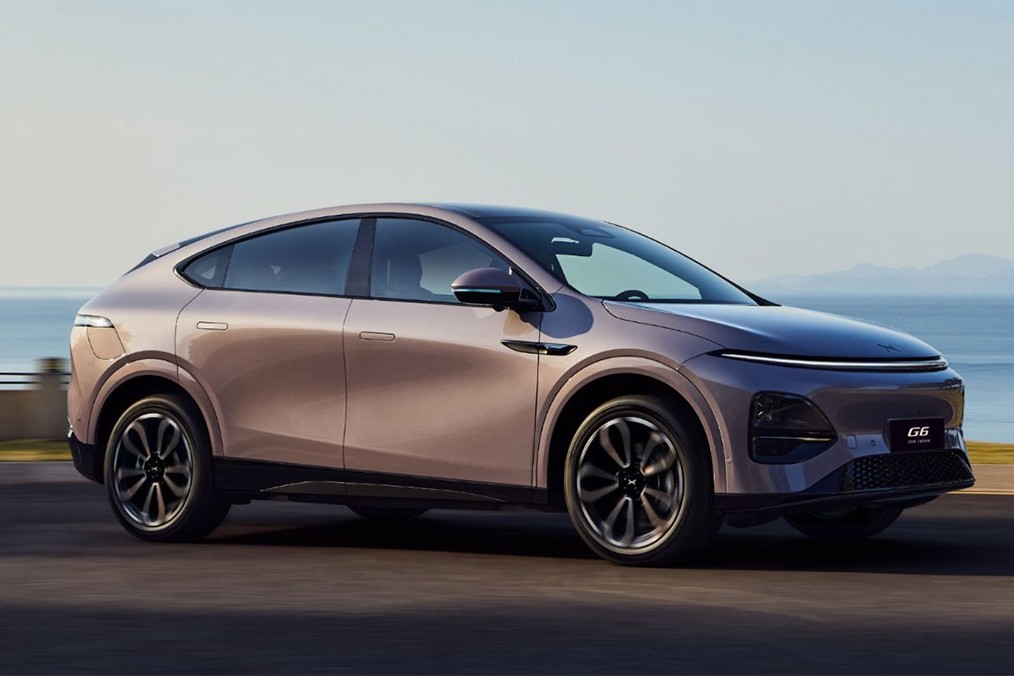
The existing baseline is the new G6 and X9, both recently launched in Australia and New Zealand. In Australia, the G6 starts at 51,800 Australian dollars, while the base X9 is priced at 89,900 Australian dollars.
New Zealand pricing places the G6 at 59,990 New Zealand dollars and the X9 at 104,990 New Zealand dollars. Those figures establish a clear entry-price split inside each market: the G6 is the lower-priced opening point, while the X9 occupies the more expensive position.
That distinction matters as the rest of the range arrives. The two vehicles give Xpeng an immediate spread across its local showroom offer, while the upcoming models add different dimensions and powertrain formats rather than simply repeating the same proposition.
For vehicle selection, the announced prices are the firmest comparison currently available between the two launched products. Australia and New Zealand therefore begin with the same model pairing but not the same monetary threshold. The result is a common range strategy expressed through two separate national price structures.
L03 takes the compact-SUV route
The L03 is Xpeng’s compact SUV, positioned below the G6 and originally introduced in China as the Mona L03. It is planned as a global model in both battery-electric and extended-range electric versions.
At Xpeng’s global Brand Day on 16 July, Sven De Smet, Head of Brand & Marketing for Europe, said the company planned to introduce the model simultaneously in 65 markets. Australia and New Zealand are scheduled for the fourth quarter of this year.
The two versions differ in propulsion: one is fully battery-electric, while the other uses an extended-range electric system. Both versions are part of the planned global launch, including the fourth-quarter rollout in Australia and New Zealand.
G9L brings family-sized scale into view
Xpeng plans to begin sales of the G9L in Australia and New Zealand during the fourth quarter of 2026. A Chinese regulatory filing in May described it as a large SUV developed in battery-electric and extended-range electric forms.
The dimensions set it apart from the G9: the G9L measures 5.12 metres long, 2 metres wide and between 1.78 and 1.79 metres high, with a 3.1-metre wheelbase. Xpeng could use that larger footprint for three-row seating, creating a clearer role for the vehicle within the range.
That layout would put the G9L against the Kia EV9 and Hyundai Ioniq 9, both established reference points for large electric family SUVs. The distinction is important for selection because the G9L’s appeal would depend less on being simply another SUV and more on whether its extra space is converted into useful passenger capacity.
Xpeng has already started testing the G9L on Australian roads ahead of its local launch. That testing places the vehicle’s size and market suitability under direct consideration before the showroom deadline arrives.
L05 fills the mid-size gap
The L05 is a mid-size SUV slightly smaller than the G9. Its stated dimensions are 4,870 mm in length, 1,930 mm in width and 1,636 mm in height, supported by a 2,940 mm wheelbase.
Xpeng has developed the L05 in battery-electric and extended-range electric versions. Australia and New Zealand are scheduled to receive the model in the first quarter of 2027, giving the two markets another SUV choice after the L03 and G9L launches.
The measurements point to a different selection brief from the larger G9L. The L05’s shorter length and lower roofline suggest a mid-size position, while its EREV and BEV formats preserve the same powertrain choice used elsewhere in Xpeng’s expansion programme.
For the local range, the L05 is significant because it adds another body size without abandoning electric propulsion. Its role will be defined by the balance between the stated dimensions and the choice of drivetrain. The launch sequence therefore ends with a vehicle aimed at buyers who want a substantial SUV without moving into the G9L’s large-SUV envelope.