2026 Mazda CX-5, Honda CR-V, or VW Tiguan: Which Compact SUV Gets Daily Life Right?
The 2026 Mazda CX-5 makes the strongest premium impression, but the Honda CR-V wins this comparison by limiting the compromises that matter every day.
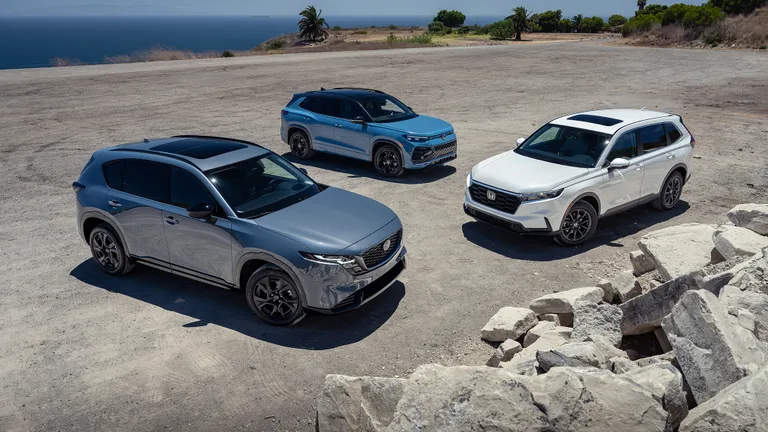
The Quiet Advantage of the Honda CR-V
The 2026 Honda CR-V EX-L AWD does not chase novelty, and that restraint becomes its most useful trait. Its cabin is orderly, familiar, and easy to operate, with physical climate controls and conventional stalks that keep routine adjustments simple. The approach is less dramatic than the Volkswagen Tiguan’s illuminated, screen-heavy interior or the Mazda CX-5’s richer presentation, but it reduces the number of steps between the driver and basic functions.
Honda’s compact SUV also concentrates on the fundamentals that define ownership: usable space, efficiency, and straightforward operation. The tradeoff is evident in the aging 9.0-inch touchscreen and in interior materials that feel merely adequate in places, particularly around the rear doors. The CR-V is not the most exciting vehicle here, nor does it deliver the freshest technology. Its strength is more consequential: it asks less of the owner during ordinary commutes, family trips, and errands. In a class where overstatement often replaces usability, the Honda’s familiar controls and practical layout carry substantial weight.
Mazda Puts Luxury Ahead of Simplicity
The 2026 Mazda CX-5 2.5 S Premium Plus makes the clearest premium argument. Its cabin uses upscale-feeling materials and attractive detailing, while heated rear seats and an airy center-console area add substance beyond visual polish. A 15.6-inch touchscreen and a 360-degree camera are standard on this trim, giving the Mazda a more expensive feel than its compact-SUV footprint suggests.
That equipment does not eliminate friction. The infotainment system is less intuitive than it should be, and the steering-wheel buttons are difficult to decipher at a glance. Those details matter because controls are part of the ownership experience, not decoration. The CX-5’s appeal is strongest when passengers notice the materials, the rear-seat amenities, and the camera view; it weakens when the driver must hunt through unfamiliar interfaces.
Mazda also enters the comparison with a distinct expectation: the driver’s choice. Its polished cabin and generous equipment support that identity, but the vehicle’s premium ambition creates a higher standard for control logic. The CX-5 looks like the special one. The Honda remains easier to live with.
Volkswagen Wins the First Impression
The 2026 Volkswagen Tiguan SE R-Line Black 4Motion is the visual standout. Its flatter, wider-looking body, front and rear lighting elements, and distinctive proportions give it more presence than the conservative CR-V. Inside, screen integration, trim choices, ambient lighting, and small design details create the most futuristic atmosphere of the three. The center display’s slight tilt toward the driver is a thoughtful touch.
The Tiguan’s technology also exposes its weakness. Touch-intensive climate and infotainment controls add steps to tasks that should be immediate. Its column controls are less familiar than the Honda’s conventional stalks, and even sunroof adjustments depend on awkward touch-sensitive inputs. The result is a cabin that photographs and impresses well but is less ergonomically settled during repeated use.
That distinction separates novelty from usability. The Volkswagen supplies the strongest visual argument for spending around $40,000 on a compact SUV, especially for buyers drawn to modern lighting and a tech-forward dashboard. Yet every additional touch point becomes another small interruption in daily driving. The Tiguan’s personality is undeniable; its interface demands more tolerance.
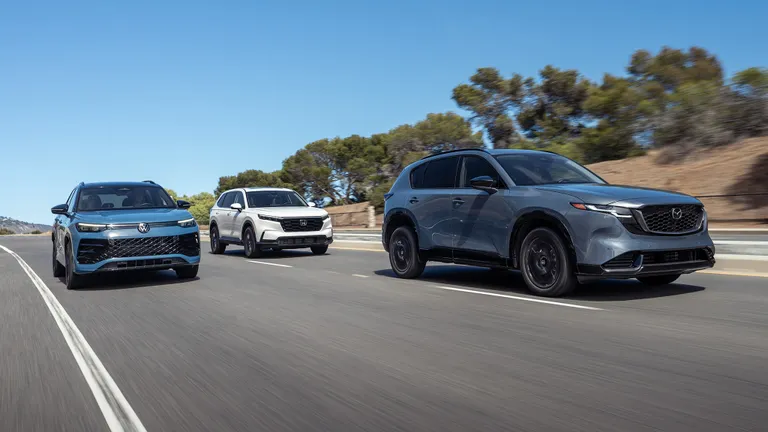
The Best Mix Is Not the Flashiest One
These three compact SUVs define value differently. The CX-5 uses standard all-wheel drive, premium-feeling materials, heated rear seats, and substantial camera and screen equipment to justify its upscale position. The Tiguan counters with the freshest visual design, a distinctive cabin, and a stronger technology presence. The CR-V offers fewer theatrics but delivers the most coherent combination of space, efficiency, and ease of use.
That balance decides the comparison. The Honda’s 2023 model-year lineage makes it the oldest design here, while the Tiguan was redesigned for 2025 and the CX-5 is all-new for 2026. Newness gives the latter two an immediate advantage in presentation, but it does not automatically produce better ownership. The Mazda’s confusing controls and the Volkswagen’s touch-heavy operation introduce compromises that the Honda largely avoids.
The 2026 Honda CR-V EX-L AWD is therefore the strongest all-around choice. It does not dominate every category, and its 9.0-inch touchscreen is plainly behind the newer competition. It wins because practicality, efficiency, and uncomplicated daily use matter more over time than a dramatic first glance.