Morgan's New Supersport Finally Lands in the US — Here's What's Under the Skin
The British marque returns to American shores with a bonded-aluminum chassis and a promise of sharper, more refined driving.
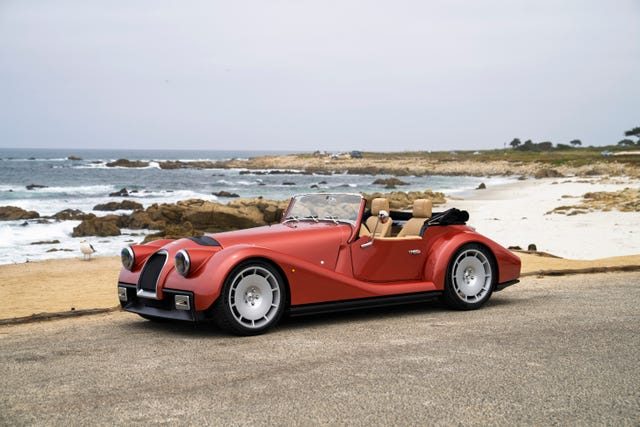
A Comeback Decades in the Making
Morgan has been absent from the U.S. market for years, but that changes on August 14 when the Supersport makes its public debut at The Quail, a key event during Monterey Car Week. The car's arrival marks a significant milestone for the British automaker, which has been steadily modernizing its lineup while retaining its hand-built character. The Supersport is the first Morgan to ride on the CXV-Generation bonded-aluminum platform, a structure that the company says delivers a more refined and engaging driving experience. For American buyers, this represents a rare chance to own a brand-new Morgan without the hassle of gray-market imports or lengthy overseas delivery. The timing also aligns with Morgan's broader strategy to expand its global footprint, and the U.S. is a natural target given its appetite for niche, enthusiast-oriented vehicles.
The Chassis That Changes the Game
The heart of the Supersport's transformation is the CXV-Generation bonded-aluminum platform. Unlike traditional body-on-frame designs that have defined Morgan for over a century, this new structure uses adhesive bonding and aluminum extrusions to create a stiffer, lighter foundation. Stiffness is critical for handling precision, and Morgan claims the CXV platform allows for better suspension geometry and improved ride quality. The bonded construction also eliminates many of the flex and vibration issues that plagued older Morgans, making the Supersport feel more modern from behind the wheel. Enthusiasts who have criticized Morgans for their vintage quirks will find a car that retains its analogue charm but behaves with greater composure on twisty roads. This platform is not just an update; it represents a fundamental shift in how Morgan approaches vehicle dynamics.
From Ford Family to Morgan — Mark Vaughn's Perspective
Mark Vaughn, an Autoweek editor with deep roots in automotive journalism, brings a unique lens to the Supersport's arrival. Vaughn grew up in a Ford family, where he spent countless hours holding a trouble light over a straight-six engine with a single-barrel carburetor while his father cursed the Blue Oval and everything associated with it. That experience, he says, was his introduction to objective automotive criticism. Vaughn's career took him from City News Service in Los Angeles to Europe, where he edited a magazine called Auto and covered Formula 1, sports prototypes, and touring cars without anyone stopping him. He joined Autoweek at the 1989 Frankfurt motor show and has been there ever since.

Modern Conveniences, Vintage Soul
Despite the advanced chassis, the Supersport remains unmistakably a Morgan. The hand-formed aluminum body panels and wooden interior accents are still there, preserving the brand's artisanal appeal. However, the CXV platform enables modern conveniences that were previously difficult to integrate. The bonded aluminum structure allows for better packaging of components, including more comfortable seating positions and improved ergonomics. Morgan has also focused on reducing noise, vibration, and harshness, which means the Supersport can be driven for longer distances without fatigue. For U.S. buyers, this is crucial — a car that only works for a short Sunday drive is a tough sell, but one that can handle a multi-state road trip is another matter. The Supersport aims to be both a weekend toy and a grand tourer, and the new platform is what makes that versatility possible.
What Buyers Should Watch For
For those considering a Supersport, the most important factor is the driving experience itself. The CXV platform's increased stiffness should translate to sharper turn-in and better stability at highway speeds, addressing common complaints about older Morgan models. However, potential owners should also consider the practical aspects of owning a low-volume British sports car. Parts availability, dealer support, and service intervals are all worth investigating before committing. Morgan's return to the U.S. likely means a network of authorized service centers, but it's still a niche brand, so local independent mechanics with experience on British cars could be valuable. Additionally, the Supersport's construction means collision repairs are specialized — not every body shop can work with bonded aluminum structures. The car's value retention is another point: limited production runs and strong enthusiast following typically bode well for resale, but that depends on maintaining provenance and service history.