8 Ways the Hyundai Palisade Puts Families First
Crash-test rigor, a rear-seat alarm, seating for up to eight, and a cargo hold that grows from 18 to 87 cubic feet are among the eight family-focused features that make the Palisade a smarter choice.
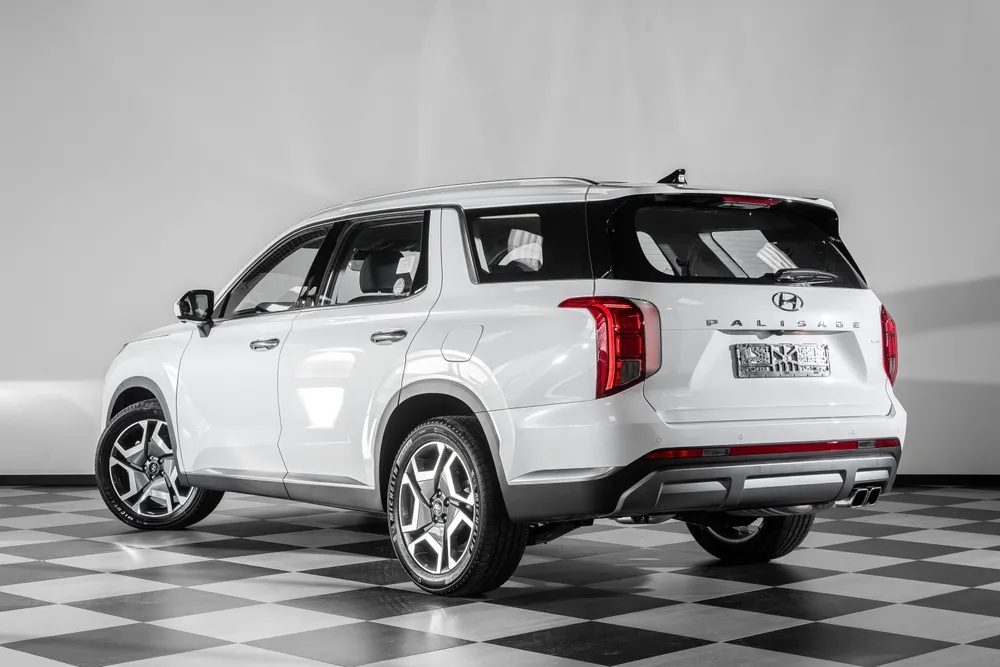
Crash-Test Credentials That Match the Price
The Palisade’s safety case rests on two independent evaluations. The National Highway Traffic Safety Administration gives it a 5-star overall rating, while the Insurance Institute for Highway Safety names it a Top Safety Pick+. Neither badge is automatic for a three-row SUV; the Palisade earned them on the strength of its high-strength steel frame and a suite of standard driver aids. Hyundai’s SmartSense package includes forward collision-avoidance assist with pedestrian detection, lane-keeping assist, and blind-spot collision-avoidance assist. Those systems aren’t add-ons — they come on every trim. For families comparing the Palisade against rivals like the Honda Pilot or Toyota Highlander, the combination of a 5-star federal score and IIHS’s top tier puts it at the head of the class without requiring a luxury badge.
- Safety RatingNHTSA 5-star
- Safety RatingIIHS Top Safety P
- StructureHigh-strength steel f
An Ultrasonic Alarm That Watches the Back Seat
One of the Palisade’s most family-specific features is the available Ultrasonic Rear Occupant Alert. The system uses sonar to detect movement in the rear seats after the driver locks the vehicle. If it senses a child or pet, it sounds an alarm and sends a notification to the driver’s smartphone. This is a direct response to the real-world danger of hot-car deaths — a concern that has driven automakers to add rear-seat reminders. Hyundai’s version goes beyond a simple dashboard chime by actively monitoring for motion. It doesn’t require the driver to set anything; it arms itself when the doors lock. For a parent who has ever second-guessed whether they left a sleeping toddler in the car, this feature turns anxiety into a concrete safeguard.
- Safety FeatureUltrasonic Rear
- Alert TypeSmartphone notificat
Eight Seats, or Seven With Captain's Chairs
The Palisade’s standard configuration seats eight across three rows, with a second-row bench that offers generous legroom for taller passengers. Families that want easier access to the third row — or a more carlike feel — can option second-row captain’s chairs, which drops the count to seven. That trade-off is worth weighing: the bench works for carpool duty or three-across seating, while captain’s chairs add a center aisle and give each passenger individual armrests. The choice affects not just passenger count but how you load kids and groceries on a daily basis. Hyundai also offers heated and ventilated front and second-row seats — a feature usually reserved for much pricier luxury SUVs — plus a power-adjustable driver’s seat with lumbar support for long stretches behind the wheel.
- Passenger Capacity8
- OptionCaptain's chairs (7 seat
- ComfortHeated/ventilated front
Cargo Space That Grows From 18 to 87 Cubic Feet
When the third row is upright, the Palisade offers 18 cubic feet of cargo space — enough for a few carry-on bags or a weekly grocery run. Fold the second and third rows flat, and that figure jumps to 87 cubic feet, turning the SUV into a van-like box for furniture, strollers, or sports gear. The flexibility between those extremes is what matters most for families: you can keep the third row up for passengers and still pack a stroller, or drop one second-row seat to carry a long item while keeping a passenger next to it. Hyundai doesn’t give the Palisade a sliding second row, but the folding mechanism is straightforward, and the cargo opening is low enough to load heavy items without straining.
- Cargo Space18 cu ft behind thi
- Cargo Space87 cu ft with all r
A 12-Inch Touchscreen That Never Overwhelms
The standard infotainment setup centers on a 12-inch touchscreen, a size that dominates the dash without burying controls in submenus. Apple CarPlay and Android Auto come standard, so drivers can plug in and get navigation, calls, and messaging on the big display. The interface is responsive, and physical knobs for volume and tuning remain, which means you won’t have to hunt through menus to adjust climate or audio. For families, the screen’s greatest strength is legibility: passengers in the back can see route info or song titles from the second row, and the system doesn’t lag when switching between apps. Hyundai also keeps the home screen configurable, so you can put the map, media, and phone controls exactly where you want them.
- Infotainment12-inch touchscree
- ConnectivityApple CarPlay and
Charging Ports for Every Device in the Car
A long road trip with kids means phones, tablets, and headphones all running out of power at the same time. The Palisade counters with multiple USB ports scattered through all three rows, so a passenger in the third row isn’t reaching over a sibling to use the front charger. Up front, an available wireless charging pad sits in the console, letting you drop a compatible phone and have it top up without cables. The combination of wired and wireless options covers both older and newer devices. Hyundai doesn’t disclose the exact number of ports, but the placement is what counts: each row has its own access, and the front pad reduces cord clutter. For a family that rotates devices constantly, this small detail saves the recurring argument over who gets the last charging spot.
- ConvenienceMultiple USB ports
- ConvenienceWireless charging p
291 Horsepower From a Smooth V6
Under the hood sits a 3.8-liter V6 that produces 291 horsepower, paired with an 8-speed automatic transmission. That combination yields ample power for merging onto highways and passing slow-moving trucks without downshifting into a noisy scramble. The transmission’s smooth, responsive shifts contribute to refined driving dynamics, keeping the ride composed whether you’re navigating city traffic or cruising on an interstate. For those in regions with snow or rain, the available HTRAC all-wheel drive distributes power between front and rear wheels as needed, boosting traction and stability on slippery surfaces. Despite its size and muscle, the Palisade still manages respectable efficiency: EPA-estimated 19 mpg city and 26 mpg highway for front-wheel-drive models. So whether you’re commuting daily or stretching out on a long road trip, this powertrain balances capability with practicality—just keep in mind that the engine’s output, while competitive, isn’t the class’s most extreme.
- Powertrain3.8L V6
- Horsepower291 hp
- Transmission8-speed automatic
All-Wheel Drive and Fuel Economy That Makes Sense
For families in snow belts or on gravel roads, the available HTRAC all-wheel-drive system is a standout. It automatically distributes torque between front and rear axles based on traction, so you get confident starts on slick pavement without having to shift into a special mode. It also offers a lock feature for low-speed traction on uneven terrain. The trade-off is fuel economy: front-wheel-drive models earn an EPA-estimated 19 mpg city and 26 mpg highway, while all-wheel-drive models dip slightly. That’s respectable for a three-row SUV of this size, though not the class leader. Hyundai’s competitors like the Toyota Highlander offer hybrid variants that post better city numbers, but the Palisade’s V6 and AWD combo is a straightforward, proven setup that doesn’t ask you to learn a complex new drivetrain.
- DrivetrainHTRAC AWD available
- Efficiency19 mpg city / 26 mpg