9 Ways New EVs Are Getting More Practical
VW's Buzz Cargo gains a 218-mile range, drops £5,655, and adds V2L; Volvo's EX50 introduces a new platform with up to 670 hp; and the GT's rivals include the Genesis GV60 and Tesla Model Y.
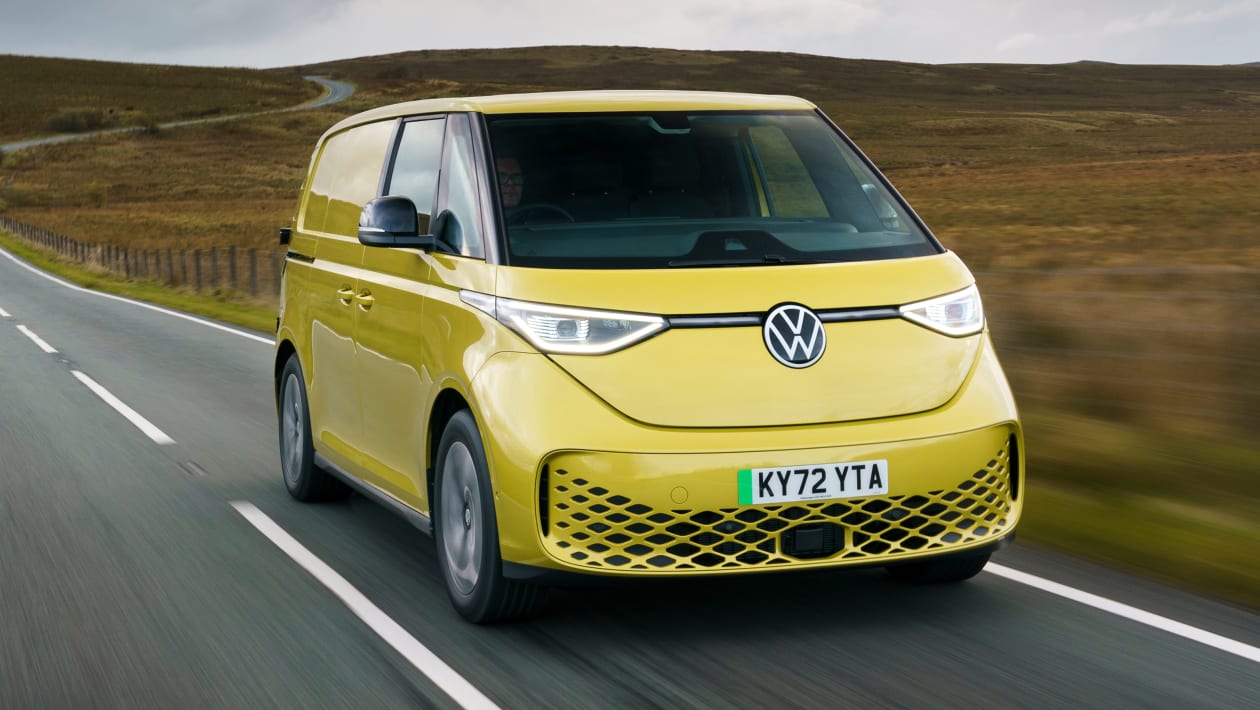
Entry-Level Buzz Cargo's 58kWh Battery Lifts Range to 218 Miles
The entry-level Volkswagen ID. Buzz Cargo trades a 59kWh pack for a 58kWh one, yet the official range rises from 201 miles to 218 miles. That's the result of improved battery efficiency, not a bigger battery. Power also jumps from 168bhp to 188bhp, cutting the 0-62mph time to just over 10 seconds. The motor stays at the rear, keeping the van's familiar driving character. For a worksite vehicle, the extra range can mean completing a full day of deliveries without a top-up, while the extra power helps with heavy loads on inclines. The battery is shared with the new ID.3 Neo, a sign that VW is consolidating its EV tech. This update makes the entry-level Cargo genuinely more useful, not just more efficient.
- Battery58kWh
- Range218 miles
- Power188bhp
Charging the New Buzz Cargo: 105kW and 26 Minutes to 80%
Charging the new entry-level ID. Buzz Cargo is straightforward: a 105kW maximum rate, identical to the pack in the ID.3 Neo, delivers a 10-80% top-up in 26 minutes. That fits neatly into a driver's break. The charging curve is designed to hold high power for longer, so the final stretch doesn't drag. VW's thermal management keeps the battery in its optimal window even in extreme weather, which is important for a work van that sits outside. The CCS port remains at the rear, and the charging speed is competitive against the Kia PV5, the van VW is aiming to beat. For fleets that rely on public rapid chargers, these numbers matter more than top-speed or acceleration. No plug-and-charge here, but the standard app can schedule charging during off-peak rates.
- Charging speed105kW
- Charging time26 min (10-80%)
Buzz Cargo Price Drops £5,655, Plus a £5,000 Grant
Volkswagen has slashed the starting price of the ID. Buzz Cargo by £5,655. The new entry-level Commerce trim starts at £29,995 excluding VAT, and the government's £5,000 Plug-in Van Grant brings the cost down further for eligible buyers. This undercuts the outgoing 59kWh model significantly and positions the Cargo against the Kia PV5. The price cut comes from using the more efficient 58kWh battery and a streamlined trim lineup. For a small business, that £5,655 saving could cover the installation of a home charger or a year's worth of electricity. The grant applies to the entire Buzz Cargo range, but the entry-level version is the one that hits the sub-£30k threshold. This makes the electric van a more realistic option for cost-conscious operators.
- Price£29,995 excl VAT
- Price cut£5,655
- Grant£5,000
V2L and New Infotainment Make the Cargo a Mobile Office
All ID. Buzz Cargo models now include vehicle-to-load (V2L) capability, with up to 3.6kW from the battery. That's enough to run power tools, laptops, or kitchen appliances. The van also gets Volkswagen's updated 6.0 infotainment system, which adds an app store and Connected Travel Assist. This uses online data to enhance driver assistance, including a new function that recognizes traffic lights and automatically stops at red lights. For a worker who uses the van as a mobile office, the V2L outlet can power a coffee machine or a small fridge. The infotainment upgrade brings a more responsive interface and access to additional apps. The traffic light recognition is a step toward more autonomous driving, but it also helps reduce the risk of running a red in a busy urban junction.
- V2L3.6kW
- Infotainment6.0
- Traffic light recognition
Bazooka Options: 79kWh Battery With 277-Mile Range or 335bhp AWD
Beyond the entry-level pack, the ID. Buzz Cargo still offers a 79kWh battery that delivers up to 277 miles of range. That's a significant jump, making it viable for long-distance delivery routes. For those who need more traction, a 4Motion dual-motor setup provides up to 335bhp, although it's only available with the larger battery. The AWD version not only improves grip on slippery job sites but also increases towing capacity, though specific figures aren't given. There's no long-wheelbase version of the Cargo, unlike the ID. Buzz MPV which offers an LWB variant. This keeps the cargo area compact but manageable. Fleet managers who need maximum range for cross-country work will prefer the 79kWh, while those who prioritize payload on uneven terrain might opt for the 4Motion. Both versions benefit from the new V2L feature.
- Battery79kWh
- Range277 miles
- Power335bhp
- Drivetrain4Motion
Volvo EX50's SPA3 Platform Brings 369-HP Single Motor or 670-HP Dual
The Volvo EX50 will ride on the new SPA3 platform, first introduced with the EX60. This architecture is built to lower costs and improve scalability across Volvo's electric lineup. The EX60 offers a single rear-mounted motor with 369 horsepower and a dual-motor all-wheel-drive setup delivering up to 670 horsepower. The EX50 is expected to use the same powertrain options, though final outputs haven't been confirmed. SPA3 also supports different battery chemistries and is designed for fast charging. The platform's modularity means the EX50 can share production tooling with the EX60, which should help keep the entry-level price down. This is the first Volvo to be built at the new Kosice, Slovakia plant, which is expected to handle high-volume production of SPA3 vehicles. The EX50 effectively replaces the EX40, which is being phased out.
- PlatformSPA3
- Power369hp single / 670hp dual
Buzz Cargo Lineup: Entry Price, Grant, and Body Options
The entry-level ID. Buzz Cargo now starts in Commerce trim at £29,995 excluding VAT, which is £5,655 less than the outgoing 59kWh version. It also still qualifies for the Government's £5,000 Plug-in Van Grant, lowering the effective commitment for a business buying outright. The range spans from this new entry point up to a larger 79kWh battery that extends range to 277 miles, and a 4Motion dual-motor version offering 335bhp for buyers who need more capability. What is missing is a long-wheelbase Cargo: the ID. Buzz LWB is offered only to MPV buyers, so a van owner cannot add extra load volume by choosing a longer chassis. That gives the Cargo a clear position—cheaper to enter, with a high-power option—but without the stretched body that some fleets might want.
- Sizebetween Ioniq 5 and Mach-E
- RivalsOptiq $52,695, Q4 e-tron
Connected Travel Assist: Smarter Driving Assistance in the Buzz Cargo
The updated ID. Buzz Cargo introduces Volkswagen's Connected Travel Assist, a driver-assistance system that uses online data to improve its behavior. Its most distinctive feature is traffic light recognition: the van can identify a red light and automatically bring itself to a stop, which is a real edge for someone driving in dense city traffic. The system is bundled with the 6.0 infotainment upgrade, which also adds an app store. Because it draws on online data, the assist package can evolve after the van is sold, so a business does not need new hardware to get new assistance features. For a daily urban route, that means less time spent managing a repetitive stop-and-go pattern and more confidence that the van will handle one part of driving on its own.
- Pricehigh $40,000
- Launchlate 2027
- ProductionKosice, Slovakia
- Volume10,000 units
GT's Rivals: Genesis GV60, Tesla Model Y, and Its Own Lineage
The Range Rover GT enters a small field of direct competitors. The Genesis GV60 and its high-performance Magma variant overlap with it, though without final specs it's hard to gauge how closely. The Tesla Model Y and Model Y Performance also could emerge as rivals, especially on price. However, the GT's Range Rover badge and grand-tourer design set it apart from these mainstream crossovers. It becomes the fifth member of the Range Rover family, joining the Velar, Sport, and full-size models. Its lower roofline and sleek shape aim for a more dynamic look than traditional boxy Range Rovers, while still offering the brand's signature upscale interior. The hybrid version, which will follow later, could appeal to buyers who want efficiency without going full electric.
- RivalsGenesis GV60, Tesla Mode
- Lineupfifth Range Rover