Frame Number Two: The Metisse That Steve McQueen's Son Didn't Get
A 2008 Metisse Desert Racer, chassis #002, built to match the motorcycle McQueen called the best-handling bike he ever owned, heads to auction with fewer than 2,000 miles on the clock.
The Mongrel That Beat the Factory
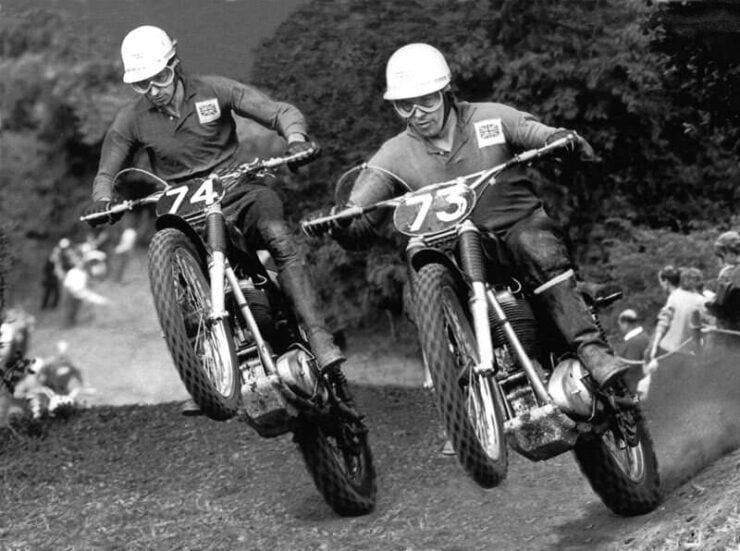
In the late 1950s, brothers Derek and Don Rickman were winning enduro and scrambles races across Britain, but the factory bikes they rode were too heavy to be truly competitive. Their solution was to design their own frame — a tubular steel cradle that could accept engines from Triumph, BSA, Matchless, and later Japanese manufacturers via adapter plates. They called the result Métisse, French for "mongrel," a nod to the mixed provenance of the parts. The Rickman-designed frames were both stiffer and lighter than anything the major factories produced, and demand from fellow racers grew fast enough that the brothers began selling complete motorcycles, kits, and individual frames. Over sixty years on, it is still possible to buy a Métisse today.
McQueen and the Desert Sled Connection
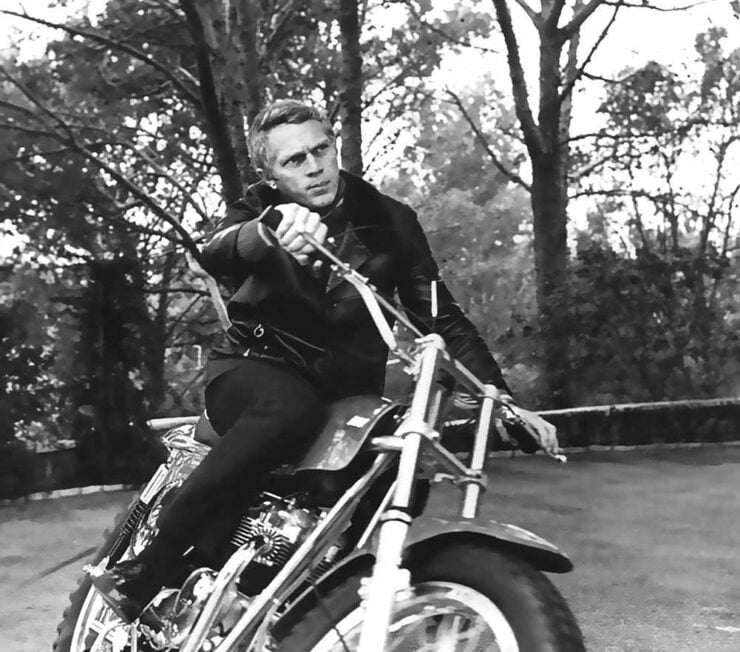
Steve McQueen was already a serious off-road racer by the early 1960s, competing under the pseudonym Harvey Mushman to avoid the circus that would have accompanied his celebrity. His weapon of choice was the Triumph TR6C, known as the "Desert Sled," a factory-built scrambler that became one of the most popular desert racing motorcycles of the 1960s. When McQueen acquired a Métisse fitted with the same Triumph parallel-twin engine but mounted in the much lighter Rickman frame with Ceriani forks and improved suspension, it quickly replaced the TR6C as his favourite. McQueen rode it extensively in desert races and later described it in an interview as "the best handling bike I've ever owned."
Building the Replica
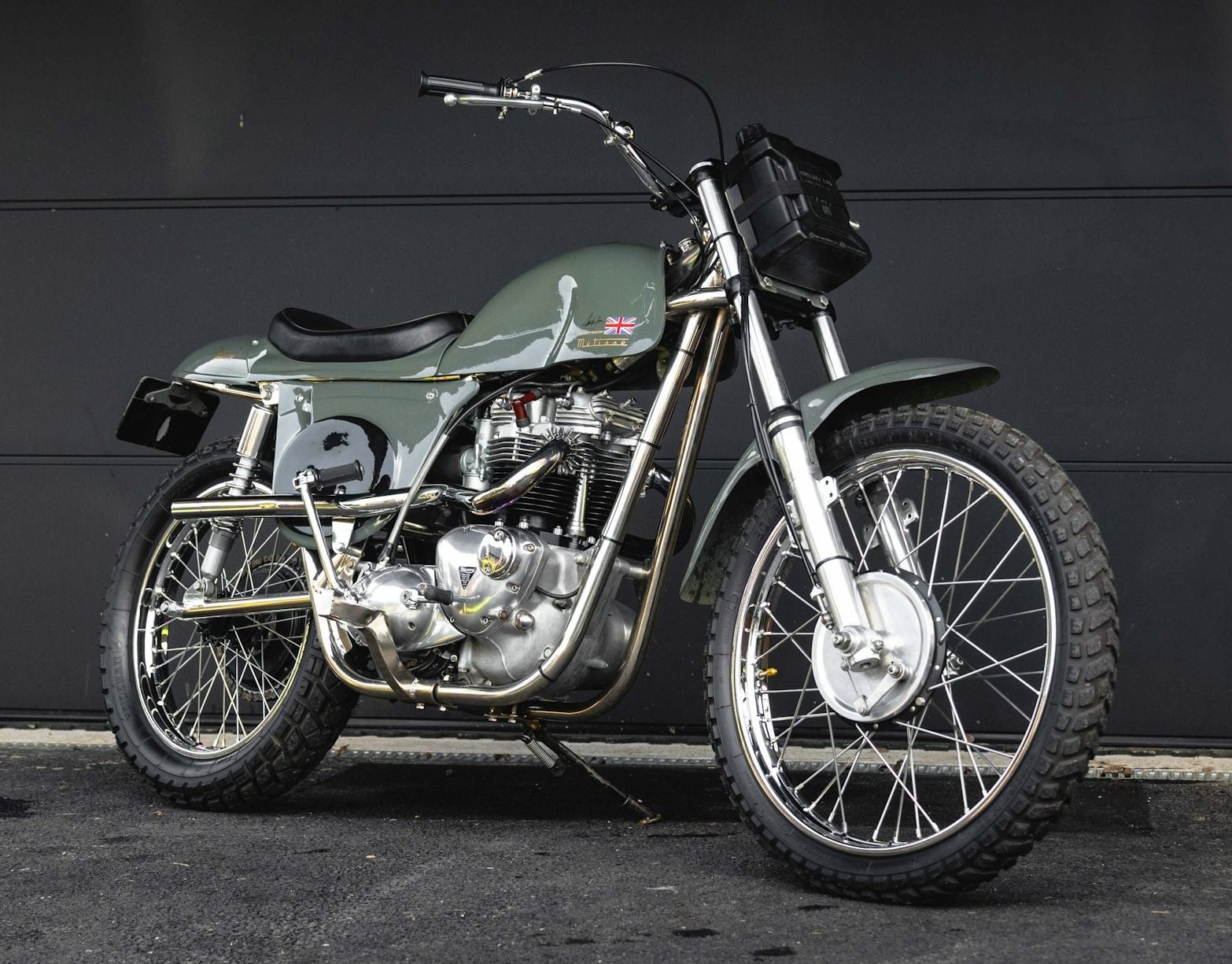
The Metisse Steve McQueen Desert Racer is a limited run of 300 motorcycles built to replicate McQueen's original 1960s machine, developed with the approval of the McQueen estate. Each bike starts with a hand-made, nickel-plated, brazed 4130 chrome-moly tube frame paired with a matching swing arm. The front end uses 35mm Ceriani forks mounted in BSA yokes. Twin Girling reproduction shock absorbers handle the rear, with 190mm of front suspension travel and 100mm at the rear. Braking comes from a 7-inch Triumph drum up front and a smaller drum at the rear. The Rickman fiberglass body kit — fuel tank, seat, rear cowl, front fender, and dual side covers — is finished in battleship grey, with the Métisse logo and Steve McQueen's authorised autograph on the tank.
Chassis 002: The First Public Bike
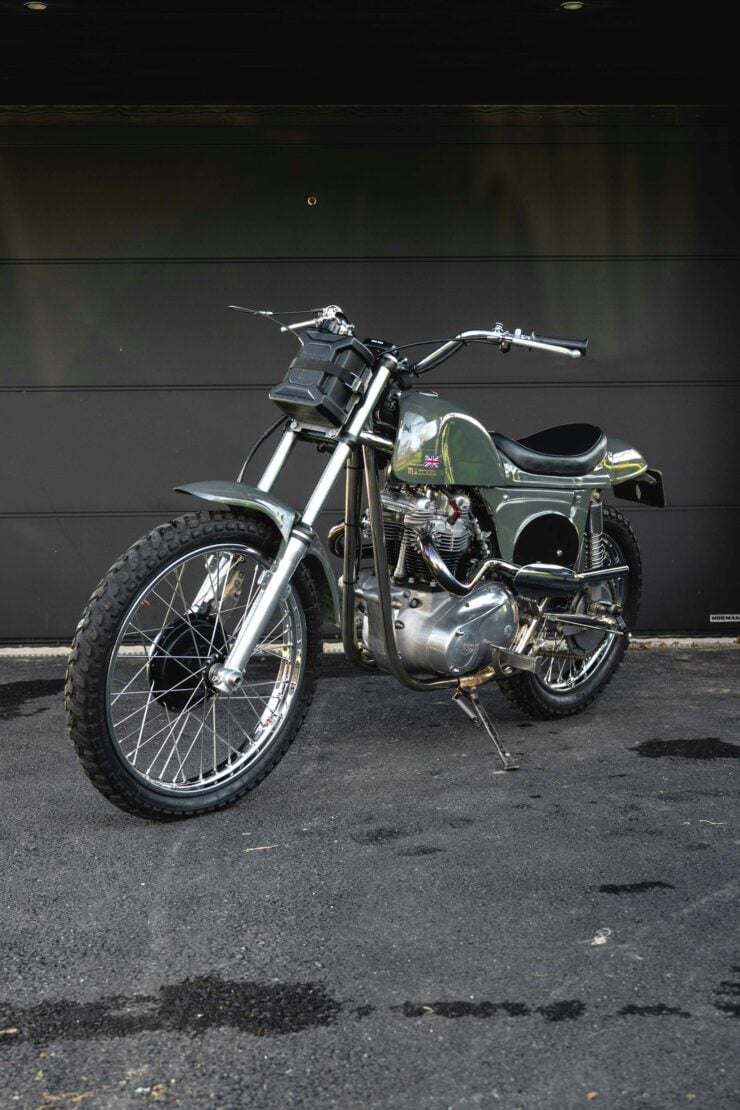
This particular machine is frame number #002, the second of the 300-unit production run and believed to be the first made available to the general public — chassis #001 went directly to Chad McQueen. The bike was first registered with the DVLA in March 2012 and has passed through five owners since. It now shows 1,982 miles on the odometer, and its most recent MOT test, carried out on 22 July 2026 at that mileage, resulted in a first-time pass with no advisories. The sale includes a Certificate of Authenticity from Métisse and a copy of *Derek & Don Rickman, The Metisse Story* by David Gittins, signed by both Rickman brothers and the author. For a collector, the combination of chassis number provenance, low mileage, clean MOT history, and documented chain of ownership makes this one of the most significant of the 300-unit run.