Factory decisions, not driving habits, set the X5's carbon footprint
A validated 40% cut in product development, a body that's half electric-arc steel, and a one-third secondary-material mass - the numbers behind the X5's pre-road emissions.
A validated 40% cut in product development
BMW's life cycle analysis for the new X5 shows a 40% reduction in CO2e emissions during the product development phase, a figure verified by the German Technical Inspection Association before the car is officially launched. This validation covers the design and sourcing stages, not just tailpipe output. The reduction comes from decarbonising BMW's own production and its parts suppliers. The full cradle-to-grave footprint will be published at launch, but the development phase set the baseline. This early cut matters because it locks in savings that persist through manufacturing, use, and eventual disposal. For a large SUV like the X5, shaving 40% off the development phase emissions is a substantial achievement, and it reflects changes in both materials and energy sources.
- Figure40% reduction
- ValidationGerman Technical Ins
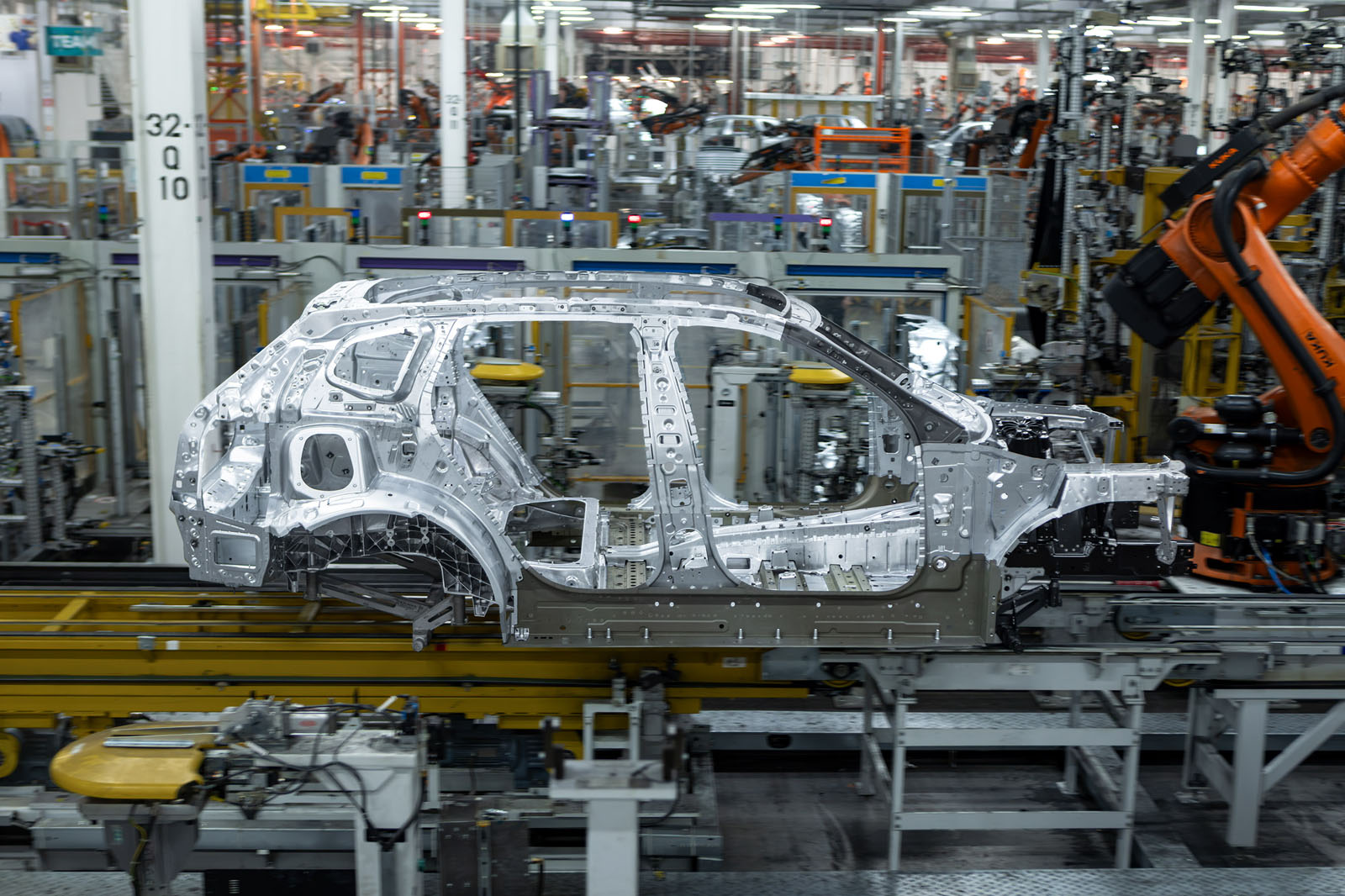
Electric arc furnace steel forms half the body
Around half of the X5's body shell is made from electric arc furnace (EAF) steel, which differs fundamentally from conventional steelmaking. EAF uses recycled scrap as its primary input and melts it with renewable electricity, whereas a blast furnace reduces virgin ore with coke. That difference avoids the emissions from iron extraction and the chemical reduction step. The steel also includes a high proportion of recycled material, so it does not rely on freshly mined ore. Because steel accounts for a large share of a vehicle's mass, choosing EAF for half the body has an outsized effect on the car's embodied CO2e. The rest of the structure and interior also use secondary materials, extending the approach beyond just the body shell. The X5's load-bearing panels and chassis elements carry a significantly lower carbon debt before assembly begins, without any trade-off in crash safety or rigidity.
- Materialsteel
- Processelectric arc furnace
Renewable electrolysis for aluminium components
The X5's heavy-duty aluminium components—wheel rims, wheel supports, rear axle supports, and brake calipers—are produced using renewable energy for both the electrolysis that converts alumina into aluminium and the subsequent manufacturing steps. Aluminium electrolysis is one of the most energy-intensive processes in industry; switching to solar or wind power eliminates a major fraction of the metal's carbon footprint. Additionally, 35% of the aluminium used in the doors comes from either external recycling sources or waste from BMW's press shop, which is looped back into the process. This closed-loop system means that over a third of the door's metal has already served a prior purpose, and the remainder is smelted with clean power. For the vehicle, that translates into a measurable reduction in embodied CO2e for the wheels, suspension, and brake components. The combination of green electrolysis and high recycled content makes these parts notably lighter on carbon than conventionally produced aluminium.
- Figure35% of door aluminium
- Materialaluminium
- Processrenewable electrolysis
Headliner yarn: 100% recycled PET
The headliner in the X5's cabin uses yarn that is 100% recycled polyethylene terephthalate (PET)—the same plastic found in drinks bottles. Every strand of that visible roof surface comes from post-consumer plastic, diverting waste from landfill and avoiding the CO2e emitted when producing virgin polyester. The recycling process turns bottle-grade PET into a fibre that meets the same acoustic and aesthetic standards as new plastic, so there is no compromise in cabin refinement. For a production vehicle, specifying a fully recycled yarn across such a large surface is an uncommon step, and it contributes to the car's carbon reduction before it ever draws electricity. The 100% figure is not a marginal claim; it applies to the entire headliner, not just a decorative panel. The headliner alone avoids the fossil feedstock and polymerisation energy that would be required for a conventional textile.
- Materialpolyethylene terephtha
- Process100% recycled
One-third of the X5's mass is secondary material
Secondary raw materials account for about one-third of an iX5 60 xDrive's mass—940kg. This includes recycled steel made in electric arc furnaces, aluminium from closed-loop scrap and external recycling, and the PET yarn in the headliner. BMW also feeds press-shop waste back into the production loop, so offcuts from stamping become input for new parts. The 940kg figure is the tangible result of all those individual choices. It is roughly the weight of a small car, and it represents material that never needed to be mined or smelted from virgin ore. Because a vehicle's mass drives its energy consumption, the use of lighter secondary materials also leaves a residual efficiency benefit. But the primary advantage is the CO2e avoided during the extraction and refining phase, a saving locked in from the moment the parts are formed.
- Figure940kg
- Materialsecondary raw material
iX5 beats combustion CO2e after one to two years
The iX5 60 xDrive's carbon advantage over a comparable petrol or diesel model is not immediate—it compounds with mileage. BMW estimates that after one to two years of driving, the cumulative CO2e of the electric version falls below that of a combustion equivalent. That crossover point depends on three variables: the drivetrain variant being compared, the annual distance covered, and the carbon intensity of the electricity used for charging. A high-mileage driver with access to renewable grid power will reach the break-even sooner than a low-mileage owner on a coal-heavy grid. The reasoning is straightforward: EV manufacturing emits more CO2e, but each kilometre driven emits far less. The rate at which the gap narrows depends on the same variables, but BMW's estimate places the crossover within one to two years. For anyone considering the purchase, the one-to-two-year figure is the threshold at which the car's lifetime emissions start to favour the electric option.
- Figure1-2 years
- Processuse phase
Life cycle analysis databases make the numbers concrete
Quantifying a car's full CO2 footprint is a formidable task, and for two decades the industry has relied on life cycle analysis (LCA) databases to do it. These databases compile emission factors for every material, process, and energy source, letting automakers compare choices—electric arc steel versus blast-furnace steel, recycled PET versus virgin polyester, renewable electrolysis versus coal-fired aluminium. BMW used these databases to model the X5's manufacturing, use phase, and end-of-life disposal, and the results underpin the 40% reduction figure. Without a standardized database, that number would simply be a claim. The LCA also becomes a design tool: it shows where the biggest emissions lie and guides procurement decisions. For the X5, the databases validated the supply-chain shifts before the first prototype was built. The official cradle-to-grave results will be published at launch, but the methodological framework is already embedded in every part of the car's development.
- Processlife cycle analysis