From Audi’s A2 e-tron to the Pinto: What Makes a Car Worth Owning?
Efficiency, safety, reliability, and engineering purpose matter more than a low price, striking design, or impressive badge.
Why is the Audi A2 e-tron expected to be so efficient?
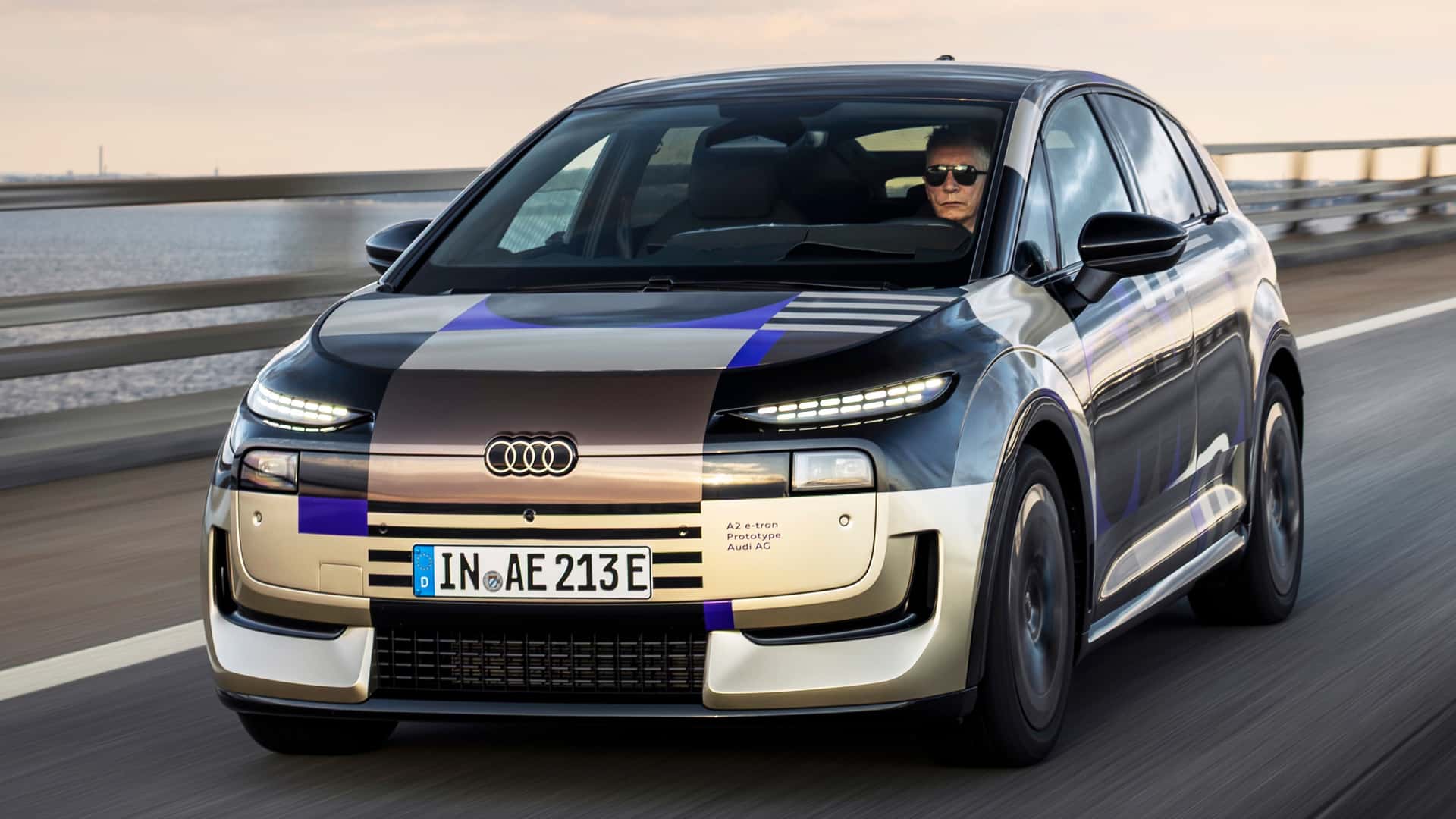
The Audi A2 e-tron’s efficiency comes from reducing losses everywhere, not from one headline component. Audi’s preliminary WLTP measurement puts the compact hatchback at 4.85 miles per kilowatt-hour, equivalent to 12.8 kWh/100 km, when fitted with the optional efficiency package. That package cuts energy consumption by up to 0.9 kWh/100 km compared with the standard car. Its aerodynamic work includes a front active cool-air intake, air curtains, gap reducers, and gap breathers. The intake remains closed in normal driving and at higher speeds, then opens for charging, hard acceleration, or hot weather so airflow can cool the battery and electronics. The package gives the car a 0.24 drag coefficient, the lowest among Audi’s compact models. The result is a car that treats air management, thermal control, and electrical conversion as one ownership proposition rather than chasing efficiency through battery size alone.
Which battery and range options will the A2 e-tron offer?
The A2 e-tron is planned with both LFP and NMC battery choices, and the longest-range version is associated with the larger pack. One announced option is a 58-kilowatt-hour lithium-iron-phosphate battery, with 61 kWh gross, built in a cell-to-pack arrangement. Audi pairs that battery with a 187-horsepower rear motor. A separate 79-kWh nickel-manganese-cobalt pack is associated with a claimed maximum range of 403 miles, or 649 km, and a 228-horsepower motor. That pairing was shown on a German Audi webpage that was later deleted, so the range and specification should be treated as planned rather than settled. The practical distinction is clear: the LFP car emphasizes a compact battery format and rear-drive output, while the NMC version is the range-led choice. Neither figure is an EPA result, and the headline distance comes from WLTP. The figures describe different battery strategies.
Can the A2 e-tron power appliances or a house?
The A2 e-tron can supply electricity as well as consume it, with V2L and V2H built into the program. Vehicle-to-load sends energy from the high-voltage battery to equipment through a household socket in the trunk. Audi specifies output of up to 2.3 kW, enough for tools, appliances, or camping equipment within that limit. Vehicle-to-home uses the car’s charge port to energize an entire house, but only after the building has the necessary installed equipment. That distinction matters for ownership: the trunk socket is an accessory-power function, while home backup depends on compatible hardware outside the vehicle. Charging efficiency also receives a specific upgrade. Audi says a revised cooling strategy raises home-charging efficiency to 89.6 percent. The car therefore offers two different kinds of electrical utility, but neither should be read as an automatic whole-house backup system. V2L is available at the vehicle; V2H is an installation-dependent capability.
How much will the Audi A2 e-tron cost, and how powerful will it be?
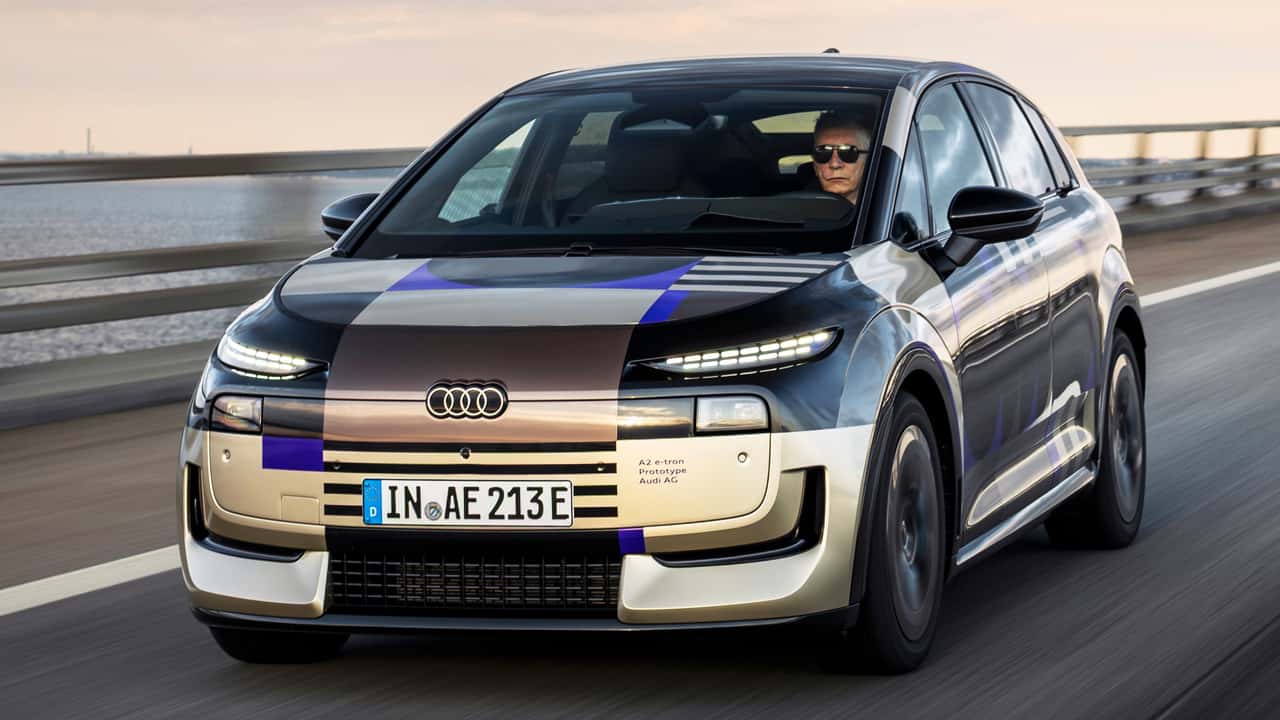
The planned A2 e-tron starts at €38,200 including VAT, which would make it Audi’s cheapest new electric vehicle. The power range extends beyond the announced rear-drive version: planned outputs also include 167 hp and 321 hp. Those figures correspond to 125 and 240 kW respectively. Audi has not presented every trim, battery, motor, and market combination as a final public lineup, so the price should be read as an entry point rather than a promise that every configuration will cost close to it. The compact four-door hatchback is scheduled for a full reveal in the fall, while the available specification has shifted as webpages appeared and disappeared. For a buyer comparing versions, the meaningful split is between lower-output compact models and higher-output range or performance configurations. The cheapest Audi EV, if launched at that figure, will not necessarily be the longest-range or quickest one.
What should buyers look for beyond a car’s low price?
A low purchase price does not by itself make a car a good ownership choice; the Mitsubishi Mirage shows why the rest of the package matters. US News described the 2019 Mirage as near the bottom of its subcompact class, citing glacial acceleration, poor ride quality, cheap cabin materials, and uncomfortable seats. Those are not abstract styling complaints: slow response affects merging, ride quality shapes every trip, and weak interior materials become a daily reminder of where costs were cut. The 2004 Chevrolet SSR offers the opposite warning. Its retro body attracted attention, but the heavy vehicle’s engine left it sluggish, undercutting the “Super Sport Roadster” name. The Pontiac Aztek added an unpopular exterior and plastic body construction to underwhelming performance and a price consumers rejected. These cases establish a useful selection test: assess propulsion, comfort, materials, and safety-related construction separately instead of allowing a low price or distinctive design to settle the decision.
Which car defects turned bad purchases into safety concerns?
The Ford Pinto remains the clearest example in these accounts of a defect changing a car’s entire ownership risk. The compact was sold with decent performance and fuel economy, but became notorious for exploding when struck by another vehicle. The consequence was not merely poor refinement or resale value; collision safety became the defining issue. The Chevrolet Citation illustrates a different path. It sold more than 800,000 units in its first year and won Motor Trend’s 1980 Car of the Year award, then lost momentum after Consumer Reports called its design dangerous. The Suzuki Samurai suffered a similar reputational blow when Consumer Reports labeled it “dangerously unsafe” in 1988; later criticism of the magazine’s rollover testing did not restore the brand in America. Ownership history matters because an award, sales surge, or loyal following can coexist with a serious defect record. In these examples, public confidence collapsed after safety concerns became impossible to separate from the product.
What does the biggest production-car inline-six reveal about engine size?
The largest production-car inline-six in this ranking is the Pierce-Arrow Model 66, whose 1913 engine displaced 825 cubic inches, or 13.52 liters. Its maximum speed was only 1,500 rpm, and its purpose was effortless pulling power in a heavy luxury chassis rather than rapid acceleration. The Peerless Model 60 came close at 824 cubic inches, or 13.5 liters, using the same broad T-head tradition. These engines show why displacement alone cannot predict a car’s character. The Model 66 used long wheelbases up to 147.5 inches and supported coachbuilt bodies, while production reached 1,250 cars before ending in 1918. Earlier examples in the group were still enormous: the 1912 Oldsmobile Limited reached 707 cubic inches, or nearly 11.6 liters, without increasing its 60-horsepower output. For a modern buyer, the lesson is historical rather than practical: engine size once served low-revving luxury and load-carrying ease, not the efficiency or compact packaging expected from an electric hatchback.