Genesis GV80 Hybrid: What Australia Needs to Know Before 2027
Genesis has reversed its all-electric course, but the first hybrid’s Australian model, specification and timing remain only partly settled.
Will the Genesis GV80 Hybrid come to Australia?
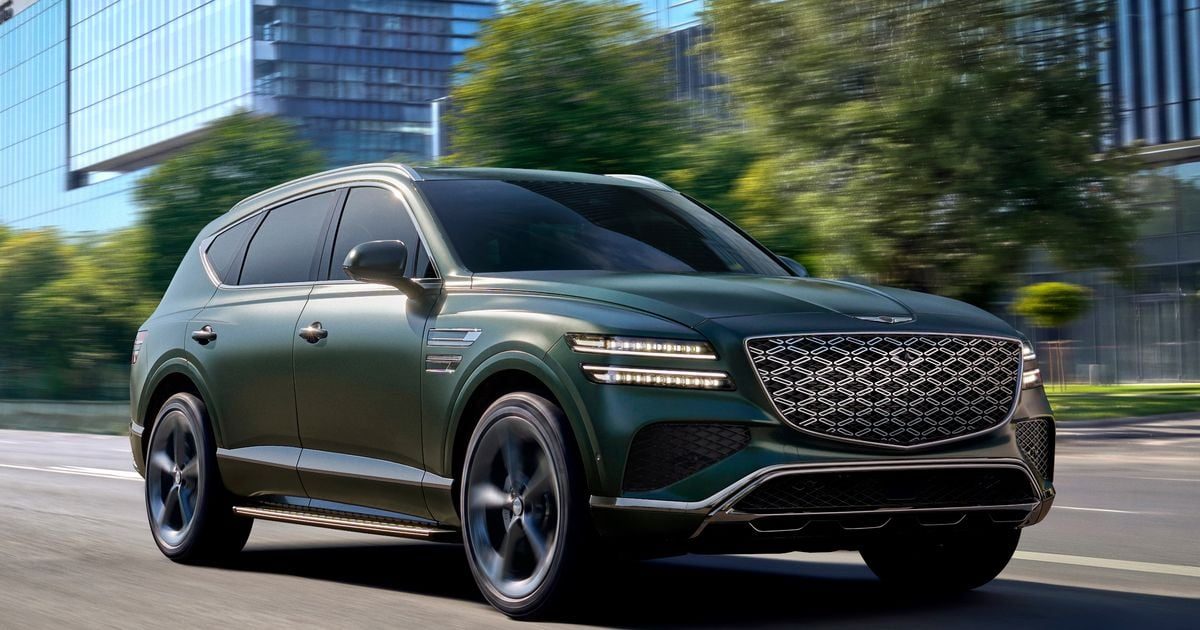
The GV80 Hybrid is not confirmed for Australia, although Genesis Australia says hybrid models will arrive locally in 2027. Genesis plans to introduce its first hybrid in Korea next month, then bring hybrids to Australia the following year. The local business has not identified which models will receive the powertrain, so the GV80 is a possibility rather than a confirmed Australian launch. Genesis has also confirmed that extended-range electric vehicle technology is under development, without giving an introduction timeline. That matters because an EREV uses its combustion engine as a generator, while a conventional hybrid can drive through its engine, electric motor or both. The GV70 mid-size SUV and G80 large sedan are also expected to receive hybrid or EREV technology, but their Australian specifications are likewise unsettled. Genesis dropped its 2030 EV-only target in January 2025, keeping combustion and hybrid powertrains in its future product plan.
What engine and performance does the GV80 Hybrid have?
The GV80 Hybrid pairs a turbocharged 2.5-litre four-cylinder petrol engine with two electric machines in a parallel-hybrid system. A P1 starter-generator handles engine starting, while a P2 drive motor supplies propulsion and regenerative braking. Combined output is 259kW and 530Nm, compared with 224kW and 422Nm for the standard 2.5-litre turbo four. Genesis claims a 0-100km/h time of 7.1 seconds. The system uses a new seven-speed rear-wheel-drive transmission, and there is no dedicated reverse gear: the P2 motor moves the vehicle backwards. That layout makes the motor part of normal driveline operation rather than an add-on used only for low-speed assistance. Genesis has so far confirmed the hybrid in rear-wheel-drive form. Australian buyers therefore should not assume the hybrid will mirror the seven-seat, all-wheel-drive GV80 2.5T currently sold locally; its final local drivetrain has not been specified.
How much fuel can the GV80 Hybrid save?
Genesis claims the GV80 Hybrid can cut fuel consumption by 25 per cent or more against a rear-wheel-drive, five-seat GV80 2.5T. That comparison needs context: Australia does not offer that exact rear-drive, five-seat configuration. The local seven-seat, all-wheel-drive petrol version is rated at 10.4L/100km on the combined cycle, so that figure is not a published hybrid result and cannot be used to calculate an Australian economy number. The hybrid battery is liquid-cooled, which Genesis describes as a first for a Hyundai Motor Group hybrid system and as a way to manage battery temperature more efficiently. The powertrain’s basic advantage is mechanical: the petrol engine, motor and battery share the work, while regenerative braking returns energy to the battery. Fuel use will therefore depend on the final Australian body, drivetrain and test certification. Until those details are announced, the 25-per-cent claim is the usable benchmark, not a local fuel-economy promise.
What makes the hybrid quieter and smoother in traffic?
The GV80 Hybrid is designed to use electric mode heavily in stop-start traffic and to give sharper response during overtaking. Genesis describes the result as an EV-like driving experience, with less noise than the standard model. The quietness is not attributed only to the electric motors: the hybrid receives a lower final-drive ratio, new engine crankshaft damper-pulley technology and a centrifugal pendulum absorber damper to reduce noise and vibration. Hierarchical Predictive Control, also used in the Hyundai Palisade Hybrid, predicts the route and manages the battery’s state of charge. Smart Regenerative Braking uses navigation data to select and apply regenerative-braking strength automatically. In ownership terms, these systems target the situations where a large SUV is most interrupted—queues, junctions and changing road speeds—while retaining engine power for longer acceleration. The promised refinement is therefore a combination of electric assistance, vibration control, route prediction and navigation-linked braking rather than a battery-only driving guarantee.
How can I tell the GV80 Hybrid apart from other GV80s?
The hybrid has its own exterior detailing, including a unique grille and wheel design. Genesis is also introducing four two-tone cabin colourways, among them Obsidian Black/Taiga Green and Ultramarine Blue/Travertine Beige. Two new wood inlays and fresh quilting patterns complete the interior changes. Those details identify the electrified version without relying on a badge alone, although the Australian-market appearance may differ if Genesis chooses a different specification. The changes are restrained rather than a new body shell: the GV80 remains the large SUV launched in 2020, with the facelift revealed in Korea in 2023 and arriving in Australia the following year. Genesis has not published an Australian hybrid price, equipment list or colour allocation. Buyers comparing showroom cars will therefore need to separate confirmed design cues from local-order information. The grille, wheels and cabin trim are the clearest announced markers; availability, pricing and final upholstery combinations remain open.
What does the GV80 Coupe offer at the luxury-SUV end of the range?
The GV80 Coupe is a separate, sportier body style, and a SlashGear review of a 2026 Prestige Black example described it as Genesis’s most expensive SUV variant. That vehicle started at $89,400 and used a 3.5-litre twin-turbo V6 with a 48-volt e-supercharger, producing 409 horsepower and 405 lb-ft through an eight-speed automatic and all-wheel drive. The review praised its 22-inch wheels, quilted leather, driver massage function, open-pore ash trim, crystal gear selector and 27-inch OLED display. It also recorded practical irritations: the rotary gear selector and infotainment knob were close enough to confuse during parking, the steering-wheel volume dial was awkward to adjust precisely, and the conventional reversing camera could lag despite strong resolution and top-down and 3D views. That assessment concerns the Coupe, not the unconfirmed Australian hybrid specification, so its price and equipment should not be transferred to the standard GV80 Hybrid.