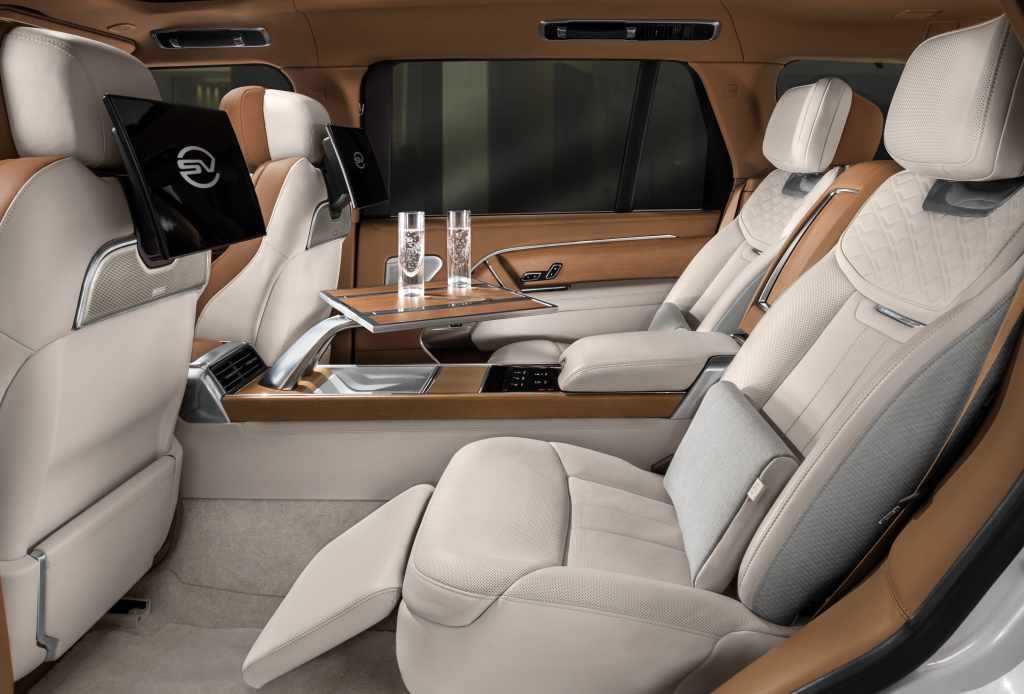
The Range Rover’s Electrostatic Audio System Changes What Car Speakers Can Be
A new flagship setup replaces conventional drivers with ultra-light membranes, adds tactile bass effects, and carries a five-figure price on some trims.
What makes electrostatic speakers different from normal car audio?
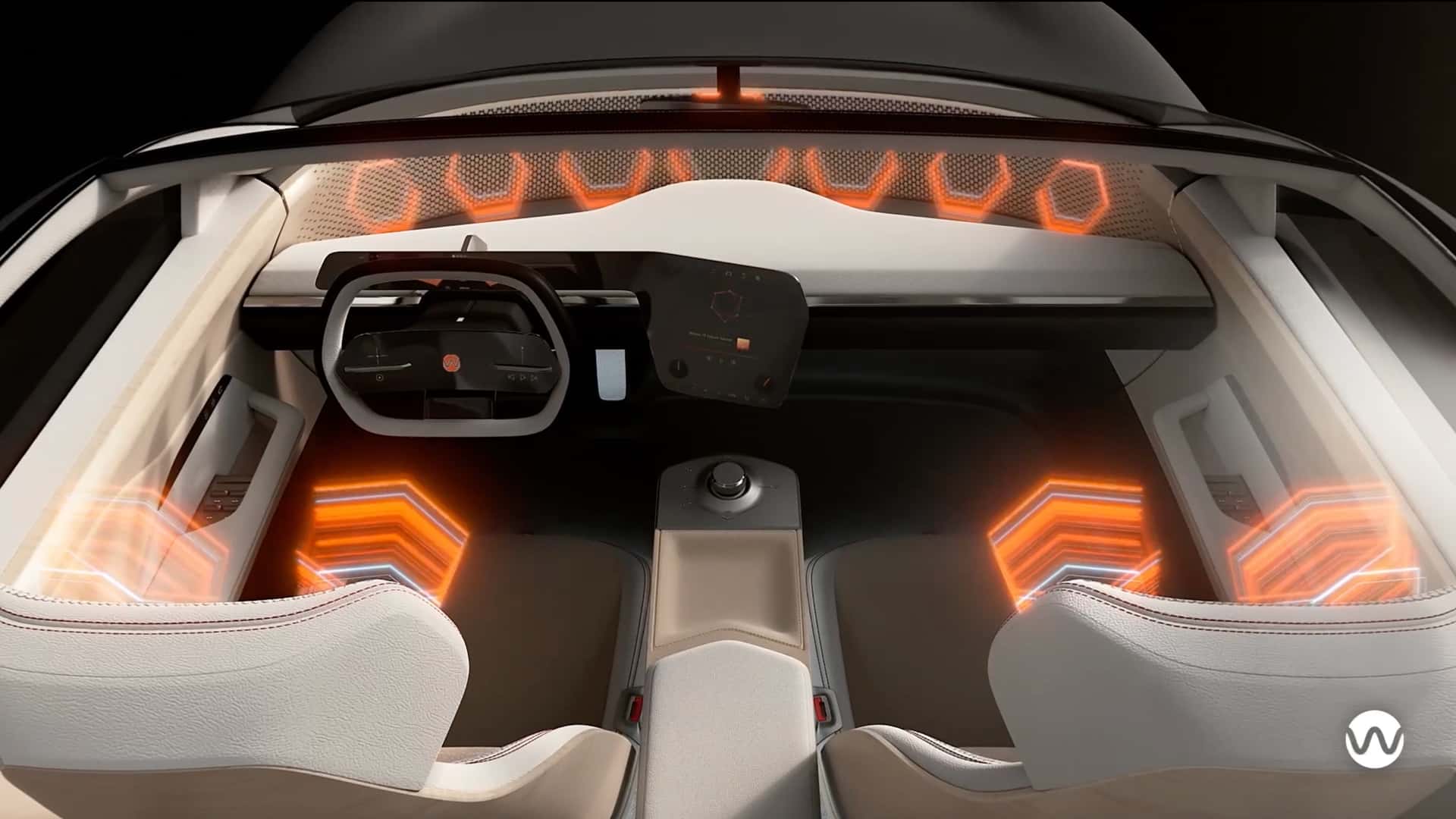
Electrostatic speakers create sound with a thin membrane rather than a conventional cone, voice coil, and magnet. In the Range Rover SV Ultra, each membrane is 1 millimeter thick and suspended between two electrically charged metal plates. An electrical signal changes the forces around the membrane, making it vibrate and disturb the surrounding air. Tilesh Karania, Jaguar Land Rover’s senior electrical innovation engineer, says the design’s lower moving mass allows unusually precise reproduction with no perceptible distortion. The system contains 21 membranes distributed through the cabin. That arrangement removes much of the hardware found in dynamic drivers, which normally depend on a magnetic field moving a coil attached to a cone. Planar magnetic headphones use a related flat-driver idea, but they still rely on magnets and coils. Electrostatic automotive speakers eliminate both, making them a fundamentally different approach rather than another refinement of familiar car-audio hardware.
Do electrostatic speakers actually sound better in a car?
The strongest reported advantage is not louder playback but a cleaner, less directional presentation. During a demonstration lasting about 20 minutes, Susanne Vega and DNA’s “Tom’s Diner” revealed audible breaths before the lyrics, while “Hotel California” kept its acoustic guitar, electric guitars, bass, drums, and percussion distinct. The sound did not seem to come from a door, dashboard, or pillar-mounted tweeter. Instead, it appeared to fill the cabin evenly, with a sense of space that felt separate from conventional 3D audio effects. High volume also felt less tiring because the presentation remained calm rather than aggressively focused on the listener. Taylor Swift’s “Lavender Haze” showed that the system could retain the same definition with denser modern production. The result is a studio-like impression: individual notes remain sharply separated, yet the music feels cohesive instead of assembled from separate speakers around the cabin.
Do the electrostatic units provide the bass too?
No. The electrostatic membranes handle much of the detailed upper and midrange presentation, while five additional bass speakers supply the air movement needed for low frequencies. The vehicle also adds tactile hardware: a vibrating floor called the Haptic Floor and seats fitted with Body and Soul transducers. Each seat has four transducers, allowing bass-like sensations to pass through the cushion and floor rather than arriving only through the ears. That feature is adjustable, including a setting that turns the transducers off completely. The tactile effect will not suit every occupant; the reported demonstration found the seat vibration less appealing than the speakers themselves and considered it gimmicky at higher intensity. The practical distinction matters for ownership. Buyers are not choosing between electrostatic speakers and a conventional subwoofer-only arrangement. They are getting a layered system that combines membrane drivers, dedicated bass hardware, and optional physical vibration.
Can this speaker design improve an electric vehicle’s range?
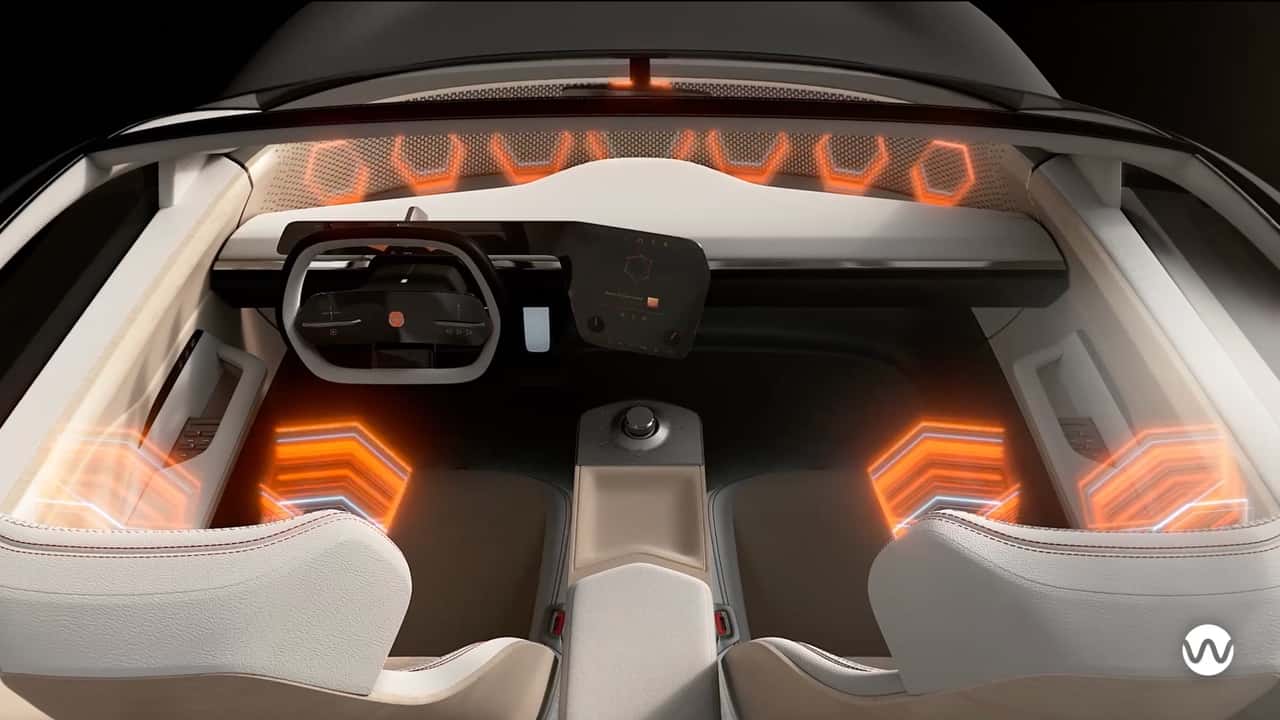
It can reduce the audio system’s electrical demand and mass, although the claimed driving-range benefit remains an estimate rather than a measured result in a specific vehicle. Warwick Acoustics, the U.K. company that developed the technology, says its system responds 1,000 times faster than conventional units, uses 90% less energy, and contains 90% less mass. The company estimates that an electric vehicle with a 100-kilowatt-hour battery could gain up to 20 miles of WLTP range from those savings. The mechanism is straightforward: lighter speaker hardware reduces vehicle weight, while lower power consumption leaves more battery energy for propulsion. No exact weight reduction versus a mainstream premium audio system was disclosed for the Range Rover installation. That omission limits any direct comparison between the advertised efficiency potential and the benefit an owner would see in a particular EV.
Which Range Rover trims include the electrostatic audio system, and what does it cost?
The electrostatic system is standard on the gas-powered Range Rover SV Ultra. On non-Ultra SV trims, it is an optional upgrade priced at $12,570. That makes the audio hardware a major purchase decision rather than an inexpensive tick-box feature. The broader vehicle already occupies the top end of the market, with an SV positioned around the quarter-million-dollar mark. The option’s price therefore targets buyers who are already considering a high-value luxury SUV, not customers comparing ordinary factory stereo packages. The system is not described as standard across the wider Range Rover range, and the available information does not establish a lower-priced model using the same speakers. For shoppers focused on ownership value, the key distinction is simple: the premium sound experience is built into SV Ultra equipment, while other SV buyers must absorb a five-figure supplement.
Will electrostatic speakers replace today’s premium car-audio systems?
Not immediately. Existing premium systems remain highly capable, and electrostatic hardware currently appears limited to an expensive flagship application. Bowers & Wilkins Diamond Surround Sound, Burmester 3D spatial audio, and AKG systems with Dolby Atmos already deliver different forms of immersion through conventional speaker technology and software. The electrostatic approach raises the ceiling for detail and evenness, but it still requires separate bass speakers and adds tactile components for physical impact. Its next step depends on whether manufacturers can bring the design beyond six-figure luxury vehicles without losing the advantages that make it distinctive. The technology’s lighter construction and lower energy demand give automakers a practical reason to investigate it, especially as electric vehicles place greater emphasis on efficiency. More luxury brands may pursue tailored versions for flagship models, while broader adoption remains an open commercial question rather than an established industry shift.