Revoy's $27 Million Bet on the Hybrid Trailer That Could Cut Diesel Fleets' Fuel Bills in Half
The San Francisco startup just closed its Series A and completed a year-long pilot with Ryder, but the 22,000-pound elephant in the room still looms over every mile.
The Money and the Momentum
Revoy EV closed a $27 million Series A round led by Standard Capital, with Doerr Capital, Time Ventures, Y Combinator, and Leap Ventures joining the table. The raise lands on the heels of a year-long proof-of-concept pilot with Ryder Systems, and the company has earmarked the capital toward a second-generation hybrid trailer dolly that trades a smaller battery for roughly the same fuel economy gains. Four additional pilot deployments along a 200-mile corridor in the Pacific Northwest are slated before year's end, with "dozens" of units in operation by the close of 2027.
A Three-Part Rig That Hides in Plain Sight
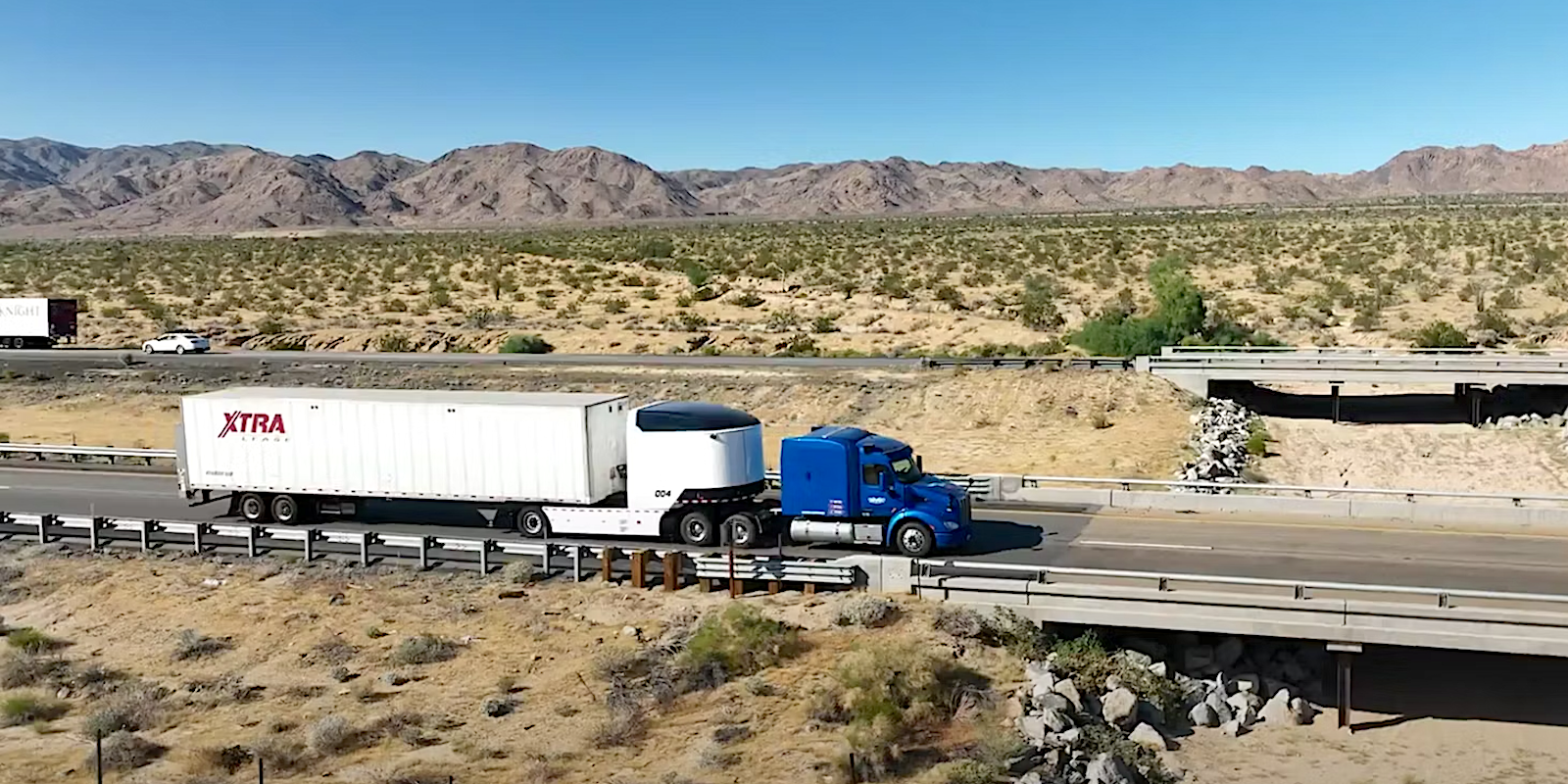
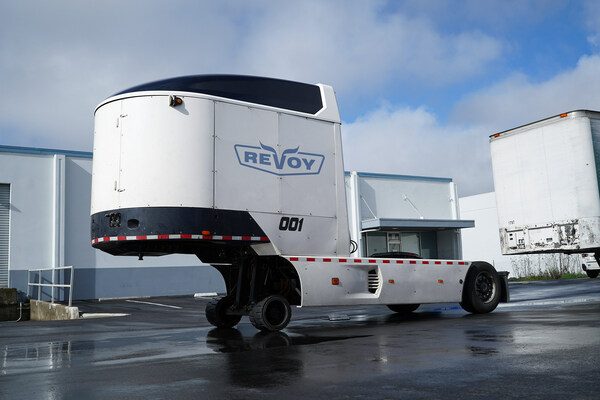
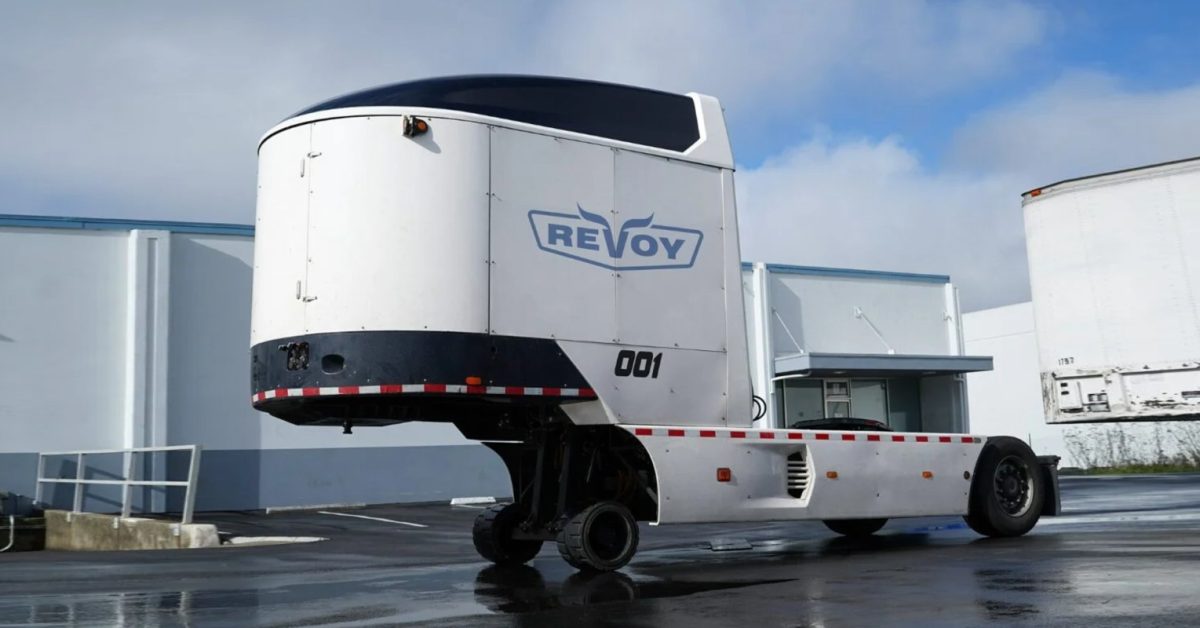
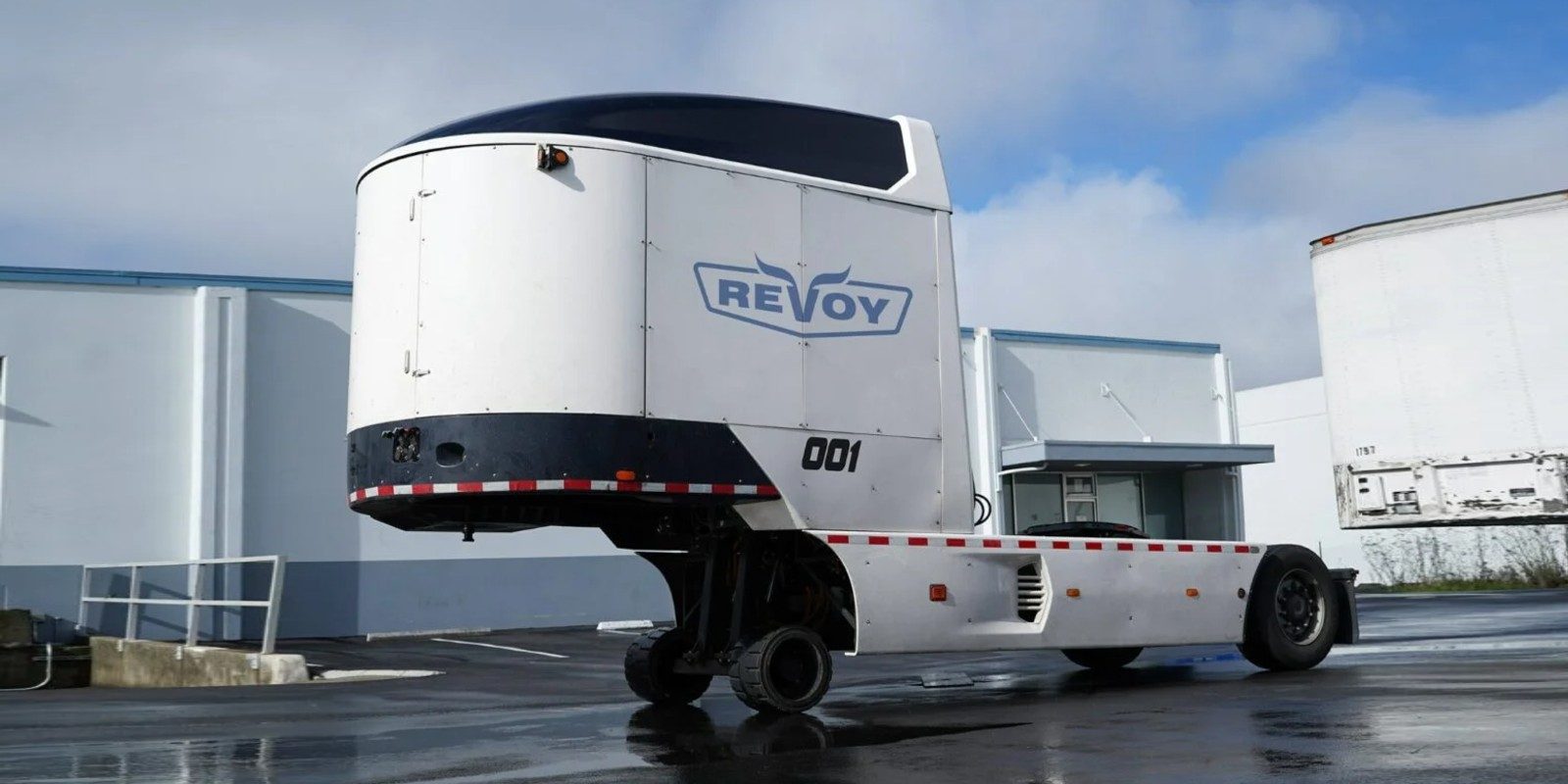
The Revoy EV slots between a conventional tractor and its trailer. The tractor's fifth wheel couples to the Revoy's hitch; the cargo trailer then mounts to the Revoy's own fifth wheel. Embedded electronic control units run continuous calculations, feeding power from a high-torque electric axle during acceleration while the diesel engine handles steady-state highway cruising where it is most efficient. The configuration resembles two trailers — a setup Brian Peterson notes already runs "all around the western US" in triple-trailer form. Revoy received NHTSA regulatory approval in 2023, clearing the unit for public roads.
The Weight Problem Nobody Can Engineer Away
At roughly 22,000 pounds, the Revoy trailer consumes a significant chunk of the federal 80,000-pound gross combined weight rating. Because the unit is not classified as a zero-emission vehicle, it does not qualify for the 2,000-pound BEV allowance that battery-electric trucks receive. Every pound the Revoy adds is a pound of cargo a fleet cannot haul. Rust says two-thirds of loads can absorb the penalty, but with commercial fleets already pushing for higher EV weight limits, that margin leaves room for doubt. The second-generation unit is expected to have a smaller battery, though Revoy has not disclosed a target weight.
Pay-by-the-Mile, Not Up Front
Revoy sells the system as a fuel product rather than a piece of equipment. Fleets pay nothing for the hardware; instead they are billed per mile for the diesel the unit displaces, plus whatever residual diesel the rig still burns. On a 250-mile run, a truck averaging seven miles per gallon would consume roughly 35 gallons — about $140 at $4 a gallon. Revoy's pitch is that it cuts that bill roughly in half and charges the fleet a share of the savings. The 250-mile electric range sits on par with the second-generation Volvo VNR Electric and the Freightliner eCascadia, though Revoy's unit adds rather than replaces the diesel powertrain.
Swap Stations and the Deployment Map
Two battery-swap stations are already operating in Texas and Arkansas, staffed by Revoy attendants who exchange a spent pack in approximately five minutes. California and Oregon stations are planned, and the Pacific Northwest corridor chosen for the next four pilots hints at where the company sees early density forming. The swap model lets a single unit cycle through multiple tractors in a day, a cadence Brian Peterson argues could push utilization near 100 percent on predictable, under-weight routes — especially if fleets schedule charges overnight at commercial electricity rates.
What the Industry Is Watching
The GCWR question is not academic. Fleet operators who already complain the federal BEV allowance is insufficient will be watching Revoy's second-gen weight figures closely. The company's data claim that two-thirds of freight loads cube out before they weigh out is the linchpin: if that number holds under real-world dispatch, the weight penalty becomes a scheduling filter rather than a dealbreaker. If it does not, the unit becomes a liability for any hauler moving dense cargo. Revoy's next eighteen months — the PNW pilots, the new dolly's specs, the swap-station buildout — will determine whether the hybrid trailer is a footnote or a fixture.