6 Details That Set the Subaru Trailseeker Apart From Its Toyota Twin
The Trailseeker shares its electric hardware and mechanical layout with the Toyota bZ Woodland, but its steering-wheel controls, lower price, familiar interfaces, range, and cooling system tell a more nuanced story.
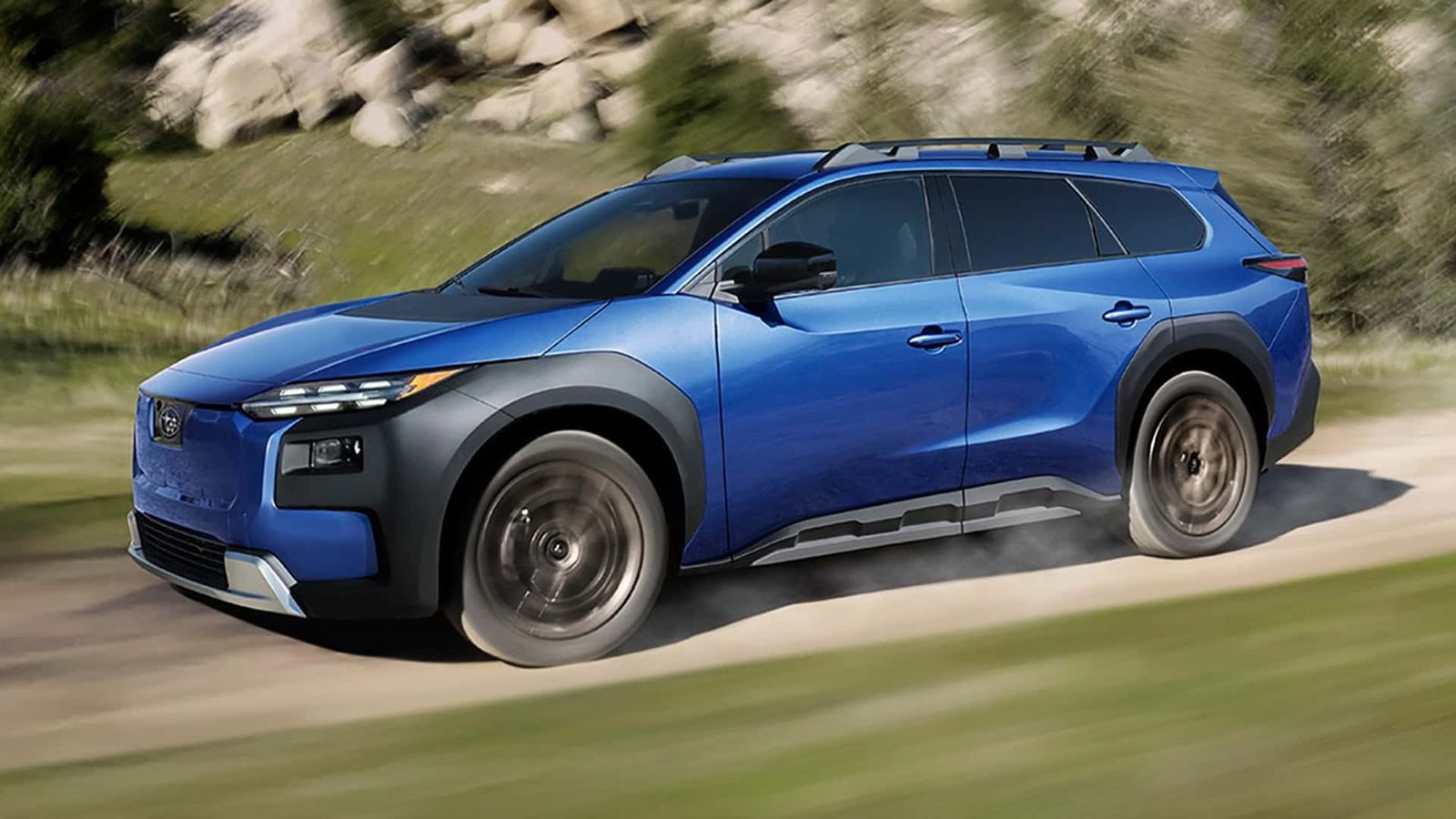
The steering wheel fixes the biggest dashboard problem
The Trailseeker’s most meaningful advantage is its steering wheel. Subaru gives the rim a flat top, allowing it to sit beneath the gauge cluster instead of cutting across the driver’s view. That is a small design choice with a direct ownership benefit: speed and other driving information remain visible without forcing an awkward seating adjustment. The Toyota BZ Woodland takes the opposite approach, with a rounded wheel whose upper rim can block the cluster. The problem is severe enough that the wheel may need to be lowered until it touches the driver’s thighs before the instruments become readable. A driver should not have to estimate speed because the steering wheel is in the way. Subaru’s flatter design leaves the display unobstructed while preserving a normal driving position. Among the Trailseeker’s differences, this is the one that affects every trip and requires no software update or optional package.
The starting price undercuts the Toyota by nearly $5,500
The Trailseeker enters the market at $41,445, while the BZ Woodland starts at $46,895. That creates an almost $5,500 gap before buyers compare equipment, financing, or running costs. Subaru does not match the Toyota on standard features, so the lower price is not a claim that the two versions have identical showroom content. It does establish a clear trade: the Trailseeker delivers the shared electric vehicle hardware at a substantially lower entry point, while the Woodland asks buyers to pay more for a richer standard specification. The cheaper Subaru still includes almost everything needed from the outset. That combination makes the price difference more significant than a simple equipment-sheet comparison. Buyers who value the shared mechanical package and the unobstructed gauge view can retain money at purchase without giving up the core all-wheel-drive configuration.
The 67-kWh battery is matched to roughly 280 miles of range
A 67 kWh battery pack supplies the Trailseeker’s energy storage, with a maximum range of around 280 miles. The pack is shared with the BZ Woodland, placing both vehicles on the same published battery and range footing. Range estimates describe a maximum rather than a guaranteed distance for every drive, but the figure gives the Subaru a clear long-distance benchmark. More importantly, the identical battery capacity reinforces how little separates the two vehicles underneath their brand-specific styling. A buyer choosing the Subaru is not accepting a smaller pack in exchange for the lower price. The same stated capacity and approximate maximum range remain available. That makes the Trailseeker’s selection less about sacrificing electric capability and more about prioritizing the details that shape daily use: the wheel design, familiar controls, and purchase price. Its 67-kWh pack is therefore a shared foundation, not a Subaru-specific compromise.
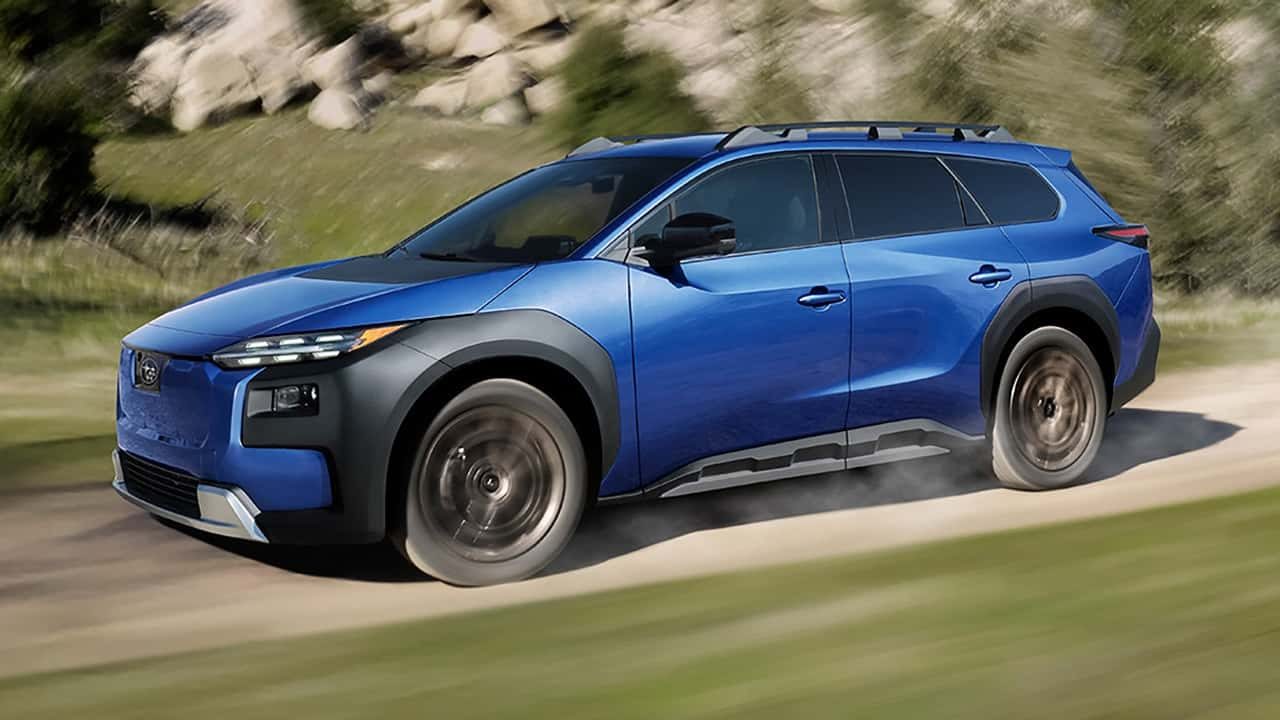
Familiar controls make the electric transition less demanding
The Trailseeker treats its electric powertrain as a change beneath conventional car controls rather than a reason to redesign the entire driving experience. It uses a normal keyfob, a normal starter button, and familiar controls. Doors do not require a keycard, and the mirrors are not adjusted through steering-wheel-mounted controls. The result is an ownership routine that resembles a gasoline-powered car even though propulsion comes from electric motors. That distinction matters during ordinary tasks such as unlocking the vehicle, starting a trip, and setting the mirrors. Drivers moving from conventional cars do not have to learn a new control philosophy before the vehicle becomes usable. Tesla, Rivian, and Lucid are specifically contrasted as brands whose vehicles can demand more adaptation in these areas. The Trailseeker’s approach keeps the interaction pattern recognizable: press the expected buttons, use the expected controls, and drive without a separate familiarization period.
Toyota-derived engineering gives the Subaru a conventional mechanical layout
The Trailseeker’s close relationship with the BZ Woodland is not presented as a weakness in its mechanical design. The vehicles are built on the same lines and are mechanically identical in the major areas described, making the Subaru a Toyota-derived electric crossover rather than an untested departure. That shared production and engineering basis gives the Trailseeker a deliberately sensible layout. Its electric identity does not lead to unusual cabin controls, and its systems retain recognizable automotive logic. The relationship also explains why the two models carry the same dual-motor arrangement and battery specification despite wearing different badges and exterior details. Subaru adds its own styling elements, but the underlying vehicle remains closely aligned with the Toyota version. For owners, the important point is straightforward: the Trailseeker’s novelty is concentrated in its branding and selected design decisions, not in a radically different mechanical concept. Its foundation is a familiar, established vehicle architecture.
One cooling circuit uses Toyota’s gas-car coolant
The Trailseeker has two cooling systems, and one uses the same coolant Toyota puts in its gasoline and hybrid vehicles. That detail links the electric Subaru to service conventions already used across Toyota’s conventional and electrified models. It also illustrates the vehicle’s broader design philosophy: electric propulsion does not mean every maintenance-related component must be unique. The cooling arrangement still contains two systems, but the shared coolant specification shows that at least one part of the thermal-management setup follows an established Toyota practice. This is a more concrete ownership detail than a general claim about reliability because it identifies the fluid and the vehicles already associated with it. The Trailseeker remains an electric car, yet this particular system connects it to familiar automotive hardware. The coolant choice does not erase the need to understand the vehicle’s two cooling circuits, but it does show how much conventional engineering remains beneath the Subaru’s battery-powered operation.